


You wake up, run your fingers through your hair, and there it is again. That familiar puff of frizz, despite the premium shampoo, the fancy conditioner, and the serum you applied last night. Frustrating? Absolutely. But here’s the thing: frizz is not a sign that you’re doing everything wrong. It’s a sign that your hair needs a smarter, more targeted approach. Cuticle lift allows moisture in, especially in women with textured or porous hair, making frizz one of the most common haircare challenges around. This guide gives you a clear, evidence-backed, step-by-step plan to get smoother, calmer hair using natural and cruelty-free methods that actually work.
Table of Contents
- Understanding what causes frizz
- What you need before you begin
- Step-by-step guide: how to defrizz hair naturally
- Troubleshooting: common frizz mistakes and fixes
- How to tell it’s working: signs of truly healthy, frizz-free hair
- Upgrade your frizz-fighting haircare
- Frequently asked questions
Key Takeaways
| Point | Details |
|---|---|
| Know frizz causes | Frizz happens when humidity lifts the cuticle, so understanding your hair’s porosity is vital. |
| Use natural solutions | Premium, cruelty-free products with natural oils offer better, lasting frizz control without buildup. |
| Follow a stepwise method | Layering hydration, sealing in moisture, and avoiding harsh ingredients power smoother, healthier hair. |
| Troubleshoot with care | Tailor your regimen to your hair type and adjust steps for climate or texture for best results. |
Understanding what causes frizz
Before diving into the solutions, it’s vital to grasp why frizz happens and who is most affected. Your hair strand has three layers: the medulla (inner core), the cortex (middle layer that holds moisture and shape), and the cuticle (the outer protective layer). When the cuticle is smooth and flat, hair looks sleek. When it lifts, moisture from the air rushes in and disrupts the hydrogen bonds inside the cortex, causing strands to swell and separate. That’s frizz.
Hair is hygroscopic, meaning it naturally absorbs water from the surrounding air. On humid days, this process accelerates dramatically, especially for those with high-porosity hair. Porosity refers to how easily your hair absorbs and retains moisture. High-porosity hair has gaps in the cuticle, making it absorb humidity fast but lose moisture just as quickly. Understanding your hair porosity basics is one of the most powerful steps you can take.
Frizz results when the cuticle lifts and humidity disrupts the hair’s internal structure, but other factors make it worse:
- Dryness: Stripped hair desperately seeks moisture from the air
- Hard water: Mineral deposits roughen the cuticle over time
- Overwashing: Removes natural oils that protect and smooth the cuticle
- Wrong products: Silicone-heavy formulas create buildup that blocks hydration
- Heat damage: Repeated heat styling permanently lifts and weakens the cuticle
“The cuticle is your hair’s first line of defence. When it’s compromised, no amount of surface-level product will deliver lasting smoothness.”
What you need before you begin
With the science in mind, you’ll want to choose tools and products that support healthy, frizz-free hair from the start. Getting the right kit together before you begin makes a real difference to your results.
| Product or tool | Why it matters | Best for |
|---|---|---|
| Microfibre towel | Reduces friction and cuticle damage | All hair types |
| Sulphate-free shampoo | Preserves natural oils | Dry, porous, or curly hair |
| Hydrating conditioner | Replenishes moisture and smooths cuticle | All hair types |
| Wide-tooth comb | Detangles without breakage | Curly and textured hair |
| Natural hair oil | Seals moisture and adds shine | High-porosity hair especially |
| Protective serum | Shields against humidity and heat | All hair types |
For natural frizz control, look for cruelty-free brands that prioritise plant-based ingredients. Brands like Briogeo, Sienna Naturals, and Innersense offer vegan, frizz-targeting ranges that are free from harsh chemicals. When choosing natural oils for hair, argan, coconut, and jojoba are excellent starting points.
- Avoid: Sulphates, parabens, synthetic silicones, and alcohol-heavy formulas
- Favour: Shea butter, aloe vera, glycerin, and plant-derived oils
- Hard water tip: Add an apple cider vinegar (ACV) rinse once a week to remove mineral buildup and restore shine
Pro Tip: If you have textured or coily hair, look for products labelled “curl-friendly” or “porosity-aware” as these are formulated to address the specific structural needs of your hair type.
Step-by-step guide: how to defrizz hair naturally
With your products prepped, follow these expert-backed steps for instantly smoother hair.
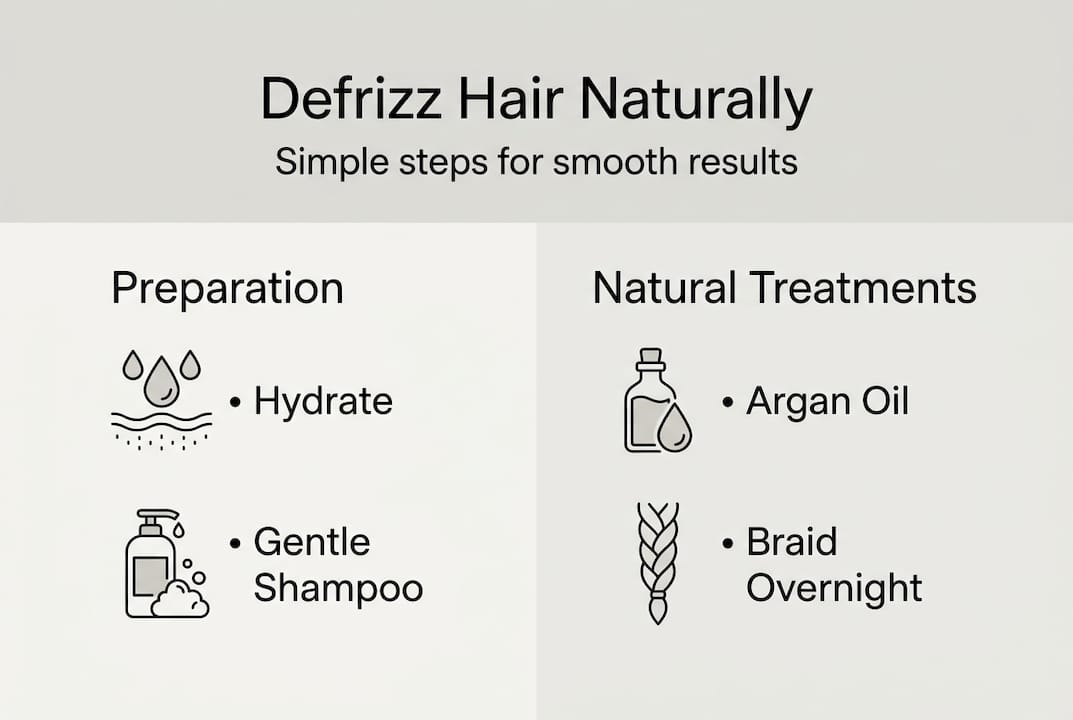
- Cleanse gently. Use a sulphate-free shampoo and focus on the scalp only. Let the lather rinse through the lengths without scrubbing. This preserves your natural oils.
- Condition properly. Apply a hydrating conditioner from mid-length to ends. Leave it on for at least three minutes. Use a wide-tooth comb to distribute it evenly while your hair is wet.
- Apply a leave-in treatment. On damp hair, smooth a moisture-sealing leave-in conditioner from roots to ends. This creates a barrier that slows moisture loss.
- Layer in a natural oil. A few drops of oil applied over the leave-in seals the cuticle and adds lasting shine. Using argan oil is particularly effective for frizz-prone hair. For guidance on technique, see applying hair oil naturally.
- Air-dry whenever possible. Heat tools cause damage and chronic frizz; air-drying and protective styles like braids are far more hair-friendly. If you must use heat, always apply a thermal protectant first.
- Finish with a serum. Once hair is 80% dry, smooth a lightweight anti-frizz serum over the surface to lock everything in and protect against humidity.
Internal hydration and natural oils deliver better long-term results than silicone surface-coating, which can build up and block moisture over time. For more detail on achieving smooth results naturally, explore our full guide.

Pro Tip: For overnight frizz control, apply a small amount of argan oil to dry hair, loosely braid it, and sleep on a silk or satin pillowcase. You’ll wake up to noticeably smoother strands.
Troubleshooting: common frizz mistakes and fixes
Even with careful technique, a few common pitfalls can reverse your progress. Here’s what to watch for and how to solve them.
Frequent mistakes that cause frizz to return:
- Washing hair too often, stripping protective oils
- Using products too heavy or too light for your porosity type
- Rough towel-drying that lifts the cuticle aggressively
- Skipping conditioner on wash days
- Applying oil to dry hair instead of damp hair (reduces absorption)
| Hair type | Common issue | Best fix |
|---|---|---|
| High-porosity | Loses moisture fast, frizzes in humidity | Heavier oils (castor, coconut), protein treatments |
| Low-porosity | Product sits on top, causes buildup | Lightweight oils (argan, jojoba), heat to open cuticle |
| Curly or coily | Tangles and dryness amplify frizz | Finger detangling, curl creams, microfibre towels |
| Fine hair | Weighed down by heavy products | Water-based leave-ins, minimal oil |
High-porosity hair benefits from heavier oils, while low-porosity hair needs lighter products and sealing is essential in humid climates. Understanding your porosity impact on frizz helps you choose the right fix every time.
“Switching to a microfibre towel alone can reduce frizz by up to 50% for women with textured or curly hair, simply by eliminating friction during drying.”
For deeper repair, explore natural treatments for hair that address damage at the root cause rather than masking it.
How to tell it’s working: signs of truly healthy, frizz-free hair
With troubleshooting complete, ensure your hair stays on track by recognising true signs of improvement. Progress is not always dramatic at first, but these signals confirm your routine is working:
- Smoother texture when you run your fingers through dry hair
- Reduced puffing in humid conditions or after washing
- More defined natural pattern in curly or wavy hair
- Less breakage when detangling
- Increased shine without greasiness
- Longer time between washes as your scalp rebalances
Long-term use of natural oils prevents buildup and maintains cuticle integrity for ongoing frizz control. This is the key difference between a quick fix and a lasting result. Monitor for signs of moisture loss (returning dryness, dullness) or buildup (limpness, lack of volume) and adjust your routine accordingly.
Consistency is everything. A single good wash day will not transform your hair. But two to four weeks of a well-chosen, naturally-focused routine will show real, measurable change. If you are working to revitalise dry hair alongside managing frizz, combining moisture-restoring treatments with your defrizz steps speeds up results significantly. For a broader view of what works, our guide on healthy haircare routines covers everything you need to build a sustainable, effective practice.
Upgrade your frizz-fighting haircare
Having seen positive change, you can elevate your results further with dedicated product sets tailored to fight frizz naturally. At Luxeva Haircare, every product is cruelty-free, plant-powered, and formulated with real science behind it. No harsh chemicals. No compromise.

The GrowLux ritual set is a complete system designed to nourish the scalp and smooth the hair shaft from root to tip. It’s ideal for women dealing with persistent frizz alongside thinning or slow-growing hair. For targeted repair and shine, the Argan oil repair set delivers deep cuticle smoothing with heat protection built in. Both sets are suitable for all hair types and are built around the same clean, cruelty-free principles this guide is based on. Real results. Premium ingredients. No guesswork. ✨
Frequently asked questions
Why does my hair get frizzy even with expensive products?
Frizz is not just a sign of dryness; product buildup and ingredient choice matter enormously. Even premium products with silicones can accumulate on the hair shaft and block moisture, making frizz worse over time if they are not the right match for your porosity type.
Can natural oils really control frizz long-term?
Yes. Natural oils are superior for long-term frizz management because they penetrate and seal the hair shaft without the buildup that synthetic silicones leave behind, giving you lasting smoothness rather than a temporary fix.
Which natural ingredients are best for frizzy hair?
Argan oil, coconut oil, and shea butter are ideal for sealing moisture and smoothing the cuticle. Ingredient choice impacts frizz and moisture retention significantly, especially when combined with gentle cleansing and hydrating leave-in treatments.
How often should I use oils or serums to control frizz?
Apply a lightweight oil or serum to damp hair after every wash. Product choice and frequency depend on hair porosity, so adjust the amount based on your hair type. Fine or low-porosity hair needs less product to avoid heaviness and buildup.