


Frizzy hair is one of the most misunderstood topics in hair care. Many women assume it signals damage or neglect, but the reality is far more nuanced. Even the healthiest, most well-nourished hair can frizz in response to humidity, temperature shifts, or simply the wrong product choice. This guide cuts through the noise, offering evidence-based, cruelty-free strategies rooted in clean beauty principles so you can finally understand your hair and work with it, not against it.
Table of Contents
- Understanding why hair becomes frizzy
- Common misconceptions about frizzy hair
- Choosing cruelty-free and natural solutions
- Essential routine tweaks for frizz control
- Weather, lifestyle, and holistic frizz management
- Discover clean beauty solutions tailored for frizz
- Frequently asked questions
Key Takeaways
| Point | Details |
|---|---|
| Frizz is not always damage | Natural hair texture and environmental factors can both contribute to frizz without indicating poor hair health. |
| Clean beauty works | Cruelty-free, natural products help control frizz without compromising health or ethics. |
| Routine is key | Simple changes like gentle towel drying and using the right products can dramatically reduce frizz. |
| Look beyond products | Diet, stress, and the UK’s climate play a major part in long-term frizz management. |
Understanding why hair becomes frizzy
Frizz is not a character flaw in your hair. It is a physical response to specific conditions, and once you understand those conditions, managing it becomes far more straightforward.
Each strand of hair is covered by a cuticle layer, a series of overlapping scales that ideally lie flat and smooth. When those scales lift, moisture from the air enters the shaft unevenly, causing the hair to swell and expand in unpredictable directions. That swelling is what we call frizz. Moisture imbalance, cuticle damage, protein loss, static, and UV exposure are all confirmed triggers.
Here is a quick breakdown of the most common frizz triggers:
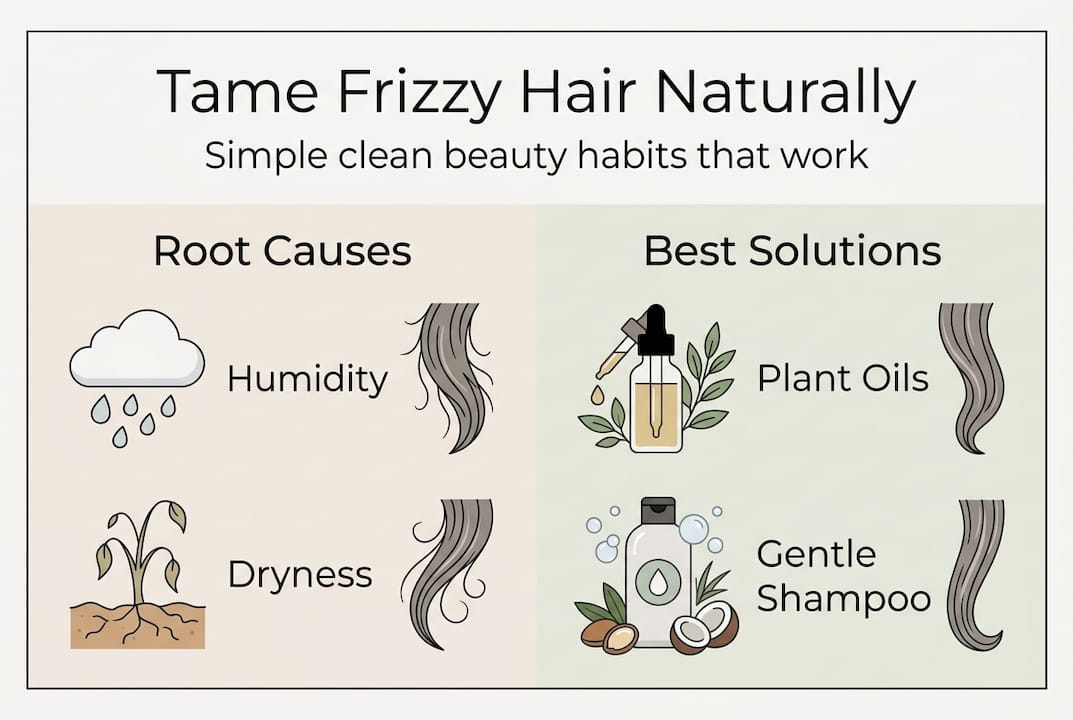
- Humidity: Excess moisture in the air penetrates lifted cuticles and disrupts the hair shaft
- Dryness: Paradoxically, very dry hair also frizzes because it desperately absorbs any available moisture
- Mechanical damage: Rough towel-drying, tight elastics, and aggressive brushing all lift the cuticle
- Heat styling without protection: Repeated heat exposure degrades the cuticle over time
- UV exposure: Sunlight breaks down the proteins that keep the cuticle intact
“The cuticle is the hair’s first line of defence. When it is compromised, frizz is simply the hair trying to rebalance itself.”
| Frizz trigger | Primary cause | Severity in the UK |
|---|---|---|
| Humidity | Atmospheric moisture | High (especially autumn and winter) |
| Dryness | Low sebum or over-washing | Moderate |
| Mechanical damage | Friction and heat | Moderate to high |
| UV exposure | Sunlight protein breakdown | Lower, but present in summer |
| Static | Dry indoor air | High in winter |
For a broader look at natural ways to reduce frizz, it helps to start with the root cause rather than reaching for the nearest serum.
Common misconceptions about frizzy hair
Now that we have established the science, it is important to clear up what frizz truly signals about your hair. Spoiler: it is rarely what you think.
Myth 1: Frizzy hair is always damaged hair. This is simply not true. Frizz is not always a sign of damage and can be a completely natural expression of your hair’s texture. Curly and wavy hair types are particularly prone to frizz because the curved shape of the strand makes it harder for natural oils to travel from root to tip.
Myth 2: Silicone-based products are the gold standard for frizz control. Silicones do create a smooth finish, but they coat the hair shaft rather than treating it. Over time, they build up, block moisture, and can actually worsen frizz. They are also not aligned with clean beauty principles, which prioritise ingredients that work with the hair rather than masking the problem.
Myth 3: You need to eliminate frizz entirely. Some texture and volume are natural and beautiful. The goal for most women is not a perfectly flat, pin-straight result but rather manageable, defined hair that feels healthy and looks intentional.
Here is what frizz actually tells you:
- Your hair may need more moisture or protein
- Your current products might not suit your hair’s porosity
- Environmental conditions are affecting your cuticle
- Your styling routine could be introducing unnecessary friction
“Accepting your natural texture while managing frizz strategically is far more sustainable than fighting your hair every morning.”
Building healthy hair habits is the foundation of any long-term frizz management plan.
Choosing cruelty-free and natural solutions
Armed with the facts, let us navigate how to find ethical and effective products tailored to frizz. The clean beauty space has grown enormously, and there are now genuinely brilliant options that do not rely on harsh chemicals or animal testing.
When it comes to frizz, plant-based ingredients are not just an ethical choice. They are often a more effective one. Coconut oil protects hair fibres from damage better than mineral oil, making it a standout ingredient in any anti-frizz routine. Argan oil, rosemary extract, and biotin are similarly well-supported by research and work by nourishing the cuticle rather than simply coating it.
Ingredients to look for:
- Argan oil: Rich in fatty acids and vitamin E, smooths the cuticle and adds shine
- Coconut oil: Penetrates the hair shaft to reduce protein loss and seal moisture
- Rosemary extract: Stimulates circulation at the scalp and supports stronger strands
- Biotin: Supports keratin infrastructure, helping hair resist breakage and frizz
- Aloe vera: Lightweight moisture that does not weigh hair down
Ingredients to avoid:
- Sulphates (strip natural oils and disrupt the cuticle)
- Parabens (linked to hormonal disruption and not necessary for preservation)
- Silicones (build up over time and block moisture)
- Synthetic fragrances (can irritate the scalp and cause inflammation)
Exploring plant-based hair oils is one of the most impactful steps you can take. Equally important is understanding the benefits of sulphate-free shampoo, which forms the backbone of a clean hair care routine.
| Product type | Conventional | Cruelty-free and clean |
|---|---|---|
| Shampoo | Sulphate-based, strips oils | Sulphate-free, preserves moisture |
| Conditioner | Silicone-heavy, coats shaft | Plant-based, nourishes cuticle |
| Styling product | Alcohol-based, drying | Aloe or oil-based, hydrating |
| Treatment | Synthetic proteins | Natural keratin or biotin sources |
Pro Tip: Check the first five ingredients on any product label. They make up the majority of the formula. If you see sulphates or silicones in those first five, the product is unlikely to align with a clean beauty approach.
Essential routine tweaks for frizz control
With the right products in hand, focusing on simple daily tweaks can make all the difference. Frizz management is as much about how you treat your hair as what you put on it.
-
Switch to a microfibre towel. Standard cotton towels create friction against the cuticle, lifting it and causing immediate frizz. A microfibre towel or an old cotton T-shirt absorbs water gently without roughing up the hair shaft.
-
Rinse with cool or lukewarm water. Avoid friction, use lukewarm water, apply leave-ins to damp hair, and always finish with a cool rinse to seal the cuticle before styling. Hot water opens the cuticle and makes it far more vulnerable to humidity.
-
Apply products to damp, not dripping, hair. Damp hair absorbs product more evenly. Soaking wet hair dilutes your leave-in or oil before it has a chance to work.
-
Layer products correctly. Start with the lightest product (a leave-in conditioner or water-based mist), then seal with a heavier oil or cream. Going heavy first blocks lighter products from penetrating.
-
Avoid touching your hair while it dries. Every time you run your fingers through drying hair, you disrupt the cuticle and introduce frizz. Scrunch gently if needed, then leave it alone.
-
Use sulphate-free hair washes consistently. Switching shampoo is one of the highest-impact changes you can make, as it stops the cycle of stripping and overproduction of oils.
Pro Tip: If you are trying to reduce hair breakage, detangle your hair from the ends upward using a wide-tooth comb while a conditioner is still in. This single habit dramatically reduces mechanical damage over time.
Weather, lifestyle, and holistic frizz management
While product and routine get you far, holistic approaches and considering Britain’s climate complete the picture for truly frizz-resilient hair. The UK is particularly challenging for frizz-prone hair because humidity and dryness act as primary triggers, and Britain delivers both in abundance across the seasons.
In autumn and winter, central heating dries the indoor air dramatically, creating the same effect as a desert environment for your hair. In spring and summer, the damp, overcast conditions push atmospheric moisture levels up, lifting the cuticle from the outside. You are essentially managing two opposite problems depending on the time of year.
Holistic strategies that genuinely help:
- Hydration from within: Drinking enough water supports the scalp’s natural oil production, which in turn keeps the cuticle more supple
- Omega-3 fatty acids: Found in oily fish, flaxseed, and walnuts, these support the lipid layer of the hair shaft
- Stress management: Chronic stress elevates cortisol, which disrupts the hair growth cycle and can lead to dryness and increased frizz
- Silk or satin pillowcases: Cotton pillowcases create friction overnight, lifting the cuticle while you sleep
- Gentle tools: Wide-tooth combs and boar-bristle brushes distribute natural oils without tearing the cuticle
- Protective styles in high-humidity weather: Braids, buns, and twists reduce the surface area exposed to atmospheric moisture
Building consistent hair wellness habits alongside your product routine creates a compounding effect. If your scalp tends to overcompensate with oil production (a common response to stripping products), learning to manage oily hair naturally is equally important for overall balance.
Discover clean beauty solutions tailored for frizz
If you are ready to put this advice into practice, Luxeva’s range makes it straightforward to build a genuinely effective, cruelty-free routine. Every product is formulated with plant actives, free from sulphates and parabens, and designed specifically to strengthen and smooth without compromise.

The LUXEVA 3-in-1 Biotin Rosemary Shampoo and Conditioner combines biotin and rosemary extract to nourish the cuticle from the first wash, making it an ideal starting point for anyone managing frizz with clean beauty principles. It is woman-led, science-backed, and built around the idea that your hair deserves ingredients you can actually trust. To see the full collection and find the right ritual for your hair type, explore Luxeva’s full range and discover what clean, frizz-focused hair care looks like in practice.
Frequently asked questions
Why does my hair get frizzy despite using conditioner?
Conditioner alone cannot always counteract humidity, cuticle damage, and product mismatch. Frizz often persists when the conditioner is not suited to your hair’s porosity or when environmental triggers override its effects.
Do sulphate-free shampoos really help with frizz?
Yes. Sulphate-free shampoos improve hair smoothness by preserving the natural oils that keep the cuticle sealed, reducing the cycle of stripping and compensatory frizz that conventional shampoos can cause.
Can plant-based oils really smooth frizzy hair?
Absolutely. Coconut oil protects hair fibres more effectively than mineral oil by penetrating the shaft rather than simply sitting on the surface, which means it addresses frizz at its source.
Does frizz mean my hair is unhealthy?
Not necessarily. Frizz is not always a sign of damage and is a completely natural characteristic of many hair textures, particularly curly and wavy types.