


Most advice about british hair care overlooks a crucial detail: hair porosity shapes how your strands look and feel every day. A surprising sixty percent of people regularly misjudge their hair’s true moisture needs, leading to product buildup or chronic dryness. Exploring the realities behind hair porosity and busting common myths gives you the power to tailor routines for truly healthy hair, whether you are dealing with British weather or salon styling.
Table of Contents
- Defining Hair Porosity And Common Myths
- Types Of Hair Porosity: Low, Medium, High
- How Porosity Affects Moisture Absorption
- Testing Hair Porosity At Home
- Care Tips For Each Porosity Type
Key Takeaways
| Point | Details |
|---|---|
| Understanding Hair Porosity | Hair porosity affects how well your hair absorbs and retains moisture, influenced by genetic and environmental factors. |
| Types of Porosity | There are three hair porosity types: Low, Medium, and High, each with distinct characteristics and care needs. |
| Myths vs. Reality | Common myths about hair porosity can lead to misunderstandings; it’s influenced by more than just genetics. |
| Targeted Care Strategies | Tailoring your hair care routine to your specific porosity type is essential for maintaining healthy hair. |
Defining Hair Porosity And Common Myths
Hair porosity is a fundamental concept that reveals how your hair absorbs and retains moisture, directly impacting its health and appearance. Understanding hair porosity goes beyond simple genetics, involving complex interactions between your hair’s structural layers and environmental factors.
At its core, hair porosity describes the cuticle layer’s ability to allow water and nutrients to penetrate the hair shaft. Think of your hair cuticle like a protective gate: some gates are wide open, some are tightly closed, and others sit somewhere in between. These variations determine whether moisture easily enters or struggles to penetrate your hair strands.
Contrary to popular belief, hair porosity isn’t solely predetermined by genetics. Scientific research demonstrates that chemical treatments, heat styling, environmental exposure, and hair care practices significantly influence your hair’s moisture absorption capabilities. Low porosity hair, for instance, doesn’t automatically mean healthy hair - it can actually be prone to product buildup and require specialised care strategies.
Common myths about hair porosity often lead people to misunderstand their hair’s unique needs. Here are key misconceptions to be aware of:
- Myth: Porosity is completely genetic
- Reality: Environmental factors and hair treatments dramatically impact porosity
- Myth: All low porosity hair is inherently healthy
- Reality: Low porosity hair requires specific moisture and cleansing techniques
- Myth: High porosity hair cannot be managed
- Reality: Targeted treatments can improve moisture retention
Pro Hair Care Tip: Perform a simple water drop test to determine your hair’s porosity by observing how quickly a water droplet absorbs into a clean hair strand - this can help you select more appropriate hair care products and techniques.
Types Of Hair Porosity: Low, Medium, High
Hair porosity exists on a spectrum, with three distinct categories that dramatically influence how your hair absorbs, retains, and responds to moisture. Understanding these porosity types is crucial for developing an effective hair care routine tailored to your specific hair structure.
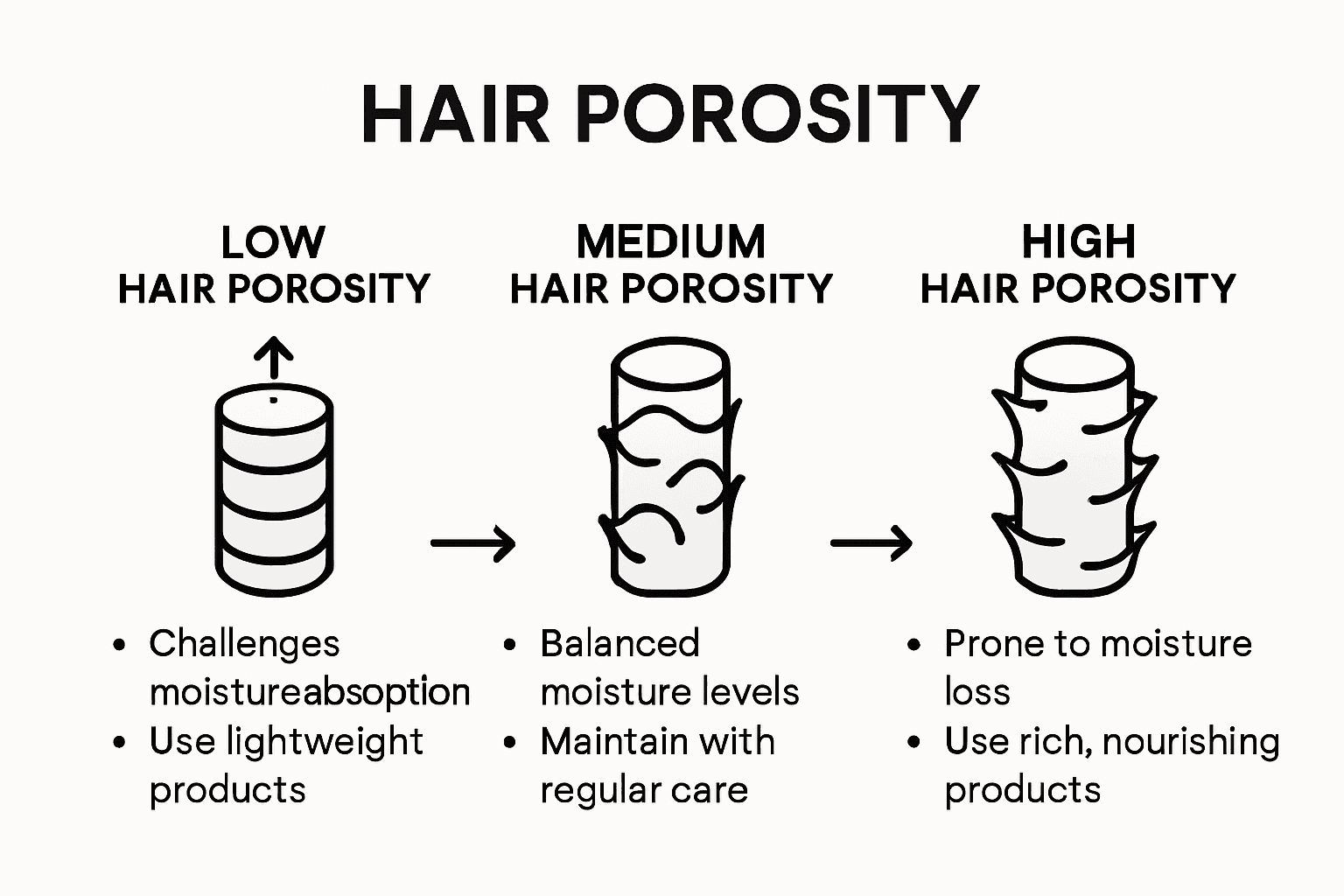
In low porosity hair, the cuticle layer remains tightly sealed, creating a significant barrier to moisture absorption. Think of it like a sealed raincoat that prevents water from penetrating. Scientific research indicates that low porosity hair requires more intense heat and specialised products to allow moisture to enter the hair shaft. These hair strands typically appear smooth and resist water during initial washing, taking longer to become fully saturated.
Medium porosity hair represents the ideal balance in moisture management. The cuticle layer is slightly more relaxed, allowing water and nutrients to penetrate and be retained more effectively. This hair type tends to hold styles well, responds positively to chemical treatments, and maintains a healthy appearance with relatively minimal intervention. Styling and conditioning treatments are typically most successful with medium porosity hair.
High porosity hair presents the most complex moisture challenge. The cuticle layer contains significant gaps and openings, enabling rapid moisture absorption but equally rapid moisture loss. This hair type often appears dry, frizzy, and prone to damage. The open cuticle structure means that hair quickly absorbs water but struggles to retain it, leading to potential breakage and fragility.
Key characteristics of hair porosity types include:
-
Low Porosity:
- Resistant to moisture absorption
- Requires heat for product penetration
- Prone to product buildup
-
Medium Porosity:
- Balanced moisture retention
- Responds well to treatments
- Maintains healthy appearance
-
High Porosity:
- Rapid moisture absorption
- Quick moisture loss
- Easily damaged
Pro Hair Care Tip: Perform a simple strand test by dropping water onto a clean hair strand and observing how quickly it is absorbed to determine your specific porosity level.
Here’s a comparative summary of the three hair porosity types:
| Porosity Type | Cuticle Structure | Common Challenges | Suitable Products |
|---|---|---|---|
| Low Porosity | Tightly sealed, smooth | Product buildup, dry ends | Lightweight, liquid-based |
| Medium Porosity | Slightly open, balanced | Occasional dryness | Versatile, balanced formulas |
| High Porosity | Open, gaps present | Frizz, brittleness | Heavy, protein-rich, oils |
How Porosity Affects Moisture Absorption
Understanding moisture absorption is crucial for maintaining healthy, vibrant hair. The intricate relationship between hair porosity and moisture is a delicate dance of cuticle structure, environmental factors, and individual hair characteristics that dramatically impacts hair health and appearance.
For low porosity hair, moisture absorption becomes a complex challenge. Scientific research reveals that the tightly compacted cuticle layer acts like an impenetrable fortress, repelling water and hair products. Imagine trying to saturate a tarpaulin with water - the liquid simply beads and slides off. Similarly, low porosity hair requires strategic approaches such as using heat, steam, or specific lightweight products to encourage moisture penetration.
Medium porosity hair represents the goldilocks zone of moisture absorption. The cuticle layer is sufficiently relaxed to allow water and nutrients to enter and remain within the hair shaft, creating an optimal environment for hydration. This hair type effectively balances absorption and retention, making it the most manageable and responsive to standard hair care treatments.
High porosity hair presents the most dramatic moisture absorption scenario. The cuticle layer resembles a damaged fence with multiple gaps and openings, enabling rapid water absorption but equally swift moisture loss. This structural vulnerability means that while high porosity hair quickly drinks in moisture, it struggles to maintain hydration, often resulting in dry, brittle, and fragile hair strands.
Key moisture absorption characteristics by porosity level:
-
Low Porosity:
- Extremely slow moisture absorption
- Requires heat or specialised techniques
- Products tend to sit on hair surface
-
Medium Porosity:
- Balanced moisture intake
- Consistent hydration
- Optimal product absorption
-
High Porosity:
- Rapid moisture absorption
- Quick moisture evaporation
- Prone to dryness and damage
Pro Hair Care Tip: Use the water drop test to determine your hair’s porosity - place a clean hair strand in water and observe how quickly it absorbs to understand your hair’s unique moisture dynamics.
Testing Hair Porosity At Home
Understanding hair porosity begins with simple diagnostic techniques that anyone can perform at home. Determining your hair’s moisture absorption characteristics doesn’t require expensive equipment or professional intervention, just a few household items and careful observation.
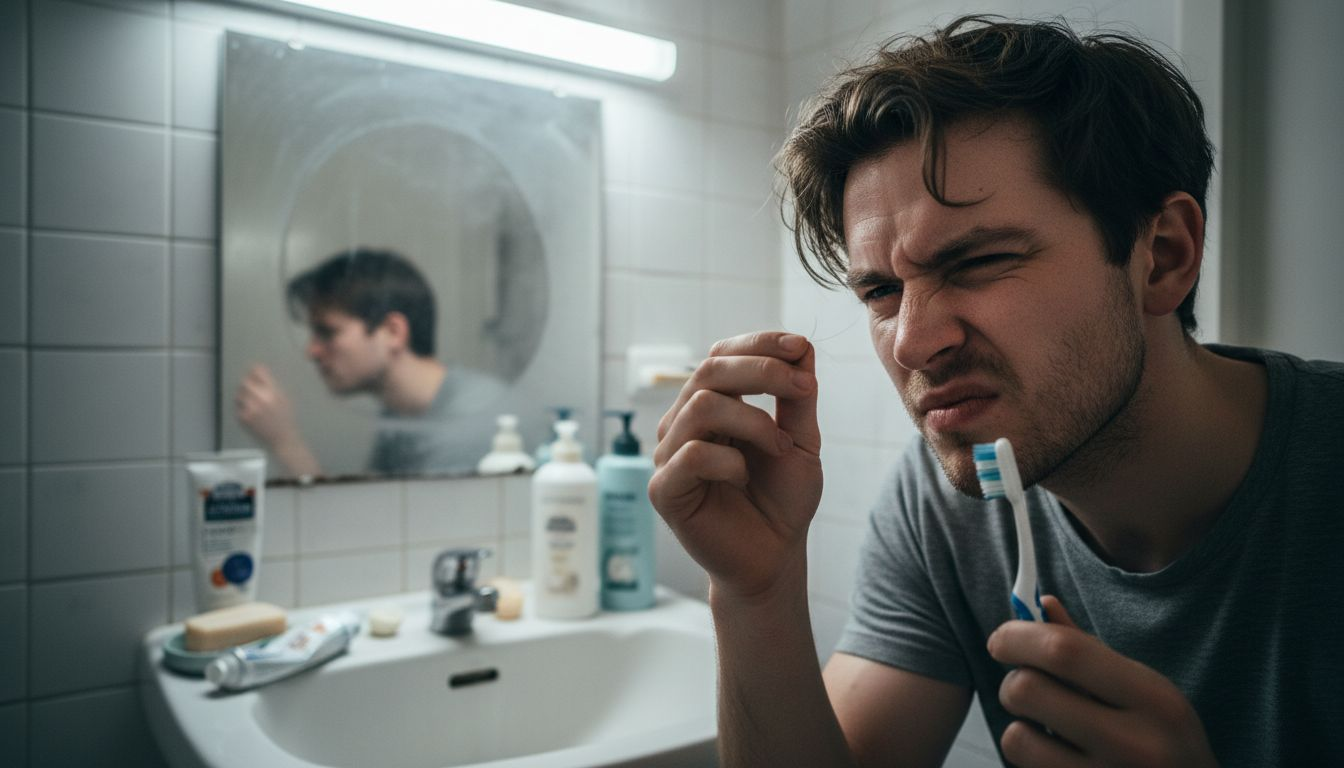
The most straightforward method involves the water droplet test, which provides immediate insights into your hair’s unique structural properties. Scientific research demonstrates that this technique offers a reliable initial assessment of hair porosity. To conduct the test, start by ensuring your hair strand is clean and completely dry. Select a single strand from your hairbrush or freshly washed hair, and gently place it into a clear glass of room temperature water.
The water’s behaviour with your hair strand reveals critical information about its porosity level. Low porosity hair will float on the water’s surface, indicating tightly sealed cuticles that resist moisture penetration. Medium porosity hair will slowly sink, suspended midway through the glass, suggesting a balanced moisture absorption capacity. High porosity hair will rapidly sink to the bottom, signalling multiple cuticle openings that allow swift water absorption.
Additional at-home testing methods provide complementary insights into your hair’s moisture dynamics:
-
Strand Texture Test:
- Gently stretch a wet hair strand
- Low porosity: Limited elasticity, quickly returns to original shape
- High porosity: Stretches extensively, breaks easily
-
Product Absorption Test:
- Apply a small amount of water-based product
- Low porosity: Product sits on hair surface
- High porosity: Product absorbs rapidly
-
Hair Appearance Indicators:
- Low porosity: Appears shiny, resists moisture
- High porosity: Looks dry, frizzy, prone to tangling
Pro Hair Care Tip: Repeat the water droplet test multiple times with different strands to ensure consistent results, as individual hair strands can vary slightly in porosity.
To help you assess your hair’s porosity at home, here’s a quick comparison of common DIY tests:
| Test Method | What You Observe | Porosity Level Indicated |
|---|---|---|
| Water Droplet Test | Strand floats or sinks | Float: Low, Slow sink: Medium, Fast sink: High |
| Product Absorption | Product sits or absorbs quickly | Sits: Low, Quick absorption: High |
| Strand Texture | Resilience when stretched | Snaps back: Low, Breaks: High |
Care Tips For Each Porosity Type
Navigating hair porosity care requires understanding the unique needs of each hair type. Each porosity level demands a tailored approach to maintain optimal hair health, moisture balance, and overall appearance.
For low porosity hair, moisture penetration becomes the primary challenge. Scientific research highlights that these hair types require strategic hydration techniques. Lightweight, liquid-based products work best, as heavy creams tend to sit on the hair surface. Heat application during conditioning can help open the tightly sealed cuticles, allowing moisture to penetrate more effectively. Consider using a steamer or applying a warm towel during deep conditioning treatments to enhance product absorption.
Medium porosity hair represents the most versatile hair type, responding well to balanced moisture and protein treatments. This hair type maintains moisture more efficiently and can tolerate a wider range of hair care products. Regular conditioning, occasional protein treatments, and a mix of lightweight and medium-weight products help maintain its natural balance. The key is avoiding over-manipulation and maintaining a consistent, gentle hair care routine that preserves the hair’s natural integrity.
High porosity hair requires the most intensive moisture management strategy. The damaged cuticle structure means rapid moisture absorption and equally quick moisture loss. Deep conditioning treatments with heavy, protein-rich moisturisers become crucial. Layering products - starting with water-based treatments and sealing with heavier oils or butters - helps lock in hydration. Minimising heat styling, chemical treatments, and environmental stressors is paramount to prevent further cuticle damage.
Detailed care strategies for each porosity type:
-
Low Porosity Hair Care:
- Use heat during conditioning
- Choose lightweight, liquid products
- Avoid heavy, protein-rich treatments
- Focus on gentle penetration techniques
-
Medium Porosity Hair Care:
- Balanced protein and moisture treatments
- Regular conditioning
- Versatile product selection
- Minimal manipulation
-
High Porosity Hair Care:
- Deep conditioning treatments
- Layer water-based and oil-based products
- Protein treatments to repair cuticle
- Minimize heat and chemical exposure
Pro Hair Care Tip: Create a personalised hair care arsenal by mixing and matching products specifically designed for your hair’s unique porosity level, adjusting your routine seasonally as environmental conditions change.
Discover Premium Solutions Tailored for Your Hair Porosity Needs
Understanding your hair’s porosity is the first step to transforming your hair care routine. Whether you struggle with moisture absorption from low porosity or rapid moisture loss from high porosity, it is vital to use products designed to work in harmony with your unique hair structure. Key challenges like product buildup, dryness, and damage can be addressed by choosing scientifically backed, natural treatments that nourish your hair deeply while respecting its specific porosity level.

Explore our curated selection of luxurious, cruelty-free hair care solutions at LUXEVASTORE.com. Our premium range includes lightweight argan oils for low porosity hair, balanced biotin formulas for medium porosity, and rich protein treatments crafted to repair and seal high porosity strands. Don’t wait to revitalise your hair with clean, effective products trusted by women who prioritise natural beauty and wellness. Start your personalised hair journey now by visiting our homepage and embrace the radiant, healthy hair you deserve.
Frequently Asked Questions
What is hair porosity?
Hair porosity refers to the hair’s ability to absorb and retain moisture, determined by the structure of the cuticle layer that surrounds each hair strand.
How does hair porosity affect moisture absorption?
Hair porosity affects moisture absorption by determining how easily water and hair products can penetrate the hair shaft, influencing overall hair health and appearance.
What are the different types of hair porosity?
There are three types of hair porosity: low, medium, and high. Low porosity hair resists moisture absorption, medium porosity hair has a balanced moisture intake, and high porosity hair absorbs moisture quickly but loses it just as fast.
How can I test my hair porosity at home?
You can test your hair porosity at home using the water droplet test. Place a clean hair strand in water and observe: if it floats, you have low porosity; if it sinks slowly, you have medium porosity; and if it sinks quickly, you have high porosity.
Recommended
- Hair Loss vs Shedding: Spot the Signs & Strengthen Your Hair Today – LUXEVA
- Sulphate-Free Shampoo: Benefits, Risks, and Best Choices Explained – LUXEVA
- Combat Postpartum Hair Loss: Natural Tips & Treatments That Work – LUXEVA
- Reverse Alopecia: Insights from Science and Real-Life Success Stories – LUXEVA