


Struggling with dry, damaged, frizzy hair that refuses to cooperate? You’re not alone. Chemical treatments, heat styling, and environmental stressors wreak havoc on hair structure, leaving strands porous, weak, and prone to frizz. This guide reveals scientifically backed, cruelty-free methods to restore your hair’s health using natural oils and targeted care routines. Discover how premium, plant-powered ingredients can transform your hair from brittle and unmanageable to smooth, strong, and beautifully hydrated.
Table of Contents
- Understanding Damaged, Dry, And Frizzy Hair
- Preparing To Restore Your Hair: What You Need
- Step-By-Step Guide To Repairing Damaged Dry Frizzy Hair
- Common Mistakes And How To Avoid Them When Caring For Damaged Hair
- Discover Premium Cruelty-Free Hair Care Products At LUXEVA
- FAQ
Key takeaways
| Point | Details |
|---|---|
| Damaged hair shows higher porosity | Increased water permeability causes frizz, moisture loss, and weakened structure |
| Natural oils restore internal health | Miracle fruit seed and fenugreek seed oils improve hydration, reduce breakage, and strengthen strands |
| Sealing cuticles reduces frizz | Effective care replenishes proteins and lipids to smooth hair and prevent humidity-induced swelling |
| Avoid common care mistakes | Overwashing, excessive oil use, and heat damage compromise restoration efforts |
| Consistent routine delivers results | Regular deep conditioning and gentle cleansing maintain long-term hair health and smoothness |
Understanding damaged, dry, and frizzy hair
Hair damage begins at the structural level. Chemical treatments like bleaching and colouring, combined with heat styling and environmental exposure, compromise the hair cuticle. Damaged hair shows increased porosity, leading to water permeability and surface irregularities that manifest as frizz and dullness. When the protective outer layer becomes compromised, moisture escapes rapidly whilst environmental humidity penetrates unevenly.
Bleached and chemically treated hair suffers particularly severe consequences. These processes strip away essential proteins and lipids, creating voids within the hair shaft. The result? Strands become mechanically weaker, more susceptible to breakage, and unable to withstand thermal stress from styling tools. Porous hair absorbs water quickly but releases it just as fast, creating a cycle of dehydration.
Frizz occurs when damaged cuticles fail to lie flat. Humidity causes porous hair to swell unevenly, with individual strands expanding at different rates. This misalignment creates the fuzzy halo effect that defines frizzy hair. Understanding these mechanisms helps you select targeted treatments that address root causes rather than temporarily masking symptoms.
Factors contributing to hair damage:
- Chemical treatments stripping natural proteins and oils
- Heat styling tools causing thermal degradation
- Environmental stressors including UV radiation and pollution
- Mechanical damage from brushing and tight hairstyles
- Harsh cleansing products removing protective sebum
| Damage Type | Primary Effect | Visible Symptom |
|---|---|---|
| Chemical | Protein and lipid depletion | Brittleness, breakage |
| Thermal | Cuticle lifting | Roughness, dullness |
| Mechanical | Structural fractures | Split ends, tangles |
| Environmental | Oxidative stress | Discolouration, dryness |
Recognising your specific damage pattern enables personalised care. Explore cruelty-free hair remedies that target your unique concerns with ethical, effective formulations.
Preparing to restore your hair: what you need
Successful restoration begins with honest assessment. Examine your hair’s current condition by checking porosity, elasticity, and texture. High porosity hair absorbs water quickly but struggles to retain moisture. Low elasticity indicates protein loss, whilst rough texture suggests cuticle damage. Understanding these characteristics guides product selection.
Choosing premium, cruelty-free ingredients makes a measurable difference. Fenugreek seed oil provides conditioning, frizz reduction, hydration, and follicle support through its rich nutrient profile. Natural oils penetrate damaged hair more effectively than synthetic alternatives, delivering essential fatty acids and vitamins directly to compromised areas. Quality matters when rebuilding hair structure from within.

Gather your restoration toolkit thoughtfully. You’ll need a sulphate-free shampoo that cleanses without stripping, a protein-rich conditioner to rebuild structure, penetrating oils for deep treatment, and a heat protectant for unavoidable styling. Avoid products containing harsh sulphates, parabens, or silicones that coat hair without repairing underlying damage.
Essential preparation steps:
- Assess hair porosity using the water float test
- Identify protein versus moisture needs through elasticity testing
- Select oils matched to your hair texture and damage level
- Establish realistic expectations for gradual improvement
- Commit to consistent care over several weeks
Pro Tip: Test new oils on a small section before full application. Some hair types respond better to lighter oils like argan, whilst others benefit from richer formulations containing miracle fruit seed oil.
Understanding your hair’s unique requirements prevents wasted effort on unsuitable products. Research natural oils for hair to identify ingredients that align with your specific damage profile and texture.
Step-by-step guide to repairing damaged dry frizzy hair
Restoration follows a systematic approach that rebuilds hair from the inside out. Begin with gentle cleansing that removes buildup without compromising natural oils. Massage sulphate-free shampoo into your scalp only, allowing runoff to cleanse lengths. This technique prevents additional dryness whilst maintaining scalp health.
- Cleanse hair with lukewarm water and sulphate-free shampoo once or twice weekly
- Apply penetrating oil treatment to damp hair, focusing on mid-lengths and ends
- Wrap hair in a warm towel for 30 minutes to enhance oil absorption
- Rinse thoroughly and follow with protein-rich conditioner
- Apply leave-in treatment to seal cuticles and provide ongoing protection
- Air dry whenever possible, using heat styling only when necessary with protectant
- Maintain routine consistently for minimum eight weeks to see structural improvement
Miracle Fruit Seed Oil improved Healthy Hair Index by over 200%, reducing breakage effectively through internal repair mechanisms. This remarkable ingredient penetrates the hair shaft to restore depleted proteins and lipids, addressing damage at its source rather than simply coating the surface.
Deep conditioning masks amplify restoration efforts. Apply weekly treatments that combine hydrating and protein-building ingredients. Leave masks on for 20 to 30 minutes under a processing cap to maximise penetration. Consistent deep conditioning gradually rebuilds hair’s structural integrity.
Pro Tip: Alternate between protein and moisture treatments based on your hair’s response. Over-proteinating can cause brittleness, whilst excessive moisture leads to limpness. Balance is key.
| Treatment Type | Frequency | Primary Benefit | Best For |
|---|---|---|---|
| Penetrating oil | 1-2 times weekly | Internal repair | Severely damaged hair |
| Deep conditioner | Weekly | Moisture retention | Dry, porous hair |
| Protein treatment | Fortnightly | Strength building | Chemically treated hair |
| Leave-in conditioner | Daily | Cuticle sealing | All damage types |
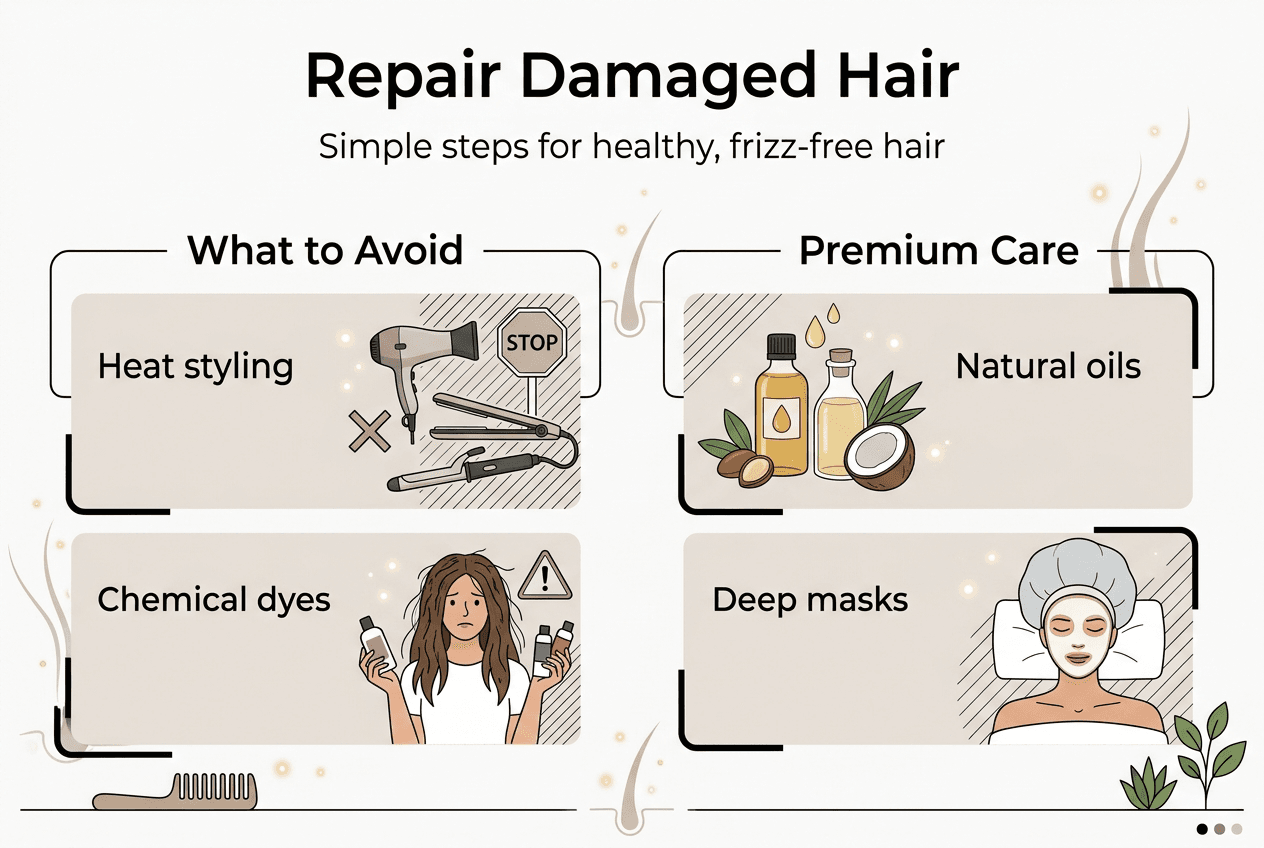
Limiting heat and chemical exposure protects your restoration progress. When heat styling is unavoidable, use the lowest effective temperature with quality heat protectant. Consider protective styles that minimise manipulation and environmental exposure. Follow the damaged hair repair guide for additional techniques that reduce hair breakage naturally through gentle handling and strategic care.
Common mistakes and how to avoid them when caring for damaged hair
Even well-intentioned care can backfire without proper knowledge. Overwashing ranks amongst the most damaging habits. Frequent shampooing strips natural sebum that protects hair and maintains moisture balance. Limit washing to two or three times weekly, using dry shampoo between cleansing sessions to manage oil without water exposure.
Excessive oil application creates its own problems. Whilst natural oils provide remarkable benefits, overuse leads to greasy buildup that attracts dirt and weighs hair down. Overuse of oils can cause buildup; textured or bleached hair needs careful oil selection and use. Apply oils sparingly to ends and mid-lengths, avoiding the scalp unless specifically treating dryness there.
Oil selection matters enormously. Coconut oil penetrates textured and bleached hair effectively, whilst heavier oils may sit on the surface of fine hair without absorbing. Match oil molecular weight to your hair’s porosity and texture. Lighter oils like argan suit low porosity hair, whilst richer formulations benefit high porosity strands.
Critical mistakes to avoid:
- Washing hair daily, stripping protective natural oils
- Applying excessive product amounts causing buildup
- Using high heat without adequate protection
- Continuing chemical treatments during restoration period
- Expecting overnight results instead of gradual improvement
- Relying on silicones that mask rather than repair damage
“The key to hair restoration lies not in quick fixes but in consistent, scientifically informed care that addresses structural damage at the molecular level.”
Synthetic silicones deserve particular caution. These ingredients create temporary smoothness by coating hair, but they don’t repair internal damage. Over time, silicone buildup prevents moisture and nutrients from penetrating, actually worsening underlying problems. Choose products with natural alternatives that provide slip without barrier formation.
Heat damage accumulates insidiously. Each styling session causes incremental harm that compounds over time. Embrace air drying and heatless styling methods whenever possible. When heat is necessary, never exceed 180°C and always use thermal protection. Learn to reduce frizz naturally through techniques that don’t rely on damaging tools.
Discover premium cruelty-free hair care products at LUXEVA
Transforming damaged hair requires more than knowledge; it demands access to premium, scientifically formulated products that deliver genuine results. LUXEVA curates exceptional premium cruelty-free hair products specifically designed for women seeking effective, ethical solutions to dry, damaged, frizzy hair challenges.

Our collection features natural oils like miracle fruit seed and fenugreek seed incorporated into luxurious formulations that restore strength, hydration, and smoothness. Each product combines plant-powered ingredients with scientific rigour, ensuring you receive treatments that repair hair structure rather than temporarily masking damage. From targeted shampoos free from harsh sulphates to protein-rich conditioners and penetrating oil treatments, LUXEVA offers complete care systems.
Shop with confidence knowing every product supports ethical practices whilst delivering measurable improvements in hair health. Explore the best products for damaged hair and discover formulations that align with your values and your hair’s unique needs.
FAQ
What causes hair to become dry and frizzy?
Damage from chemicals, heat styling, and environmental factors increases hair porosity, causing dryness and frizz. Higher water permeability and cuticle irregularities lead to hair that easily loses moisture and swells unevenly when exposed to humidity. This structural compromise manifests as the fuzzy, unmanageable texture characteristic of damaged hair.
Which natural oils are best for repairing damaged hair?
Miracle fruit seed oil and fenugreek seed oil prove highly effective for hydration, protein restoration, and frizz reduction through their rich nutrient profiles. Coconut oil penetrates textured or bleached hair better than mineral oils, delivering fatty acids deep into the shaft for internal repair. Select oils based on your specific hair porosity and texture for optimal results.
How often should I use deep conditioning treatments?
Use deep conditioning treatments once or twice weekly depending on damage severity and hair type. Severely damaged hair benefits from twice-weekly applications, whilst moderately compromised hair responds well to weekly sessions. Consistent use seals cuticles and replenishes moisture for sustained frizz control and progressive strength improvement.
Can I use hair oils daily without causing buildup?
Daily use works well if applying small amounts and focusing on ends rather than scalp areas. Avoid overuse to prevent oil accumulation that attracts dirt and creates greasiness. Select lightweight oils suited to your hair texture, and adjust frequency based on how your hair responds over several weeks of consistent application.