


Finding truly luxurious yet gentle haircare for greasy hair can seem never-ending, especially when you care about both efficacy and the ingredients you use. Greasy roots and limp lengths often result from routines that overlook how frequently you wash, what you apply, and your own hair’s texture. With a focus on natural, cruelty-free solutions that nurture the scalp and hair, this guide shows how a tailored approach can transform oily hair into something fresh, healthy, and beautifully balanced.
Table of Contents
- Step 1: Assess Your Current Haircare Routine
- Step 2: Select Natural, Sulphate-Free Cleansing Products
- Step 3: Apply Cleansing Techniques For Optimal Results
- Step 4: Incorporate Scalp Balancing Rituals
- Step 5: Monitor Hair Freshness And Adjust As Needed
Quick Summary
| Key Insight | Explanation |
|---|---|
| 1. Assess your haircare routine | Identify your washing frequency, products, and scalp condition to understand oiliness. |
| 2. Choose sulphate-free products | Opt for natural, gentle cleansing agents to effectively manage scalp health and sebum production. |
| 3. Use proper cleansing techniques | Focus on scalp application, gentle massaging, and lukewarm rinses for optimal results. |
| 4. Maintain regular scalp rituals | Incorporate exfoliation, lightweight moisturising, and stress management for a balanced scalp. |
| 5. Monitor hair health closely | Track texture and responses to treatments, adjusting your routine based on your observations. |
Step 1: Assess your current haircare routine
Understanding your current haircare approach is crucial to tackling greasy hair effectively. Greasy hair develops when your scalp overproduces sebum, which can be influenced by multiple factors including your washing routine, product selection, and individual hair characteristics.
To begin assessing your routine, examine these key elements:
- Washing frequency: How often are you currently washing your hair?
- Product types: What shampoos and conditioners are you using?
- Scalp condition: Is your scalp feeling consistently oily or dry?
The scalp hygiene guidelines recommend evaluating your personal washing habits to prevent excess oil buildup. Pay close attention to how your hair responds after washing - does it become greasy quickly, or does it maintain a balanced appearance?
Recognising your unique hair profile is the first step towards developing an effective haircare strategy.
Your assessment should focus on understanding whether your current routine is contributing to excess oil production. This might involve tracking how quickly your hair becomes greasy after washing and identifying any patterns in product usage or environmental factors.
Below is a summary of how different hair types influence scalp oiliness and suggested care adjustments:
| Hair Type | Oiliness Tendency | Care Adjustment |
|---|---|---|
| Fine or Thin | Quickly becomes oily | Use gentle, lightweight formulas |
| Medium | Moderate oil buildup | Balance cleansing, avoid over-washing |
| Thick or Coarse | Slower oil spread | Focus on scalp cleansing |
| Curly | Roots oily, ends dry | Target scalp, add leave-in conditioner |
Professional advice: Keep a detailed hair journal for two weeks, noting washing frequency, products used, and how your hair responds to help pinpoint the root causes of greasiness.
Step 2: Select natural, sulphate-free cleansing products
Selecting the right hair products is crucial in managing greasy hair and maintaining scalp health. Your goal is to choose cleansing products that effectively remove excess oil without stripping away natural moisture.
When searching for sulphate-free products, focus on these key characteristics:
- Natural ingredients: Look for plant-based cleansing agents
- Gentle formulations: Avoid harsh chemical compounds
- Balanced pH: Select products that support scalp microbiome
Research demonstrates that natural ingredients reduce scalp irritation and help maintain your hair’s intrinsic health. Sulphate-free shampoos are particularly beneficial for individuals with sensitive scalps or those prone to excess oil production.
Chemical-free hair products protect both your scalp and overall well-being.
Key considerations when selecting your cleansing products include understanding your specific hair type, checking ingredient lists thoroughly, and prioritising products that support natural oil balance. Pay attention to ingredients like tea tree oil, green tea extract, and chamomile, which can help regulate sebum production.
Professional advice: Perform a patch test with new products and introduce them gradually to understand how your scalp responds to different natural formulations.
Step 3: Apply cleansing techniques for optimal results
Effective cleansing is more than just washing your hair - it’s about using precise techniques that balance oil removal and scalp health. Your goal is to remove excess sebum without stripping away essential natural moisture.
Implement these strategic cleansing techniques:
- Scalp focus: Apply shampoo directly to the scalp
- Gentle massage: Use fingertips with light circular motions
- Lukewarm rinse: Avoid hot water that stimulates oil production
- Targeted application: Concentrate cleaning on roots, not hair ends
Healthy hair cleansing methods emphasise targeting the scalp rather than aggressively scrubbing your entire hair length. This approach helps regulate sebum production while maintaining your hair’s natural protective barrier.
Precision in your cleansing technique matters more than frequency.
Pay attention to your hair’s unique characteristics. Some individuals with fine or thin hair might require gentler techniques, while those with thicker hair might need more thorough cleansing. The key is understanding your specific hair type and adapting your approach accordingly.
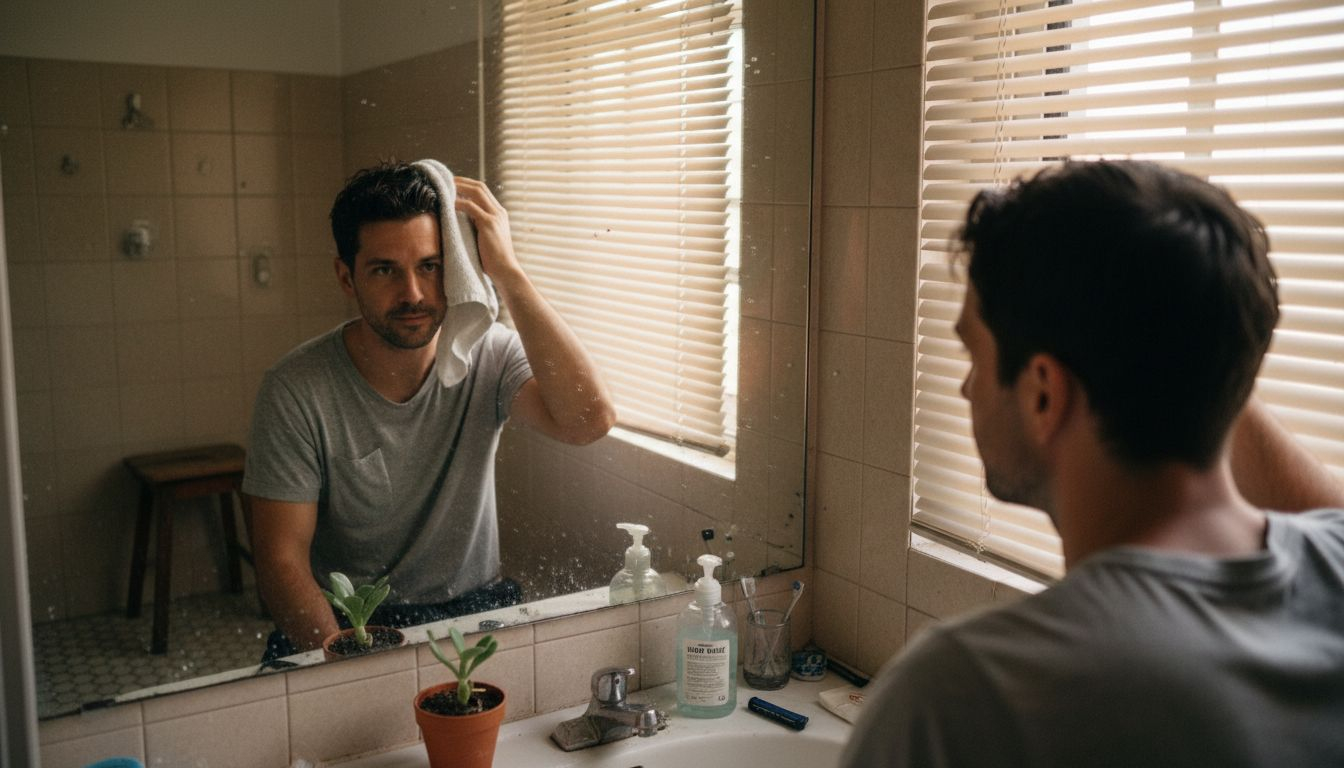
Professional advice: Experiment with different water temperatures and massage techniques to discover the most effective cleansing method for your individual hair type.
Step 4: Incorporate scalp balancing rituals
Balancing your scalp’s natural ecosystem requires a thoughtful approach that goes beyond simple washing. Your goal is to create an environment that regulates oil production while maintaining overall scalp health and preventing excessive greasiness.
Key scalp balancing rituals include:
- Regular exfoliation: Remove product build-up and dead skin cells
- Targeted moisturising: Use lightweight, non-greasy hydrating products
- Stress management: Practice relaxation techniques that impact hormonal balance
- Strategic nutrition: Support scalp health through diet and supplements
Scalp hygiene practices emphasise the importance of personalised care tailored to individual scalp conditions. Understanding your unique scalp characteristics allows you to develop a more effective hair management strategy.
Your scalp’s health reflects your overall wellness and requires consistent, mindful attention.
Consider incorporating natural ingredients like tea tree oil, witch hazel, and green tea, which can help regulate sebum production without stripping your scalp’s natural protective barrier. Experiment with different techniques to find the perfect balance for your specific hair type.
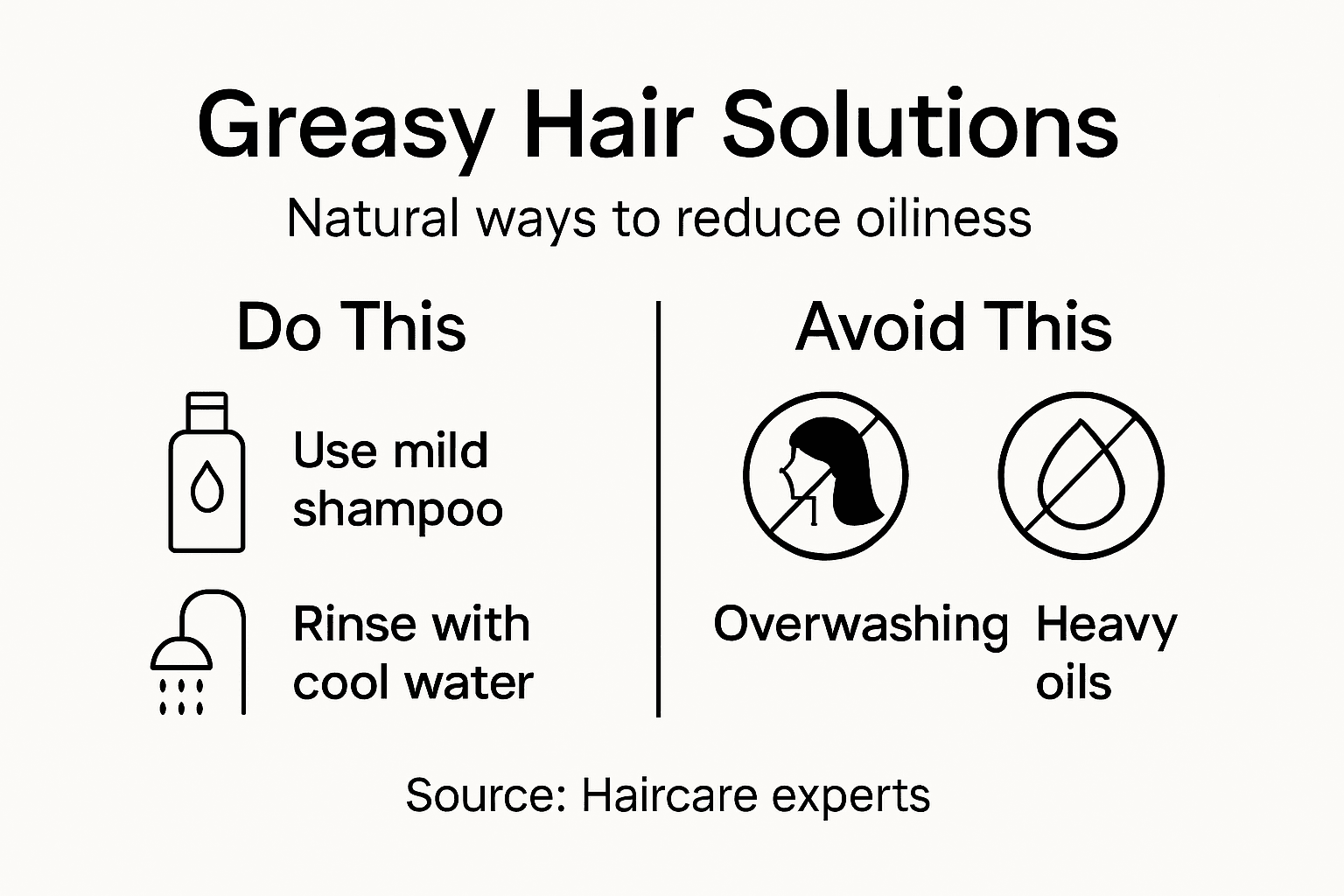
Professional advice: Track your scalp’s response to different rituals and adjust your approach gradually, allowing at least two weeks between significant changes to observe true effects.
The following table highlights common mistakes in scalp care versus recommended improvements:
| Common Mistake | Impact on Hair | Recommended Improvement |
|---|---|---|
| Overwashing with harsh shampoos | Increased oil production | Switch to sulphate-free products |
| Ignoring scalp exfoliation | Build-up, dullness | Exfoliate weekly with gentle scrub |
| Using heavy conditioners on scalp | Greasiness, flat look | Apply only to mid-length and ends |
| Sudden product changes | Scalp imbalance | Gradually introduce new products |
Step 5: Monitor hair freshness and adjust as needed
Effective hair care is a dynamic process that requires ongoing observation and adaptation. Your primary objective is to develop an intuitive understanding of how your hair responds to different treatments and environmental conditions.
Key monitoring strategies include:
- Daily texture assessment: Check hair and scalp condition
- Product response tracking: Note how hair reacts to specific treatments
- Environmental impact evaluation: Consider seasonal and lifestyle changes
- Symptom recognition: Watch for signs of excess oil or dryness
Hair washing guidelines recommend personalising your routine based on individual hair characteristics and lifestyle factors. Understanding your hair’s unique signals helps prevent overcompensation and maintains a healthy balance.
Consistent observation is the cornerstone of effective hair management.
Pay attention to subtle changes in your hair’s texture, shine, and overall appearance. Factors like stress, diet, hormonal shifts, and seasonal variations can significantly impact your scalp’s oil production, necessitating flexible and responsive hair care strategies.
Professional advice: Create a simple hair journal to document your observations, helping you identify patterns and make informed adjustments to your hair care routine.
Discover Natural Solutions for Greasy Hair at LUXEVASTORE
Struggling with oily scalp and greasy hair that washes away your confidence? The journey to balanced, fresh hair starts with understanding your unique scalp needs and choosing gentle, natural products tailored to your hair type. At LUXEVASTORE, we specialise in premium, sulphate-free haircare that targets excess sebum without stripping essential moisture. Our plant-powered formulations harness ingredients like argan oil, rosemary mint, and biotin to restore healthy scalp balance and revive your natural shine.

Take control of your haircare routine with scientifically-backed, cruelty-free remedies designed for lasting freshness and vitality. Explore our curated collection of rituals and sets that make it easy to implement scalp-balancing cleansing techniques and nurturing rituals discussed in the article. Don’t wait to transform your haircare experience shop now at LUXEVASTORE and embrace a lifestyle where beauty, wellness, and natural hair revival go hand in hand. Learn more about our commitment to clean ingredients and effective results at LUXEVASTORE homepage and start your journey to greaseless, vibrant hair today.
Frequently Asked Questions
How can I assess my current haircare routine to reduce greasy hair?
To assess your haircare routine, evaluate how often you wash your hair, the products you use, and the condition of your scalp. Start by tracking your washing frequency and noting how quickly your hair becomes greasy after washing, ideally over a two-week period.
What kind of cleansing products should I choose to get rid of greasy hair naturally?
Select natural, sulphate-free cleansing products that contain plant-based ingredients. Focus on gentle formulations that maintain a balanced pH and avoid harsh chemicals; for example, look for shampoos with tea tree oil or chamomile to help regulate oil production.
How should I properly cleanse my hair to reduce greasiness?
To cleanse your hair effectively, focus on your scalp by applying shampoo directly there and using gentle circular motions with your fingertips. Rinse with lukewarm water, avoiding hot temperatures that can stimulate oil production.
What are some rituals I can incorporate for scalp balancing?
Incorporate regular exfoliation to remove product build-up, and use lightweight, non-greasy moisturisers targeted at your scalp. Additionally, manage stress and maintain a nutritious diet to support scalp health and help regulate oil production.
How can I monitor my hair’s condition to adjust my routine effectively?
Monitor your hair by checking its texture and overall condition daily, and note how it reacts to different treatments. Pay attention to signs of greasiness or dryness to make informed adjustments to your haircare routine as needed.
What common mistakes should I avoid in my haircare routine?
Avoid overwashing your hair with harsh shampoos, which can increase oil production, and refrain from ignoring scalp exfoliation, which can lead to build-up. Instead, switch to sulphate-free products and exfoliate your scalp weekly to maintain hair freshness.
Recommended
- Greasy Hair – How It Impacts Natural Beauty – LUXEVA
- How to Apply Hair Oil Naturally for Healthier Hair – LUXEVA
- Natural Oils for Hair – How They Transform Strength and Shine – LUXEVA
- Hair Growth Oil: Achieving Effective Natural Results – LUXEVA
- Achieve Sleek Hair with Natural Hair Straightening Treatment | MyHair
- How to Get New Hair Growth Naturally: Unlock Proven Strategies