


Finding premium, cruelty-free hair oils that suit every stage of your routine can feel intimidating for many British women focused on healthy living. With over 60 percent of health-conscious women seeking natural alternatives to commercial hair care, knowing how to prepare your hair and workspace makes all the difference. This guide offers you clear, step-by-step practices to create a nourishing hair oil ritual tailored to your unique needs, helping you achieve radiant results while embracing ethical British beauty standards.
Table of Contents
- Step 1: Prepare Your Hair And Workspace
- Step 2: Select The Right Hair Oil For Your Needs
- Step 3: Warm And Distribute The Oil Evenly
- Step 4: Massage The Oil Into Your Scalp And Lengths
- Step 5: Check Absorption And Finish With Gentle Styling
Quick Summary
| Key Point | Explanation |
|---|---|
| 1. Prepare workspace and hair | Create a clean and comfortable environment to enhance treatment effectiveness and minimise mess during application. |
| 2. Choose suitable hair oil | Select an oil based on your hair type and specific needs to achieve nourishment, moisture, or growth benefits. |
| 3. Warm oil before application | Gently heating hair oil improves penetration and absorption, maximising the treatment’s effectiveness on hair and scalp. |
| 4. Massage for scalp health | A thorough massage stimulates blood flow and nourishes follicles, promoting healthy hair growth while treating hair strands. |
| 5. Assess absorption and style gently | Check how well your hair absorbs the oil, then style softly to retain moisture and protect your hair’s natural integrity. |
Step 1: Prepare your hair and workspace
Preparing your hair and workspace is crucial for achieving the best natural hair oil treatment results. This initial step ensures optimal absorption and minimises potential mess during application. Start by gathering all necessary supplies and creating a comfortable environment that supports a relaxed, focused hair care ritual.
Begin by assessing your hair condition and selecting a clean, well-lit area with a stable surface. Proper hair preparation involves understanding your unique scalp and hair needs before applying any treatment. Gently detangle your hair using a wide-toothed comb to remove any knots and minimise breakage. Ensure your workspace includes clean towels, hair clips, a mirror, and your chosen hair oil within easy reach.
Cleanse your scalp thoroughly before oil application to remove product buildup, excess sebum, and environmental residue. This step allows the hair oil to penetrate more effectively and deliver maximum nutrients. If possible, work in a warm room to help your hair cuticles open and absorb the oil more readily.
Top Tip: Place an old towel on your shoulders and wear an old shirt to protect your clothing from potential oil stains during the application process.
Step 2: Select the right hair oil for your needs
Selecting the perfect hair oil is a personalised journey that requires understanding your unique hair characteristics and specific wellness goals. The right oil can transform your hair’s health, providing nourishment, strength, and a radiant shine that reflects your hair’s natural potential.
Understanding the nutrient profiles of different hair oils enables more targeted hair care for addressing individual concerns. Hair density, scalp condition, and desired outcomes play crucial roles in oil selection. Fine hair benefits from lightweight oils like argan or grapeseed, which provide moisture without weighing down strands. Conversely, those with coarse or thick hair might require richer oils such as coconut or castor that offer deep hydration and protective properties.
Consider your primary hair objectives when choosing an oil. Dry and damaged hair thrives with moisturising oils like avocado or macadamia. If you struggle with scalp issues, jojoba or tea tree oils can help balance sebum production. For those seeking hair growth and strength, rosemary and castor oils provide essential nutrients that support follicle health and stimulate growth.
Top Tip: Always perform a small patch test with a new oil to ensure you do not have any allergic reactions and to check how your hair responds to the specific oil.
Here’s a concise guide to hair oil types and their targeted benefits:
| Hair Oil Type | Best For | Key Benefits | Typical Texture |
|---|---|---|---|
| Argan | Fine, brittle hair | Adds shine, fights frizz | Light, non-greasy |
| Coconut | Thick, dry hair | Deep hydration, repairs | Rich, viscous |
| Jojoba | Sensitive scalps | Balances sebum, soothes | Light, easily absorbed |
| Castor | Growth stimulation | Promotes thickness, nourishes | Thick, sticky |
| Avocado | Damaged hair | Moisturises, strengthens | Creamy, medium |
| Grapeseed | Oily or fine hair | Lightweight, controls oil | Very light |
Step 3: Warm and distribute the oil evenly
Warming and distributing hair oil correctly is a critical technique that maximises nutrient absorption and ensures comprehensive hair coverage. This step transforms your hair treatment from a basic application to a luxurious, deeply nourishing ritual that supports hair health from root to tip.
Warming hair oil gently enhances its ability to penetrate hair and scalp through a careful process that preserves its nutritional integrity. Begin by selecting a small heat-safe bowl and creating a double boiler method using a larger pot with warm water. Place your chosen hair oil in the smaller bowl, allowing it to warm gradually to body temperature. Avoid direct heat sources like microwaves, which can destroy delicate oil compounds and reduce effectiveness.

Once warmed, start distributing the oil systematically through your hair. Use your fingertips to massage the oil into your scalp using gentle circular motions, working from the roots outward towards the hair ends. Divide your hair into sections to ensure even coverage, paying extra attention to dry or damaged areas. The warmth helps the oil penetrate more deeply, opening hair cuticles and allowing maximum nutrient absorption.
Top Tip: Wrap your hair in a warm towel after oil application to help enhance absorption and prevent oil transfer to your clothing.
Step 4: Massage the oil into your scalp and lengths
Massaging hair oil transforms a simple application into a deeply therapeutic ritual that nourishes both your scalp and hair strands. This technique goes beyond surface treatment, creating a holistic approach to hair wellness that stimulates growth and repairs damage.
Gently massaging oil into your scalp using circular motions stimulates blood flow and nourishes hair follicles, promoting healthier hair growth and scalp conditions. Begin at your hairline and work systematically across your entire scalp, using the pads of your fingertips to apply gentle yet firm pressure. Move in slow, deliberate circles to ensure even distribution and maximum absorption of the nutrient rich oil.
Extend the massage from your scalp through the entire length of your hair, paying special attention to dry or damaged ends. Use downward stroking motions to help the oil distribute evenly, smoothing the hair cuticle and reducing frizz. Allow the oil to remain for at least 30 minutes to maximise absorption, or ideally leave overnight for deep conditioning. The consistent massage technique helps lock in moisture, strengthen hair roots, and improve overall hair texture.
Top Tip: Use a silk or satin pillowcase when leaving oil treatments overnight to prevent excess oil transfer and protect your hair fibres.
Step 5: Check absorption and finish with gentle styling
The final stage of your hair oil ritual involves carefully assessing how your hair has absorbed the treatment and completing the process with thoughtful, protective styling. This crucial step ensures that your hair receives maximum nutritional benefits while maintaining its natural integrity.
Hair oil absorption varies depending on your hair’s unique porosity and the specific oil used, typically ranging from 30 minutes to several hours. Gently run your fingers through your hair to check absorption levels. If the strands feel evenly coated without excessive greasiness, you have achieved optimal coverage. For those with fine or thin hair, blot excess oil gently with a soft towel to prevent weighing down your locks.
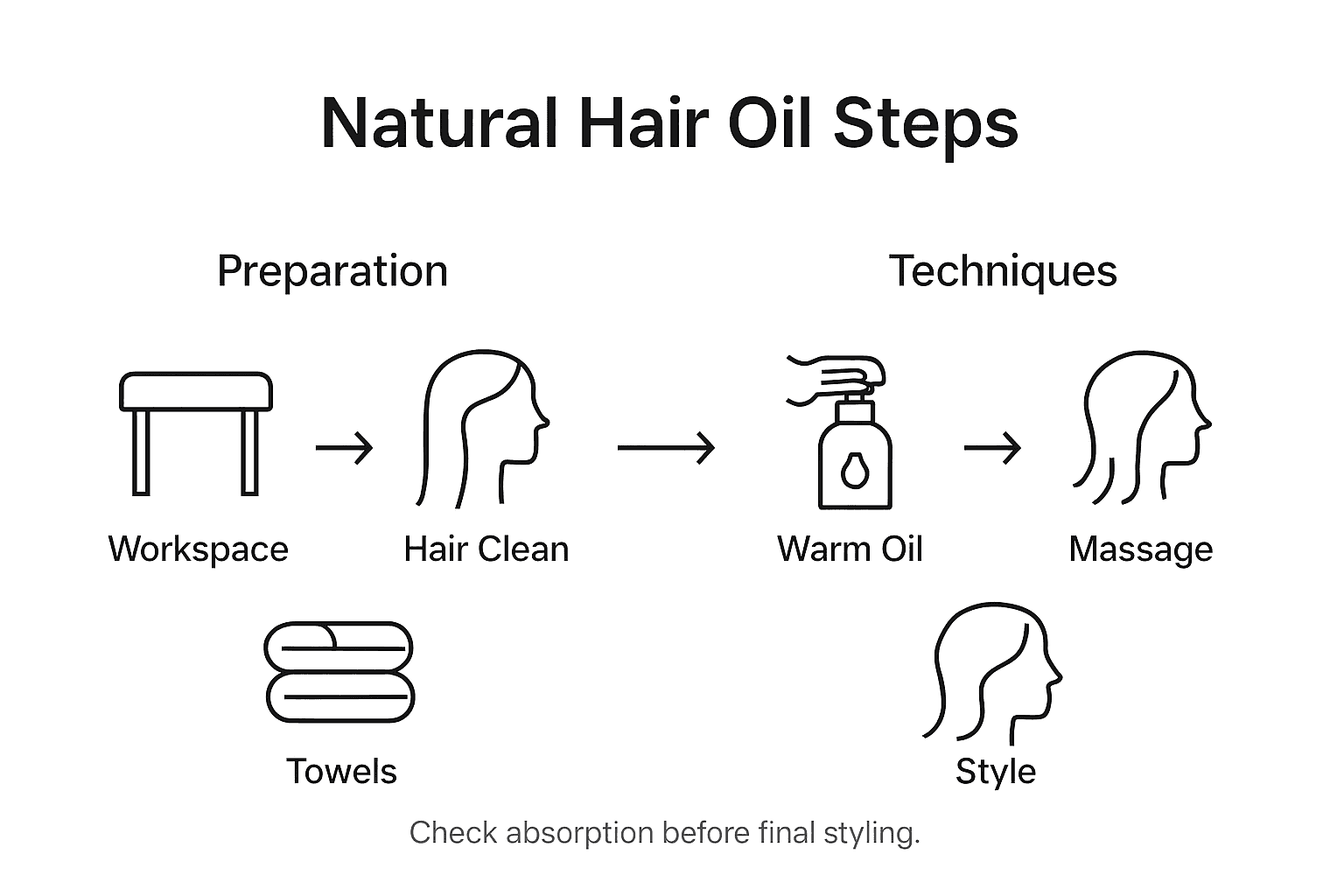
Complete your hair care ritual by using a wide-tooth comb to distribute the oil evenly and detangle without causing stress to your newly nourished strands. Avoid using heat styling tools immediately after oil treatment, as this can seal in product and potentially damage your hair. Instead, allow your hair to air dry naturally or gather it in a loose, soft braid to maintain the oil’s conditioning benefits. If you need to go out, consider a soft updo or gentle low ponytail that keeps your hair protected and looking polished.
Top Tip: Wrap your hair in a silk scarf or use a silk pillowcase to reduce friction and help the oil continue absorbing while protecting your hair fibres.
Refer to this summary of oil application and absorption factors:
| Factor | Impact on Absorption | Recommended Adjustment |
|---|---|---|
| Hair Porosity | High porosity: fast absorption | Use richer oils |
| Oil Temperature | Warm oil: deeper penetration | Heat gently before use |
| Application Time | Longer duration: better results | Leave on overnight |
| Scalp Cleanliness | Clean scalp: optimal uptake | Shampoo before oiling |
Elevate Your Natural Hair Oil Ritual with LUXEVA
Applying hair oil naturally is the first step towards healthier, nourished hair but finding the perfect products that truly complement your unique hair needs can be challenging. Whether you are seeking lightweight oils for fine hair or rich, deeply hydrating treatments for thick, dry strands, understanding your hair type and goals is essential. This article highlights the importance of warming and massaging hair oil for optimal absorption and scalp health, which you can enhance by choosing scientifically formulated, clean ingredient solutions.
Discover the power of curated Scalp & Haircare Sets – LUXEVA crafted to support your natural hair oil routine with thoughtfully blended ingredients such as argan, rosemary mint and biotin.

Experience the luxury of cruelty-free, plant-powered haircare designed to elevate your self-care ritual. Visit LUXEVASTORE.com now to explore our premium range and benefit from exclusive offers. Begin transforming your hair health today with products that align with your wellness journey and deliver lasting shine and strength. For a complete haircare upgrade, browse our Sulphate Free Shampoo Sets: Elevate Your Haircare Ritual with LUXEVA and ensure your hair oil treatments have the perfect foundation.
Take the next step towards radiant, resilient hair – your natural hair deserves it.
Frequently Asked Questions
How do I prepare my hair for a natural oil treatment?
To prepare your hair for a natural oil treatment, start by gently detangling your hair with a wide-toothed comb to remove knots. Then, cleanse your scalp thoroughly to eliminate product buildup and ensure maximum oil absorption.
What is the best way to choose the right hair oil for my hair type?
Select the right hair oil by considering your hair density and specific needs. For example, fine hair may benefit from lightweight oils like argan, while coarse hair might require richer oils like coconut for deep hydration.
How should I apply the warmed hair oil?
Apply warmed hair oil by using your fingertips to massage it into your scalp and through the lengths of your hair. Divide your hair into sections to ensure even coverage, focusing on dry or damaged areas during application.
How long should I leave the hair oil on for optimal results?
For optimal results, leave the hair oil on for at least 30 minutes or overnight for deeper conditioning. This allows your hair to absorb the nutrients effectively, leading to healthier hair over time.
What should I do after applying the hair oil?
After applying the hair oil, check how well it has absorbed by running your fingers through your hair. If it feels oily, gently blot excess oil with a soft towel, then use a wide-tooth comb to distribute the oil evenly and detangle your hair without causing stress.
Can I use hair oil treatments if I have a sensitive scalp?
Yes, you can use hair oil treatments if you have a sensitive scalp, but choose oils like jojoba or tea tree that can help soothe and balance sebum production. Always perform a patch test before full application to ensure there are no allergic reactions.