


Damaged hair affects millions of women across the UK, impacting confidence and self-image daily. Whether caused by heat styling, chemical treatments, or environmental stress, repairing your hair naturally with premium, cruelty-free ingredients is both achievable and sustainable. This guide teaches you exactly how to restore strength, shine, and vitality to your damaged hair using clean, scientifically backed methods that prioritise your hair’s health and the planet’s wellbeing. You’ll discover the essential natural ingredients, practical application techniques, and maintenance habits needed to transform brittle, dull strands into luxurious, resilient hair.
Table of Contents
- Understanding Hair Damage And Natural Repair Essentials
- Preparing Your Hair For Natural Repair Treatments
- Step-By-Step Guide To Repairing Damaged Hair Naturally At Home
- Maintaining Results And Preventing Future Damage Naturally
- Explore Premium Natural Hair Care At Luxeva
- FAQ
Key takeaways
| Point | Details |
|---|---|
| Gentle protein treatments | Damaged hair requires keratin and natural proteins to rebuild structure and strength without harsh chemicals. |
| Regular hydration | Consistent moisturising with argan oil and shea butter restores shine and prevents further breakage. |
| Clean ingredients matter | Avoiding sulphates and parabens protects sensitive scalps whilst supporting cruelty-free, ethical beauty choices. |
| Consistency delivers results | Weekly masks, daily oils, and protective habits create lasting repair over time. |
Understanding hair damage and natural repair essentials
Damaged hair manifests through split ends, brittleness, loss of natural shine, and rough texture that tangles easily. These visible signs indicate your hair’s protective cuticle layer has been compromised, leaving the inner cortex vulnerable to further deterioration. Understanding what causes this damage helps you choose the right natural repair approach.
Heat styling tools, chemical treatments like bleaching or perming, and environmental stressors such as UV exposure and pollution are the primary culprits behind hair damage. Over-washing strips natural oils, whilst harsh brushing breaks weakened strands. Each of these factors depletes essential proteins and moisture that keep hair healthy and strong.
Natural ingredients offer powerful repair without the risks associated with synthetic chemicals. Using natural ingredients strengthens hair without harsh chemicals by working with your hair’s biology rather than against it. Keratin proteins fill gaps in damaged cuticles, argan oil penetrates deeply to restore moisture, shea butter seals and protects, whilst aloe vera soothes inflammation and promotes healing.
Clean, cruelty-free formulations matter profoundly for both hair health and ethical consumption. Sulphates create harsh lather that strips protective oils, leaving hair dry and prone to breakage. Parabens can irritate sensitive scalps and accumulate over time. Choosing products free from these ingredients ensures gentle, effective care that nourishes without causing additional harm.
The benefits of natural repair extend beyond immediate results:
- Strengthens hair structure from within using bioavailable proteins
- Restores natural moisture balance without synthetic silicones
- Protects against future damage through nourishing oils
- Supports scalp health with gentle, non-irritating ingredients
- Aligns with ethical beauty values through cruelty-free sourcing
Natural repair isn’t just about fixing damage; it’s about creating the foundation for long-term hair health through ingredients your body recognises and can utilise effectively.
Selecting premium natural products requires reading ingredient lists carefully and understanding what each component contributes to repair. Look for formulations that combine proteins for structure, oils for moisture, and botanicals for soothing and protection.
Preparing your hair for natural repair treatments
Successful hair repair begins with proper preparation and honest assessment of your hair’s current condition. Preparation and correct product selection increase repair success by ensuring treatments penetrate effectively and address your specific damage patterns. Taking time to prepare sets the foundation for visible, lasting results.
Evaluating your damage severity helps determine treatment intensity and frequency. Run your fingers through dry hair, noting areas of excessive breakage, dryness, or texture changes. Severe damage shows constant breakage with very brittle, straw-like texture, whilst mild damage presents as slight dryness with occasional split ends. Mid-level damage displays noticeable roughness, increased tangling, and loss of natural shine.
Selecting appropriate natural products requires matching treatments to your damage level and hair type:
- Assess your hair porosity by placing a strand in water; high porosity hair sinks quickly and needs protein-rich treatments, whilst low porosity floats and requires lighter, penetrating oils.
- Choose deep conditioning masks with keratin and shea butter for severe damage, focusing on intensive weekly treatments.
- Select leave-in conditioners with argan oil and aloe vera for daily protection and moisture maintenance.
- Gather gentle cleansers free from sulphates that clean without stripping natural oils.
- Prepare protective oils like jojoba or coconut for sealing moisture after treatments.
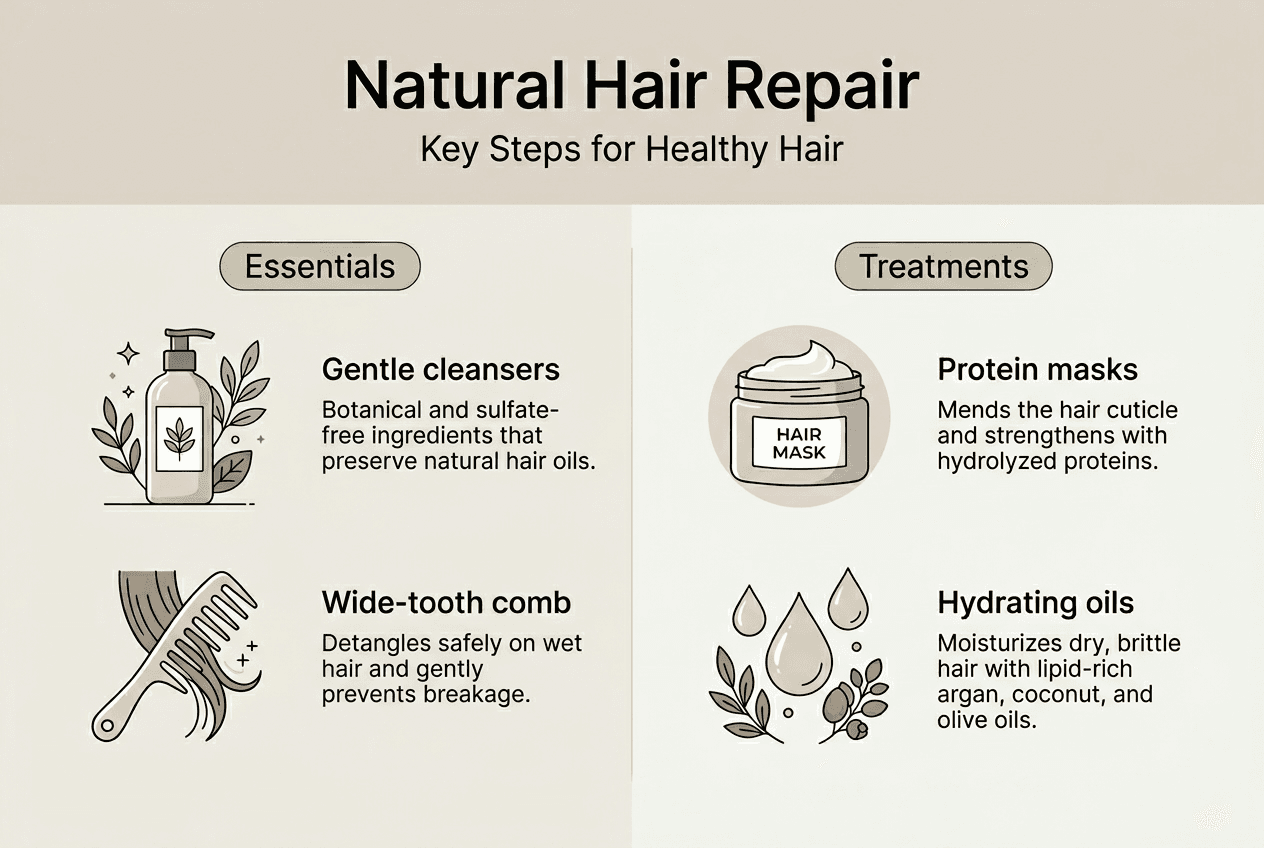
Before applying any treatment, gently detangle your hair using a wide-tooth comb, starting from the ends and working upward to minimise breakage. Wash with lukewarm water and a gentle cleanser to remove buildup that might block treatment absorption. Pat hair gently with a microfibre towel rather than rubbing vigorously, which causes friction damage to already weakened strands.
Protecting your hair from further damage during the repair process is essential. Limit heat styling to special occasions only, and always apply a heat protectant when you must use hot tools. Avoid chemical treatments completely whilst repairing, as they compound existing damage. Shield hair from environmental stressors by wearing protective styles or hats in harsh weather.

Pro Tip: Use lukewarm or cool water for the final rinse after treatments to seal the hair cuticle and lock in moisture, preventing the swelling and damage that hot water causes to already compromised strands.
Gathering quality natural products before starting your repair journey ensures consistency. Create a dedicated hair care station with all your treatments, oils, and tools organised and accessible. This preparation removes barriers to maintaining your routine and increases the likelihood of achieving your repair goals.
Step-by-step guide to repairing damaged hair naturally at home
Repairing damaged hair naturally requires a systematic approach that combines cleansing, deep conditioning, protein treatments, and protective styling. Consistent natural treatments improve hair strength, moisture, and shine when applied correctly and maintained over time. Follow this comprehensive process to transform your damaged hair at home.
The complete natural repair process involves these detailed steps:
- Cleanse gently using a sulphate-free shampoo, focusing on the scalp whilst allowing cleanser to rinse through lengths without harsh scrubbing.
- Apply a protein-rich deep conditioning mask from mid-lengths to ends, avoiding roots to prevent weighing hair down.
- Cover hair with a shower cap and apply gentle heat using a warm towel for 20-30 minutes to enhance penetration.
- Rinse thoroughly with cool water to seal the cuticle and lock in treatment benefits.
- Apply a leave-in conditioner whilst hair is still damp to provide ongoing protection and moisture.
- Massage natural oils like argan or jojoba into ends and any particularly dry areas, using minimal product to avoid greasiness.
- Detangle gently using a wide-tooth comb, starting from ends and working upward with patience.
- Air dry whenever possible, or use the coolest setting on your dryer with a diffuser attachment if time requires faster drying.
Frequency guidelines ensure optimal repair without overwhelming your hair. Deep conditioning masks work best weekly for severely damaged hair, fortnightly for moderate damage. Daily light oiling of ends maintains moisture between intensive treatments. Wash hair every 2-3 days maximum to preserve natural oils and allow treatments to work fully.
Different natural treatments address specific damage types:
- Protein treatments rebuild structure in hair with excessive breakage and elasticity loss
- Moisturising treatments restore hydration to dry, brittle hair lacking shine
- Combination treatments balance protein and moisture for comprehensive repair
- Oil treatments seal and protect whilst adding flexibility and gloss
| Treatment Type | Primary Benefit | Application Frequency | Best For |
|---|---|---|---|
| Keratin mask | Rebuilds structure | Weekly | Chemically damaged, porous hair |
| Argan oil treatment | Deep moisture | 2-3 times weekly | Dry, brittle strands |
| Shea butter mask | Sealing and protection | Weekly | Severely damaged ends |
| Aloe vera treatment | Soothing and healing | As needed | Irritated scalp, mild damage |
| Protein conditioner | Strengthening | Every other wash | Fine, breaking hair |
Balancing protein and moisture is crucial for successful repair. Too much protein makes hair stiff and prone to snapping, whilst excessive moisture without protein leaves hair limp and weak. Alternate protein-rich treatments with moisturising ones, or use combination products that provide both elements in balanced ratios.
Pro Tip: Avoid washing your hair too frequently, as each wash strips natural oils that protect and nourish damaged strands; extending time between washes allows your scalp’s natural sebum to travel down the hair shaft, providing free, built-in conditioning.
Monitoring your hair’s response helps adjust your routine for optimal results. If hair feels stiff after treatment, reduce protein and increase moisture. If hair feels mushy or overly soft, incorporate more protein. This responsive approach ensures your routine evolves with your hair’s changing needs as repair progresses.
Maintaining results and preventing future damage naturally
Once you’ve repaired your damaged hair, maintaining those results requires consistent care and protective habits. Sustainable habits protect hair post-repair and maintain natural shine by preventing the damage patterns that caused problems initially. Long-term hair health depends on integrating protective practices into your daily routine.
Regular trims every 8-12 weeks prevent split ends from travelling up the hair shaft and undoing your repair work. Even healthy hair develops splits naturally over time, so maintenance trims preserve the integrity you’ve worked hard to rebuild. Ask your stylist for minimal trims that remove only damaged ends whilst preserving length.
Limiting heat styling protects your repaired hair from reverting to damaged states. Air drying whenever possible eliminates heat damage entirely. When styling is necessary, always apply a heat protectant containing natural ingredients, use the lowest effective temperature, and limit hot tool contact time. Consider heatless styling methods like braiding damp hair for waves or using foam rollers for volume.
Sun exposure damages hair similarly to skin, breaking down proteins and fading colour. Protect your hair with natural UV-filtering sprays containing ingredients like red raspberry seed oil or carrot seed oil. Wear hats or scarves when spending extended time outdoors, especially during peak sun hours. Rinse hair after swimming to remove chlorine or salt that strips moisture and causes brittleness.
Hydration supports hair health from within. Drinking adequate water ensures your body can deliver moisture to hair follicles and maintain scalp health. Leave-in conditioners provide external hydration, creating a protective barrier that prevents moisture loss throughout the day. Reapply light oils to ends as needed, especially in dry or cold weather.
Nutritional support strengthens hair at its source. A balanced diet rich in biotin, vitamin E, omega-3 fatty acids, and iron provides the building blocks for healthy hair growth. Consider foods like salmon, eggs, nuts, leafy greens, and sweet potatoes that naturally support hair vitality. Supplements can fill gaps, but whole foods offer superior bioavailability.
Avoiding harsh chemical treatments preserves your repair work indefinitely. Permanent colour, bleach, perms, and relaxers all compromise hair structure. If colour is important to you, explore gentler alternatives like henna or semi-permanent vegetable dyes that coat rather than penetrate. Space any chemical services far apart and follow with intensive conditioning treatments.
Switching completely to clean hair care products eliminates ongoing damage from synthetic ingredients. Read labels carefully, avoiding sulphates, parabens, silicones, and synthetic fragrances. Natural alternatives clean effectively whilst nourishing rather than stripping. This transition may require an adjustment period as your hair adapts, but the long-term benefits justify initial changes.
Daily and weekly habits that sustain repair results include:
- Sleeping on silk or satin pillowcases to reduce friction and breakage
- Protecting hair in loose braids or buns rather than tight styles that stress strands
- Using wide-tooth combs instead of brushes on wet hair
- Applying oil to ends each morning to maintain flexibility and shine
- Deep conditioning weekly even after damage is repaired
- Minimising manipulation and handling to prevent mechanical damage
- Rinsing with cool water to seal cuticles after every wash
- Protecting hair from harsh weather with appropriate coverings
Consistency matters more than intensity for long-term maintenance. Small protective actions performed daily compound into significant benefits over months and years. Building these habits into your routine makes them automatic, ensuring your repaired hair stays healthy and beautiful indefinitely.
Explore premium natural hair care at LUXEVA
Transforming damaged hair into healthy, luxurious strands becomes effortless when you have access to premium, scientifically formulated natural products. LUXEVA offers a curated collection of clean, cruelty-free hair care solutions specifically designed to repair and nourish damaged hair using the powerful natural ingredients discussed throughout this guide.

Every product in the LUXEVA range prioritises ingredient transparency and ethical sourcing, ensuring you never compromise your values whilst caring for your hair. Explore natural masks enriched with keratin and shea butter, penetrating oils featuring argan and jojoba, gentle conditioners with aloe vera, and protective styling products that shield without synthetic chemicals. Each formulation combines nature with science, delivering results you can see and feel.
Shopping with LUXEVA supports not only your hair health but also responsible beauty practices that respect animals and the environment. Discover the difference premium natural hair care makes in maintaining your repair results and preventing future damage. Your journey to consistently beautiful, healthy hair continues with products designed specifically for conscious consumers who refuse to settle for anything less than excellence.
FAQ
How can I tell if my hair damage is severe or mild?
Severe damage shows constant breakage, very dry and brittle texture resembling straw, and significant loss of elasticity where hair snaps easily when stretched. Mild damage presents as slight dryness, occasional split ends, and minor texture changes with some shine remaining. Test by gently pulling a strand; severely damaged hair breaks immediately, whilst mildly damaged hair stretches slightly before breaking.
What natural ingredients are best for repairing damaged hair?
Keratin proteins rebuild hair structure by filling gaps in damaged cuticles, whilst argan oil provides deep moisture that penetrates the hair shaft. Shea butter seals and protects with its rich fatty acid content, and aloe vera soothes inflammation whilst promoting healing. Choose products combining these ingredients and free from sulphates and parabens to avoid causing additional damage whilst repairing existing problems.
How often should I apply natural hair repair treatments?
Weekly deep conditioning masks provide intensive repair for most damaged hair types, whilst daily light oiling of ends maintains moisture between treatments. Wash hair every 2-3 days maximum to preserve natural oils and allow treatments to work fully. Severely damaged hair may benefit from twice-weekly masks initially, reducing to weekly as condition improves and hair regains strength and shine.