


Nearly one in three British adults reports concerns about hair breakage, making it a widespread issue that can impact confidence and daily routines. Detecting the first signs of fragile hair is key to stopping further damage and restoring healthy strands. Whether you have straight or tightly curled hair, you will find practical advice here for recognising breakage, picking effective products, and building habits that support stronger, more resilient hair.
Table of Contents
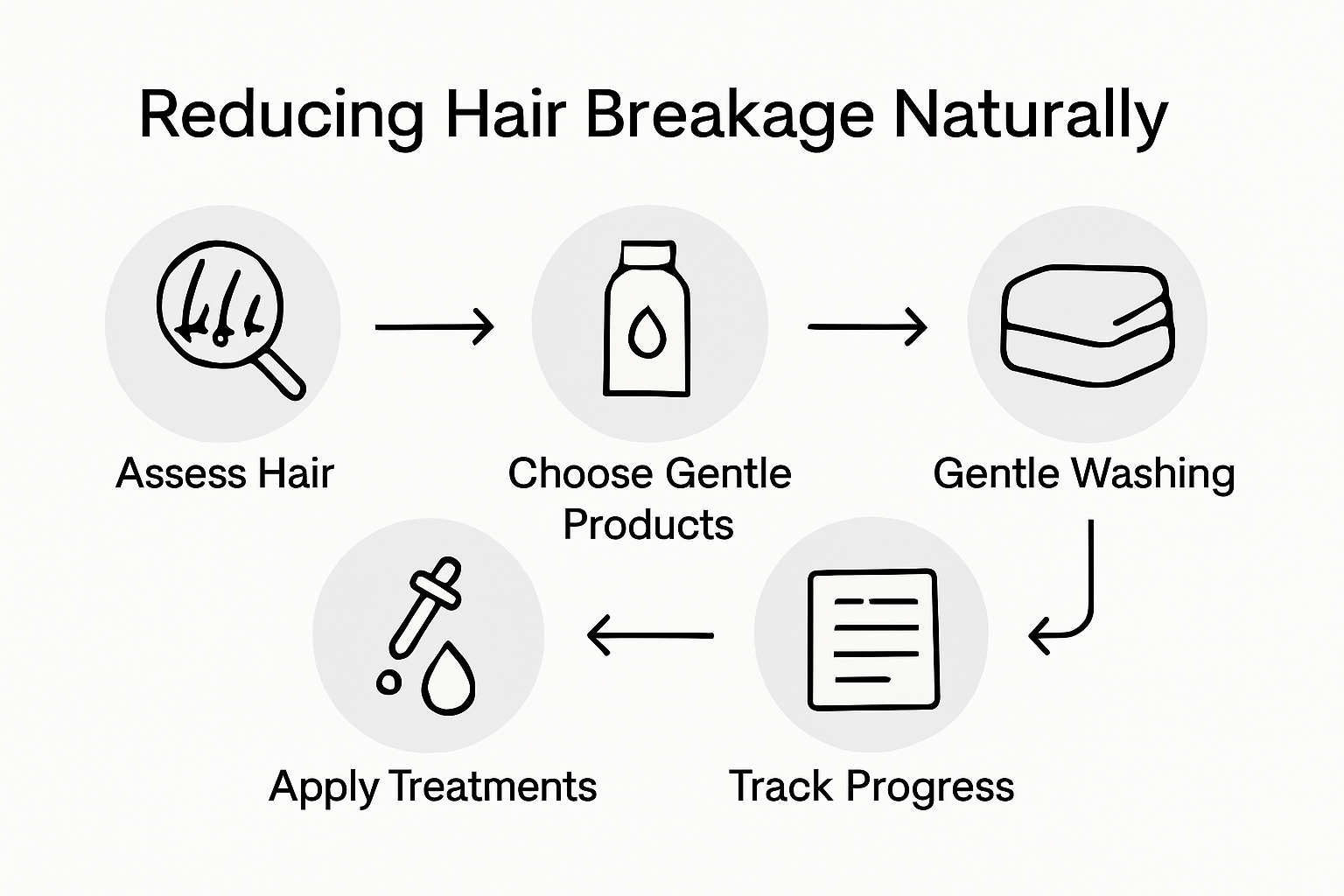
- 1: Assess Your Hair Condition And Identify Breakage Signs
- 2: Choose Clean, Nourishing Products For Gentle Care
- 3: Adopt Protective Washing And Drying Techniques
- 4: Apply Targeted Treatments To Strengthen Strands
- 5: Monitor Hair Progress And Adjust Your Routine
Quick Summary
| Key Point | Explanation |
|---|---|
| 1. Assess hair for damage signs | Look for split ends, excessive shedding, and areas of brittleness to identify hair fragility early. |
| 2. Use nourishing, mild hair products | Opt for sulfate-free products with hydrating ingredients to strengthen hair and prevent breakage. |
| 3. Implement gentle washing techniques | Massage shampoo into the scalp gently and avoid vigorous drying to reduce hair stress and damage. |
| 4. Apply targeted treatments regularly | Incorporate natural oils and protein-rich masks weekly to improve hair strength and elasticity. |
| 5. Monitor progress and adapt care routine | Keep a hair journal to track changes and be ready to adjust your routine based on your hair’s response. |
1: Assess your hair condition and identify breakage signs
Identifying hair breakage early is crucial for preventing further damage and restoring your hair’s health. By learning how to recognise the signs of hair fragility, you can take proactive steps towards healthier, stronger locks.
Begin your assessment by carefully examining your hair strands and scalp. Look for telltale indicators like split ends, excessive shedding, and uneven hair lengths. The University of Iowa Health Care recommends paying close attention to how your hair responds to washing and styling, as these can reveal underlying fragility issues. Gently run your fingers through your hair check for areas with increased tangling, brittleness, or unusual texture changes. When your hair seems prone to snapping or breaking during simple activities like brushing or tying back, these are clear signals of potential damage.
Professional hairstylists suggest conducting a simple strand test to assess your hair’s condition. Take a single strand and gently stretch it between your fingers. Healthy hair will have some elasticity and return to its original shape, whereas damaged hair will snap or break immediately. Additionally, look for visual clues such as frizzy ends, rough texture, and a lack of natural shine. By systematically evaluating these aspects, you can develop a targeted approach to hair repair and prevention.
2: Choose clean, nourishing products for gentle care
Selecting the right hair care products is essential for preventing breakage and maintaining your hair’s natural strength and vitality. Your product choices can significantly impact your hair’s health and resilience.
When shopping for hair care products, focus on mild sulfate-free formulations that protect your hair’s natural oils and prevent unnecessary damage. Look for ingredients that provide deep hydration and nourishment such as argan oil, keratin, biotin, and natural botanical extracts. These components help strengthen hair strands and reduce vulnerability to breakage. Avoid products containing harsh chemicals like sulfates, parabens, and alcohol that can strip away essential moisture and weaken hair structure.
Additionally, pay attention to your styling routine. The Ogle School recommends using heat protectants and limiting high temperature styling to minimise potential damage. When possible, opt for air drying and use styling tools on low or medium heat settings. Remember that gentle, consistent care is more effective than aggressive treatments that can cause long term hair stress and breakage.
3: Adopt protective washing and drying techniques
Mastering the right washing and drying techniques is crucial for minimising hair breakage and maintaining your hair’s overall health. By implementing gentle hair care practices, you can significantly reduce damage and preserve your hair’s natural strength.
The American Academy of Dermatology recommends a gentler approach to hair washing, focusing on careful scalp massage and minimal manipulation. Instead of roughly rubbing shampoo through your hair strands, concentrate on massaging the product into your scalp and allowing it to flow naturally down the length of your hair. This technique helps prevent unnecessary friction and potential breakage. When it comes to drying, avoid vigorous towel rubbing which can cause tangling and stress to your hair fibres. Instead, gently pat or squeeze out excess moisture and wrap your hair in a soft microfibre towel or cotton t-shirt to absorb water.

The University of Iowa Health Care suggests tailoring your washing frequency to your specific hair type, with most people benefiting from less frequent washing. For those with tightly curled or textured hair, once a week might be ideal. Always follow up with a nourishing conditioner to protect and manage your hair strands. Remember to trim your hair every two to four months to remove split ends and prevent further damage, ensuring your hair remains healthy and resilient.
4: Apply targeted treatments to strengthen strands
Restoring hair strength requires strategic treatments that nourish and protect your hair from within. Targeted interventions can dramatically improve hair resilience and reduce ongoing breakage.
Natural oils offer profound hair strengthening benefits with options like argan, castor, jojoba, and olive oil. These botanical elixirs penetrate deep into hair fibres, providing intense hydration and improving overall strand elasticity. Focus on applying these oils from mid length to ends, using gentle massaging motions to encourage absorption. For those seeking additional support, home remedies such as onion juice treatments can promote hair health by stimulating collagen production and strengthening follicles.
Consider creating a weekly treatment routine that rotates between different natural oils and protein rich masks. Fenugreek seed paste, for instance, can help fortify hair structure and prevent breakage. Apply treatments consistently but sparingly to avoid product buildup, always following with a gentle rinse and lightweight conditioning. Your hair will gradually become more resilient, with improved texture and reduced vulnerability to damage.
5: Monitor hair progress and adjust your routine
Tracking your hair’s transformation is crucial for developing an effective, personalised hair care strategy. Understanding how your hair responds to different treatments allows you to make informed adjustments and achieve optimal results.
The University of Iowa Health Care emphasises that hair care methods are deeply individual, recognising that what works for one person may not work for another. Start by keeping a detailed hair journal documenting product usage, treatment responses, and any noticeable changes in hair texture, strength, and overall appearance. Photograph your hair monthly from multiple angles to capture subtle improvements and track your progress objectively.
The American Academy of Dermatology recommends consulting a professional if your hair care efforts do not yield desired results, particularly if you notice persistent thinning or unusual hair loss. Be prepared to experiment with your routine, making incremental changes and allowing sufficient time to observe their impact. Remember that hair health is a journey of continuous learning and adaptation, requiring patience and attentive care.
Restore Your Hair’s Strength with Nature and Science
Struggling with hair breakage and longing for healthier, stronger hair is a challenge many face. This article highlights key steps like identifying breakage signs, choosing gentle sulfate-free products, and adopting nourishing treatments to rebuild hair vitality. The delicate balance of protecting your strands with clean ingredients while boosting strength is essential for lasting hair health.
Discover how our Sulphate Free Shampoo Sets: Elevate Your Haircare Ritual with LUXEVA are specially formulated to support fragile hair needing extra care without harsh chemicals. Coupled with our effective Scalp & Haircare Sets – LUXEVA designed for deep nourishment, you can create a personalised routine to reduce breakage naturally.

Start your journey to resilient, beautiful hair today by exploring these curated collections at LUXEVASTORE.com. Take control now and transform your hair care experience with scientifically backed, cruelty-free solutions that celebrate natural beauty and wellness.
Frequently Asked Questions
How can I assess my hair condition and identify breakage signs?
To assess your hair condition, examine your strands for signs like split ends, excessive shedding, and increased tangling. Conduct a simple strand test by gently stretching a hair strand; if it snaps easily, it indicates damage. Regularly check your hair’s response to washing and styling to stay aware of any fragility issues.
What should I look for in hair care products to reduce breakage?
Choose mild, sulfate-free formulations that hydrate and nourish your hair, such as those containing argan oil or keratin. Avoid products with harsh chemicals like sulfates and alcohol, as these can strip moisture and weaken your hair structure. Prioritise products that support the health of your hair over those that merely provide temporary fixes.
What washing techniques can I adopt to minimise hair breakage?
Use a gentle approach when washing your hair by focussing on your scalp and allowing shampoo to flow naturally down your locks instead of rubbing it through forcefully. Avoid vigorous towel drying; instead, pat or squeeze excess moisture and wrap your hair in a soft microfibre towel. This minimises friction and reduces the risk of breakage.
How can I use natural oils to strengthen my hair?
Incorporate natural oils like argan, castor, or jojoba oil into your hair care routine for their moisturizing and strengthening properties. Apply the oil from mid-length to the ends of your hair, using gentle massaging motions to enhance absorption. Aim to do this once a week to observe enhanced resilience and reduced breakage.
How can I track my hair’s progress during my care routine?
Keep a hair journal to document product usage, treatment responses, and changes in your hair’s texture or strength. Taking monthly photographs from different angles can help you visualise improvements over time. Adjust your hair care routine based on your observations to ensure continued progress in reducing breakage.
What should I do if my hair care efforts don’t yield results?
Consult a professional hairstylist if you notice persistent thinning or unusual hair loss despite your care routine. Be open to experimenting with different techniques and products, allowing time to assess what works best for your hair. Understanding that everyone’s hair differs can facilitate a personalised approach to improve your hair’s health.
Recommended
- Hair Loss vs Shedding: Spot the Signs & Strengthen Your Hair Today – LUXEVA
- Combat Postpartum Hair Loss: Natural Tips & Treatments That Work – LUXEVA
- Argan Oil Hair Repair & Shine Ritual – LUXEVA
- LUXEVA 3-in-1 Biotin & Rosemary Hair Growth Shampoo & Conditioner Set
- Complete Guide to Reasons for Hair Breakage - Joel C Ma Hair Studio