


More than 60 percent of british women say they struggle to find natural solutions for damaged hair. This challenge affects daily confidence, especially as modern styling habits and environmental stressors take a toll on hair health. Whether your goal is to restore strength, shine, or manageability, understanding each stage of proper care sets the foundation for meaningful transformation using proven methods and expert insight.
Table of Contents
- Stage 1: Assess Your Hair’s Condition and Needs
- Stage 2: Select Premium Clean Hair Products for Repair
- Stage 3: Apply Nourishing Treatments and Rituals Consistently
- Stage 4: Incorporate Gentle Styling and Protection Techniques
- Stage 5: Monitor Results and Adjust Your Routine
Quick Summary
| Key Message | Explanation |
|---|---|
| 1. Assess your hair’s condition | Conduct a visual and tactile examination to identify key damage indicators like dryness, brittleness, and split ends. |
| 2. Choose premium clean products | Select hair repair products free from harsh chemicals and enriched with natural ingredients like argan oil and keratin for effective treatment. |
| 3. Establish a consistent treatment ritual | Follow a structured weekly schedule of deep conditioning and protein treatments to ensure ongoing hair health improvement. |
| 4. Implement gentle styling techniques | Use low tension styling methods and avoid heat to minimise damage, prioritising protective accessories and practices. |
| 5. Monitor progress and adjust accordingly | Keep a hair health journal to document changes and adapt your treatment regimen based on observable results. |
Stage 1: Assess Your Hair’s Condition and Needs
Understanding the unique characteristics of your hair is the critical first step in achieving a natural hair revival strategy. Your hair’s current condition provides essential insights into the targeted care and treatment approach you will need to restore its health and lustre.
Begin by conducting a thorough visual and tactile assessment of your hair. Examine your hair in natural light and run your fingers through different sections to detect key indicators of damage. Specific hair wellness practices can help you understand what signs to look for. Look for telltale signs such as split ends, excessive dryness, brittleness, dullness, and irregular texture changes. Pay special attention to how your hair responds to styling, whether it breaks easily when brushed, and if it feels straw-like or lacks natural elasticity.
To perform a comprehensive hair health assessment, consider several diagnostic factors. Assess your hair’s porosity by conducting a simple water drop test on a single strand. If the water droplet is quickly absorbed, your hair likely has high porosity and requires intense moisture restoration. Check for scalp health by examining any signs of flakiness, excessive oiliness, or irritation. Understand your hair’s natural curl pattern and how environmental factors like humidity, heat styling, and chemical treatments might have impacted its structure.
Professional tip: Create a detailed hair journal documenting your observations, including current texture, moisture levels, and any visible damage. This record will serve as an invaluable baseline for tracking your hair’s transformation and help you make informed decisions about targeted natural treatment strategies.
Here is a summary of common hair damage indicators and the targeted care needed for each:
| Damage Indicator | Likely Cause | Targeted Care Approach |
|---|---|---|
| Split ends | Overstyling, dryness | Regular trims, deep conditioning |
| Excessive dryness | Dehydration, heat | Moisture-rich masks, avoid heat |
| Brittleness | Protein loss | Protein treatments, oil care |
| Dullness | Product build-up | Clarifying wash, natural oils |
| Irregular texture | Chemical treatments | Repair serums, gentle care |
Stage 2: Select Premium Clean Hair Products for Repair
Selecting the right hair repair products is paramount to restoring your hair’s natural health and vitality. Your goal is to choose clean, scientifically formulated treatments that address your specific hair damage while avoiding harsh chemical ingredients.
Start by understanding your hair’s unique requirements and seeking out products with targeted natural ingredients. Advanced hair treatment strategies can provide crucial guidance in making informed selections. Focus on products containing nourishing botanical extracts like argan oil, keratin, biotin, and plant-based proteins that effectively repair structural damage. Look for formulations free from sulphates, parabens, and silicones that can further compromise your hair’s integrity.
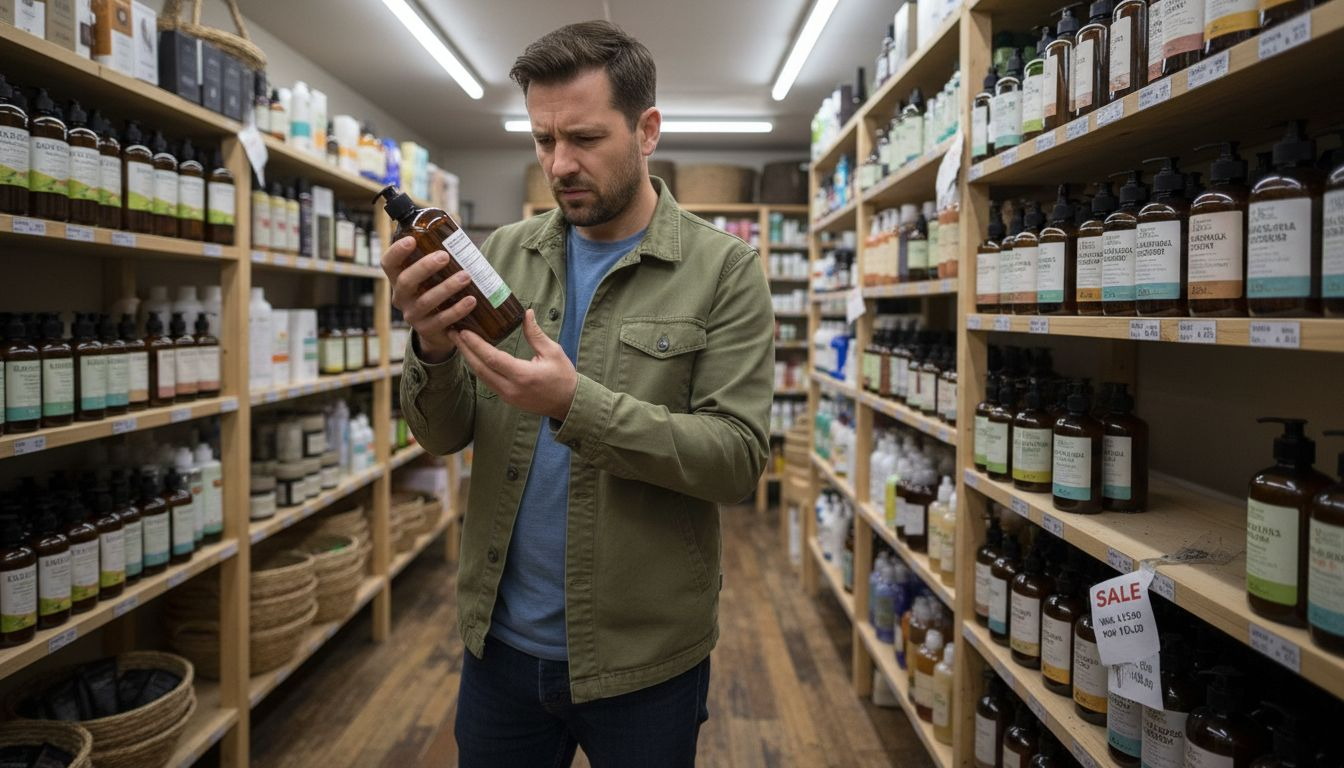
When evaluating potential hair repair products, read ingredient labels meticulously and prioritise formulations with concentrated natural repair agents. Pay attention to your specific hair concerns such as porosity, texture, and damage level. Consider products offering deep conditioning, protein reconstruction, and moisture replenishment. Understanding scientific approaches to hair repair can help you make more nuanced product choices that genuinely address your hair’s structural needs.
Professional tip: Create a personalised hair product spreadsheet documenting each product’s ingredients, your hair’s response, and visible improvements. This systematic tracking will help you refine your hair repair strategy and identify the most effective natural treatments for your specific hair type.
Compare popular natural ingredients and their primary benefits for hair restoration:
| Ingredient | Main Benefit | Suitable For Hair Type |
|---|---|---|
| Argan oil | Deep hydration, shine | Dry, frizzy, brittle hair |
| Keratin | Strengthens structure | Weakened, chemically treated |
| Biotin | Promotes growth, density | Thinning, fine hair |
| Plant proteins | Repairs, improves elasticity | Damaged, porous hair |
Stage 3: Apply Nourishing Treatments and Rituals Consistently
Consistent application of targeted hair treatments is the cornerstone of transforming damaged hair into a luxurious, healthy state. Your commitment to a structured hair care ritual will determine the success of your hair restoration journey.
Innovative hair care rituals provide a systematic approach to repairing and maintaining hair health. Develop a weekly treatment schedule that incorporates deep conditioning masks, protein treatments, and natural oil interventions. Lightweight leave-in conditioners work exceptionally well for daily maintenance, with gentle application techniques ensuring even distribution without weighing down your hair. Focus on treatments that penetrate the hair shaft rather than simply coating the exterior surface, prioritising ingredients that rebuild keratin, strengthen follicle structure, and restore moisture balance.
Implement your hair treatment ritual with precision and patience. Begin with clean hair, applying treatments from roots to ends, and use gentle massaging motions to enhance absorption. Consider using a heated towel or hair steamer to help natural ingredients penetrate more deeply, creating an optimal environment for hair repair. Allow treatments to sit for the recommended duration, typically between 15 to 45 minutes depending on the product’s formulation and your hair’s specific needs.
Professional tip: Set smartphone reminders for your weekly hair treatment schedule and create a dedicated hair care space with all your treatments organised and easily accessible. This strategic approach ensures you maintain consistency and transform your hair repair routine into a sustainable, enjoyable self-care ritual.
Stage 4: Incorporate Gentle Styling and Protection Techniques
Restoring damaged hair requires a strategic approach to styling that minimises structural stress and supports ongoing hair health. Your goal is to develop a protective styling routine that prevents further damage while nurturing your hair’s natural strength and resilience.
Carefully evaluate your current styling practices through the lens of scientific hair damage assessment which reveals how aggressive treatments can compromise hair structure. Prioritise low tension styling methods that reduce mechanical stress including loose braids, soft scrunchies, and minimal heat application. When using heated styling tools, always apply a heat protectant and keep temperatures below 185 degrees Celsius. Choose wide toothed combs for detangling and avoid brushing hair when wet to prevent unnecessary breakage. Hair breakage prevention research demonstrates that thoughtful styling techniques can significantly reduce structural damage.
Integrate protective styling strategies that shield your hair from environmental stressors. Use silk or satin pillowcases to reduce friction during sleep, wear protective caps when swimming, and minimise exposure to direct sunlight and harsh weather conditions. Select hair accessories made from soft materials that do not snag or pull, and alternate hairstyles to prevent repeated stress on the same hair sections.
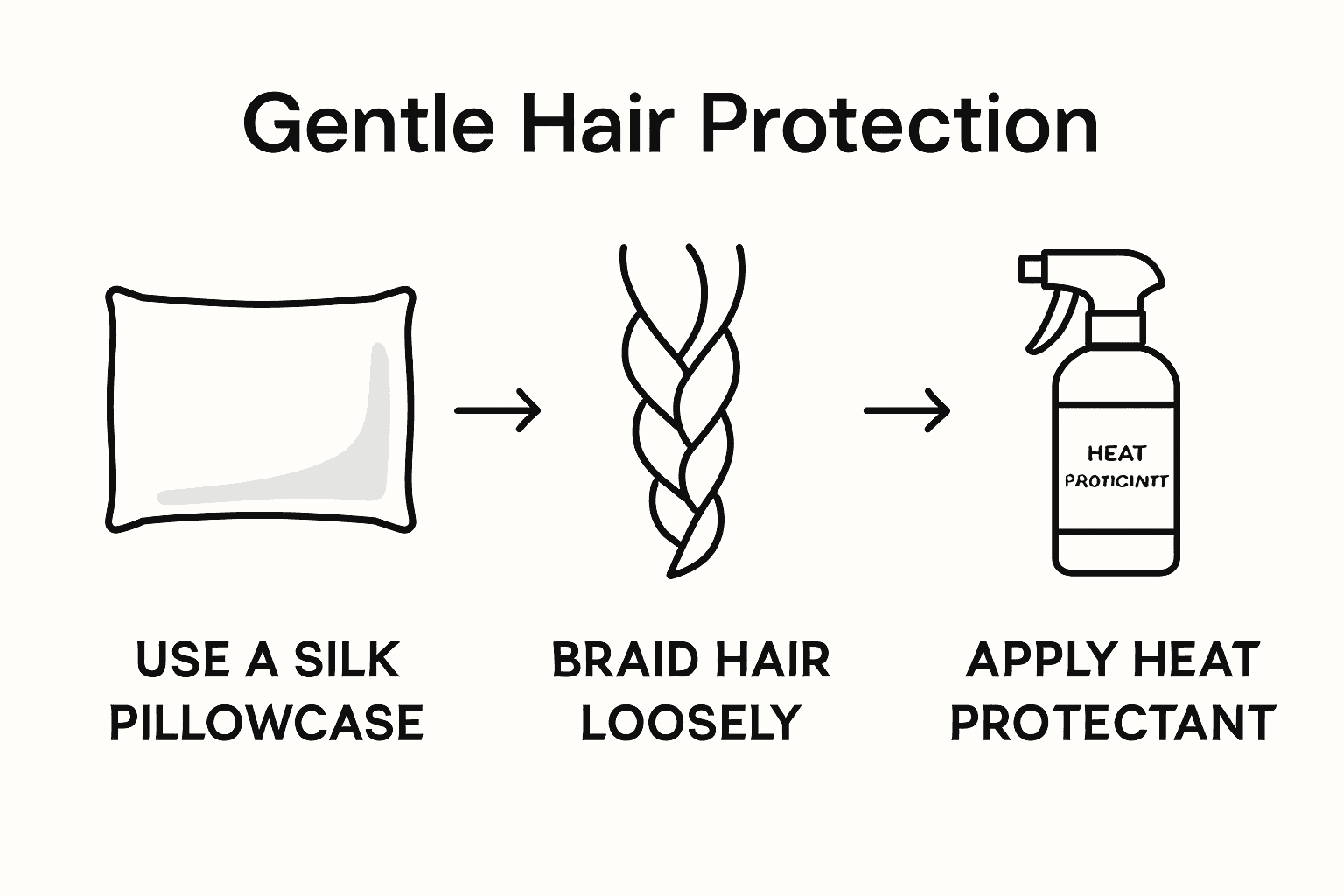
Professional tip: Create a dedicated hair protection kit containing soft hair ties, silk scrunchies, heat protectant spray, and a wide toothed comb. Keep this kit accessible to ensure you can always prioritise gentle hair management throughout your daily routine.
Stage 5: Monitor Results and Adjust Your Routine
Tracking your hair restoration journey requires systematic observation and willingness to adapt your approach based on tangible results. Your goal is to develop a methodical approach that allows you to understand how different treatments impact your hair’s health and structure.
Advanced hair health assessment techniques demonstrate the critical importance of regular monitoring to ensure effective hair repair. Create a comprehensive tracking system that documents visible changes including hair texture, elasticity, shine, and overall strength. Photograph your hair monthly under consistent lighting conditions to capture subtle transformations. Record key metrics such as breakage frequency, moisture retention, and styling ease. Pay close attention to how your hair responds to different treatments using scientific evaluation methods that provide nuanced insights into structural improvements.
Establish a flexible hair care approach that allows for strategic modifications. If you notice minimal improvement after six weeks, consider consulting a trichology specialist or reassessing your product selections. Look for specific indicators of progress such as reduced hair fall, increased shine, improved manageability, and stronger hair strand resilience. Be prepared to modify your treatment protocol based on empirical observations rather than adhering rigidly to an initial plan.
Professional tip: Create a digital or physical hair health journal with monthly entries, including photographs, product usage, and observable changes. Use smartphone apps or spreadsheet templates to make tracking systematic and straightforward, enabling you to make data-driven decisions about your hair restoration strategy.
Discover the Power of Clean, Natural Solutions to Revive Your Hair
Damaged hair caused by dryness, split ends, and chemical treatments needs gentle yet effective care to restore its natural strength and shine. If your hair feels brittle or lacks elasticity the key is consistency with nourishing rituals and scientifically-backed products that address your specific damage indicators. The article highlights the importance of using targeted ingredients like argan oil, keratin, and biotin—ingredients you can find in premium formulations designed to rebuild and protect your hair from further breakage.
Take the first step towards luxurious healthy hair by exploring the Sulphate Free Shampoo Sets: Elevate Your Haircare Ritual with LUXEVA.

Elevate your hair care with clean, cruelty-free options that combine plant-powered ingredients with scientific innovation. Create your personalised ritual using our curated collections available at Scalp & Haircare Sets – LUXEVA. Find everything you need to gently repair, hydrate, and protect your hair while embracing a lifestyle of wellness and natural beauty. Visit LUXEVASTORE.com now to start your hair transformation journey and enjoy the benefits of luxurious, resilient hair. Don’t wait to give your hair the care it deserves.
Frequently Asked Questions
How can I assess my hair’s condition before starting a natural revival strategy?
To assess your hair’s condition, conduct a visual and tactile examination. Look for signs of damage like split ends and excessive dryness, and consider documenting your observations in a hair journal to track improvements over time.
What ingredients should I look for in natural hair repair products?
Focus on products with nourishing ingredients like argan oil, keratin, and biotin, which help restore hair health. Avoid harsh chemicals like sulphates and parabens, and prioritise formulations that meet your specific hair needs, such as moisturising or strengthening properties.
How often should I apply nourishing treatments to my hair?
Aim to apply nourishing treatments such as deep conditioning masks and protein treatments at least once a week. Consistent application within this timeframe can significantly enhance your hair’s strength and appearance.
What are some gentle styling techniques to protect damaged hair?
Utilise low tension styling methods, such as loose braids and soft hair ties. When using heat, always apply a heat protectant and avoid temperatures above 185 degrees Celsius to minimise structural stress on your hair.
How can I effectively monitor my hair restoration results?
Establish a methodical approach by documenting changes in texture, elasticity, and overall strength. Take monthly photographs under consistent lighting to track progress, and be ready to modify your routine based on observable results.
What should I do if I see no improvement in my hair after several weeks?
If you notice minimal improvement after six weeks, consider reassessing your product selections or consulting a hair health specialist. Adjust your routine based on specific indicators such as reduced breakage and improved shine to enhance your results.
Recommended
- Science Behind Hair Repair: How Effective Treatments Work – LUXEVA
- How to Boost Hair Growth Naturally for Luxurious Results – LUXEVA
- 7 Proven Hair Wellness Habits for Luxurious, Healthy Hair – LUXEVA
- Argan Oil Hair Repair & Shine Ritual – LUXEVA
- Γιατί Korean Beauty: Κατανόηση της Κορεάτικης Ομορφιάς - MakeUp Closet