


Dry, brittle hair that never seems to feel truly healthy can leave many British women frustrated, especially when chemical treatments and daily styling only make matters worse. Addressing these concerns matters because unmanaged damage can dull your confidence and limit your style options. This guide provides a clear pathway, highlighting holistic hair assessment and the power of clean, cruelty-free solutions so you can restore shine and manage breakage with proven, natural ingredients.
Table of Contents
- Step 1: Assess Your Hair’s Condition And Needs
- Step 2: Choose Nourishing Clean-Ingredient Treatments
- Step 3: Apply Restorative Rituals And Targeted Care
- Step 4: Protect Hair From Future Dehydration
- Step 5: Monitor Progress And Adjust Your Routine
Quick Summary
| Key Point | Explanation |
|---|---|
| 1. Assess your hair’s condition carefully | Perform a visual examination and texture test to identify damage and moisture needs effectively. |
| 2. Choose treatments with clean ingredients | Opt for nourishing products that contain natural extracts and proteins to promote hair repair and overall health. |
| 3. Establish restorative hair care rituals | Implement a four-step routine focusing on cleansing, conditioning, and protecting your hair from root to tip. |
| 4. Protect your hair from future damage | Use UV and heat protectants, along with proper hydration, to prevent moisture loss and external damage. |
| 5. Regularly monitor your hair’s progress | Keep track of changes in texture, shine, and overall health to adjust your routine and ensure effective restoration. |
Step 1: Assess your hair’s condition and needs
Understanding the current state of your hair is fundamental to creating an effective restoration strategy. By carefully evaluating your hair’s condition, you can develop a targeted approach that addresses specific damage and moisture challenges.
Begin by performing a comprehensive hair assessment using these key diagnostic techniques:
- Visual examination: Look for signs of damage such as split ends, dryness, and frizz
- Texture test: Gently stretch a strand of hair to assess elasticity and strength
- Moisture analysis: Check how your hair responds to hydration by observing its natural shine and softness
To accurately assess hair damage, consider factors like chemical treatments, heat styling frequency, and environmental exposure. Detailed scalp and hair examination involves understanding indicators like breakage patterns, texture changes, and overall hair health.
Modern hair problems often stem from multiple sources including UV exposure, pollution, and nutritional deficiencies. Each of these factors contributes uniquely to hair damage, making a holistic assessment crucial for effective restoration.
To understand which external factors most commonly lead to hair damage and their unique effects, refer to the table below:
| Source of Damage | Typical Effect on Hair | Prevention Strategy |
|---|---|---|
| UV Exposure | Weakens hair protein bonds | Use UV protectant sprays |
| Pollution | Reduces shine, causes buildup | Regular deep cleansing |
| Nutritional Deficiency | Brittle, slow-growing hair | Balanced diet with key vitamins |
| Heat Styling | Split ends, dryness | Use heat protectants, lower heat |
| Chemical Treatments | Weakens structure, dullness | Limit frequency, deep conditioning |
Professional hair assessment requires understanding both external damage indicators and underlying health factors.
Expert advice: Conduct your hair assessment in natural daylight for the most accurate evaluation of your hair’s true condition.
Step 2: Choose nourishing clean-ingredient treatments
Selecting the right hair treatments is crucial for restoring damaged locks and achieving luxurious, healthy hair. Your choice of products can make a significant difference in repairing and protecting your hair’s natural vitality.
When exploring treatment options, prioritise formulations that offer comprehensive hair wellness. Look for products featuring natural, nutrient-rich ingredients that support hair repair and protection. Proven hair wellness habits can guide you towards making informed choices.
Key characteristics of effective clean-ingredient treatments include:
- Botanical extracts that nourish and strengthen hair
- Protein-rich formulations for structural repair
- Hydrating natural oils to restore moisture balance
- Free from harsh chemicals like sulphates and parabens
Consider treatments that address multiple aspects of hair health simultaneously. Different hair types require unique approaches, so understanding your specific hair needs is essential for selecting the most appropriate nourishing products.
Natural ingredients work synergistically to repair and protect your hair’s structural integrity.
Professional recommendation: Rotate between different clean-ingredient treatments to prevent product build-up and maintain optimal hair health.
Step 3: Apply restorative rituals and targeted care
Restorative hair care is more than just a routine - it’s a holistic approach to healing and protecting your damaged locks. Understanding how to apply targeted treatments can transform your hair’s health and appearance.

Four-step repair routine strategies are crucial for comprehensive hair restoration. Your ritual should focus on nourishing and protecting hair from root to tip, addressing multiple aspects of damage simultaneously.
Key steps in your restorative hair care ritual include:
- Deep cleansing with nourishing, sulphate-free shampoos
- Intensive conditioning using protein-rich and hydrating masks
- Leave-in protective treatments with antioxidants and natural oils
- Weekly scalp treatments to support overall hair health
Applying treatments requires a gentle, methodical approach. Work products through your hair carefully, ensuring even distribution and minimal mechanical stress. Pay special attention to the most damaged areas, typically the ends of your hair.
Consistency is key in transforming dry, damaged hair into a luxurious, healthy mane.
Professional recommendation: Apply treatments when hair is damp to maximise absorption and effectiveness of nourishing ingredients.
Step 4: Protect hair from future dehydration
Preventing future hair damage requires a strategic approach that shields your locks from environmental stressors and moisture loss. Understanding how to create a comprehensive protection strategy will help maintain your hair’s health and vitality.
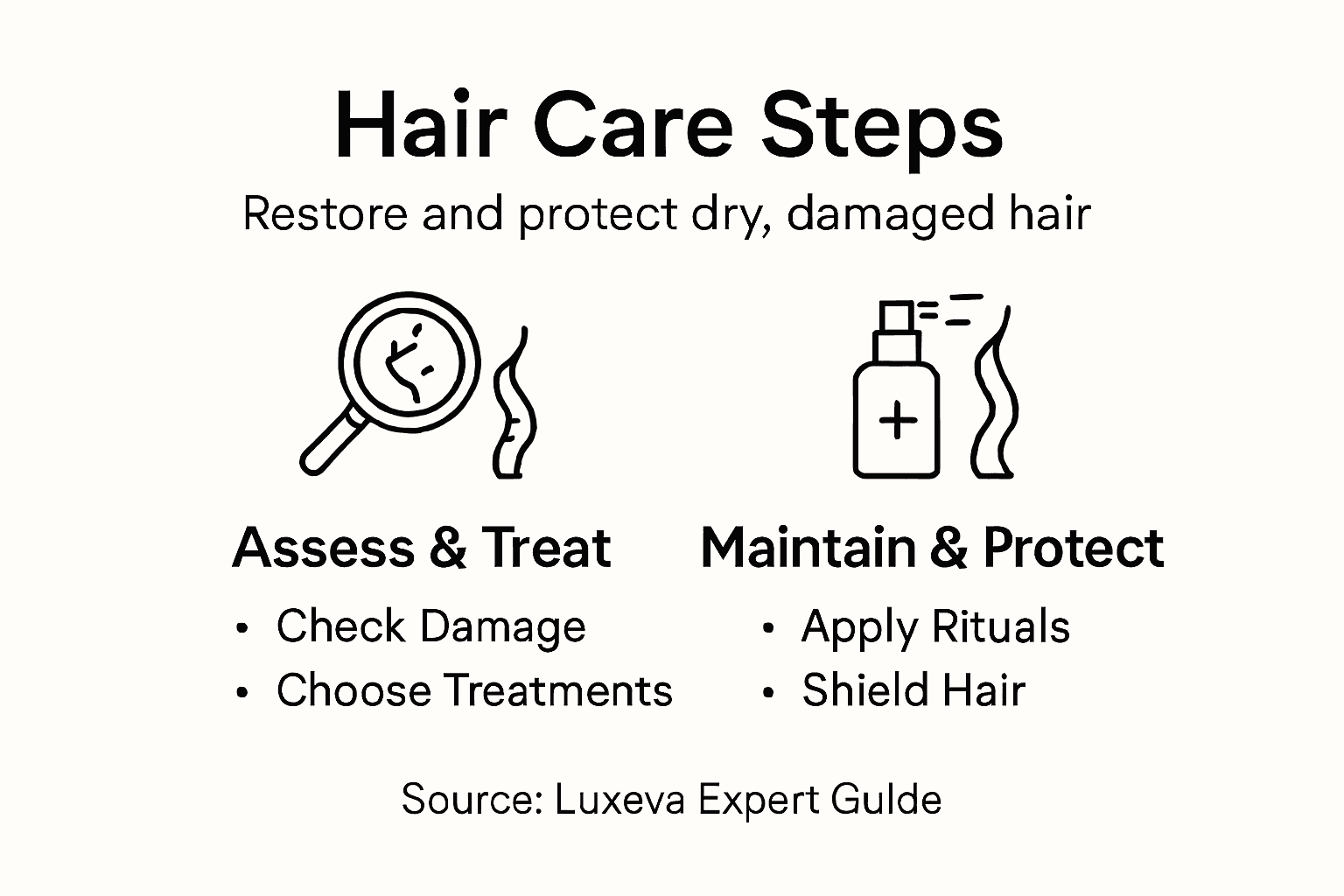
Polyphenol complex protection offers advanced defence against environmental damage. By implementing targeted techniques, you can significantly reduce the risk of dehydration and structural breakdown.
Key strategies for hair protection include:
- Hydration management through consistent water intake
- Protective styling to minimise environmental exposure
- UV and heat protection using specialised hair products
- Regular moisture sealing with natural oils and serums
- Scalp health maintenance to support overall hair resilience
Your protection routine should address both internal and external factors. Proper hydration involves not just drinking water, but also using moisturising products that lock in essential nutrients and create a protective barrier against damage.
Environmental factors are the silent destroyers of hair health - prevention is always better than repair.
Professional recommendation: Apply leave-in protective treatments with UV filters before sun exposure to create an invisible shield against moisture loss and damage.
Step 5: Monitor progress and adjust your routine
Tracking your hair restoration journey is essential for achieving long-term success and understanding how different treatments impact your hair’s health. By systematically observing and documenting changes, you can create a personalised approach that evolves with your hair’s unique needs.
Establish a consistent method for monitoring hair transformation by implementing these strategic tracking techniques:
- Weekly photographic documentation to capture visual changes
- Texture and moisture assessment using consistent touch tests
- Length and breakage tracking with monthly measurements
- Product effectiveness journal noting specific treatment responses
- Scalp health observation for underlying condition improvements
Your monitoring process should focus on both objective measurements and subjective experiences. Pay attention to subtle changes in hair texture, elasticity, shine, and overall appearance that indicate successful restoration or areas requiring adjustment.
Hair restoration is a dynamic journey - flexibility and attentiveness are your greatest allies.
Professional recommendation: Take progress photographs under consistent lighting and from the same angle to accurately track your hair’s transformation.
Here is a summary of the main steps and their primary goals in a hair restoration routine:
| Step | Main Goal | Key Focus Area |
|---|---|---|
| Assessment | Identify specific hair needs | Health condition |
| Clean-ingredient Treatments | Nourish and repair damage | Product selection |
| Restorative Rituals | Restore structure and moisture | Application routine |
| Protection from Dehydration | Prevent further environmental damage | Shielding techniques |
| Progress Monitoring | Adjust routine based on improvement | Tracking transformation |
Restore and Protect Your Hair Naturally with LUXEVA
Dry damaged hair craves deep nourishment and gentle care to regain its natural shine and strength. If your hair suffers from breakage, dryness, or loss of elasticity, you are not alone. This article highlights the importance of a holistic hair restoration routine that focuses on clean-ingredient treatments, protective rituals, and continuous progress monitoring to bring your damaged hair back to life.
Explore the specially curated Sulphate Free Shampoo Sets: Elevate Your Haircare Ritual with LUXEVA for deeply hydrating and strengthening formulas free from harsh chemicals. Combine this with our Scalp & Haircare Sets – LUXEVA designed to nurture your scalp while replenishing moisture and repairing structural damage.

Don’t wait for your dry, damaged hair to worsen. Begin your journey to luxurious, healthy locks today by choosing products that expertly blend natural ingredients with scientific innovation. Visit LUXEVASTORE.com now to discover premium, cruelty-free haircare solutions that your hair deserves.
Frequently Asked Questions
How can I assess the condition of my dry, damaged hair?
To assess the condition of your dry, damaged hair, perform a visual examination for split ends and frizz, a texture test for elasticity, and a moisture analysis to check for shine and softness. Take time to observe your hair in natural light to accurately identify areas needing attention.
What are some effective clean-ingredient treatments for damaged hair?
Look for treatments that contain natural ingredients like botanical extracts, proteins, and hydrating oils while avoiding harsh chemicals. Select products that specifically address your hair type and needs, and aim to rotate treatments weekly for the best results.
What restorative rituals can I follow to improve the health of my hair?
Implement a restorative hair ritual that includes deep cleansing with sulphate-free shampoos, intensive conditioning masks, and leave-in protective treatments. Focus on applying these treatments consistently, ideally after dampening your hair, to maximise absorption of nourishing ingredients.
How can I protect my hair from future dehydration and damage?
To prevent future dehydration and damage, maintain proper hydration by drinking water, practicing protective styling, and using UV and heat protection products. Make these practices a daily routine to shield your hair from environmental stressors and maintain its natural vitality.
How do I monitor the progress of my hair restoration efforts?
Monitor your hair restoration by documenting changes through weekly photographs, assessing texture and moisture, and tracking length and breakage monthly. Keep a journal of your treatment experiences to identify what works best for your hair, allowing for necessary adjustments as you go.