


Brittle and dry hair frustrates countless women who believe permanent damage leaves no hope for restoration. This misconception prevents many from discovering effective repair strategies using natural, cruelty-free products. Understanding the root causes of hair damage and implementing targeted care routines can transform even severely compromised hair. This guide reveals science-backed methods to nourish, strengthen, and revive brittle and dry hair through premium ingredients and practical techniques that deliver lasting results.
Table of Contents
- Key takeaways
- Understanding why hair becomes brittle and dry
- The best natural ingredients and cruelty-free products for repair
- Practical haircare routines and techniques to restore brittle and dry hair
- Common mistakes to avoid and when to seek professional care
- Discover premium natural and cruelty-free haircare products at Luxeva
- Frequently asked questions
Key Takeaways
| Point | Details |
|---|---|
| Causes of damage | Environmental exposure, heat styling and inadequate hydration drive brittleness and dryness. |
| Repair strategies | A combination of cuticle smoothing, protein rebuilding and moisture retention targets multiple damage pathways. |
| Natural ingredients | Natural oils such as argan and jojoba hydrate and seal the cuticle while plant proteins bolster strength. |
| Cruelty free products | Cruelty free certification guides ethical product selection while supporting targeted repair through botanical actives. |
Understanding why hair becomes brittle and dry
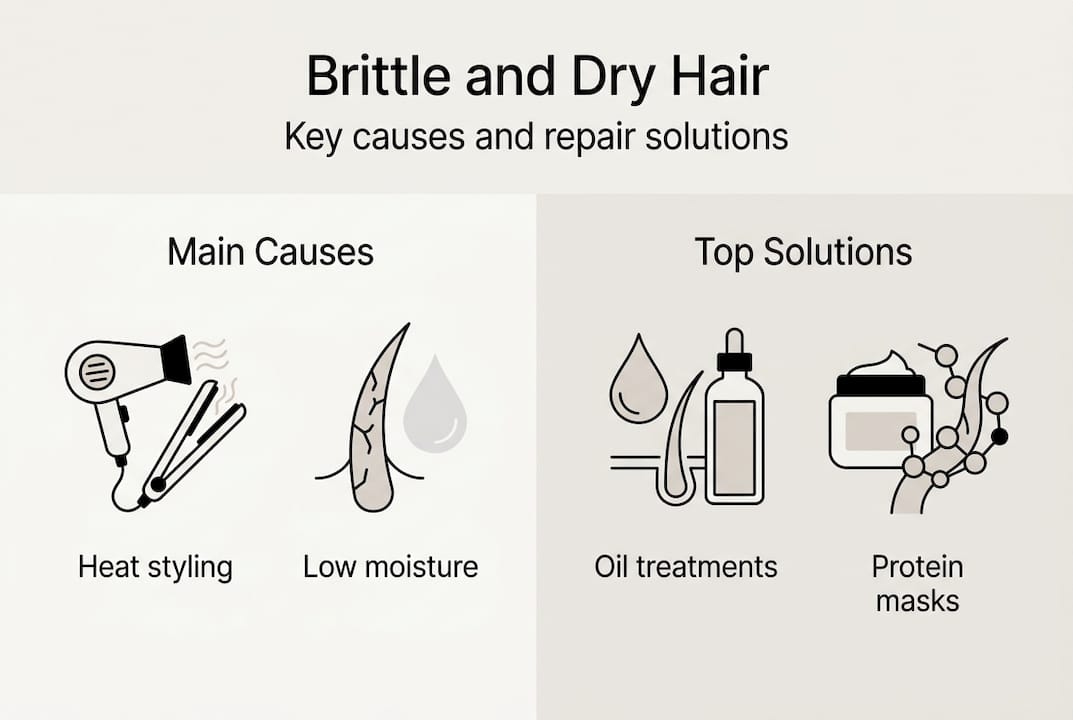
Hair comprises keratin fibres protected by overlapping cuticle scales that seal in moisture and maintain strength. When this protective barrier deteriorates, internal proteins break down and water escapes, leaving strands vulnerable to brittleness and dryness. Environmental exposure and heat styling significantly contribute to hair dryness and brittleness through cumulative structural damage.
Several factors accelerate cuticle degradation and protein loss. UV radiation oxidises melanin and weakens keratin bonds, whilst harsh chemical treatments strip natural oils and disrupt pH balance. Frequent heat styling denatures proteins at temperatures above 180°C, creating permanent structural changes. Poor nutrition deprives follicles of essential amino acids and minerals needed for healthy growth. Hard water deposits mineral buildup that roughens cuticles and blocks moisture absorption.
Distinguishing between dry and brittle hair guides appropriate treatment selection. Dry hair lacks moisture but maintains flexibility, feeling rough yet remaining intact during gentle manipulation. Brittle hair exhibits structural weakness, snapping easily under minimal tension and displaying visible splitting along the shaft. This distinction matters because brittle hair requires protein reinforcement alongside hydration, whilst dry hair primarily needs moisture replenishment.
Many assume severe damage cannot be reversed, but hair possesses remarkable regenerative capacity when provided proper nourishment and protection from further stress.
Understanding these mechanisms empowers targeted intervention. Cuticle repair through smoothing treatments restores the protective barrier. Protein supplementation rebuilds internal structure. Moisture binding ingredients attract and retain water molecules. Combined strategically, these approaches address multiple damage pathways simultaneously. Learning how to reduce hair breakage naturally complements structural repair with preventive measures.
The best natural ingredients and cruelty-free products for repair
Natural ingredients offer concentrated nourishment without synthetic additives that may cause sensitivity or environmental harm. Natural oils like argan and jojoba deeply hydrate and restore hair elasticity through fatty acid penetration and cuticle sealing. These botanical extracts mimic sebum composition, allowing superior absorption compared to petroleum derivatives.
Argan oil delivers vitamin E and oleic acid that strengthen keratin bonds whilst reducing inflammation around follicles. Jojoba oil balances sebum production and dissolves buildup without stripping natural protection. Coconut oil penetrates the cortex to prevent protein loss during washing. Rosemary extract stimulates circulation and provides antioxidant defence against oxidative stress. Biotin supports keratin synthesis and improves strand diameter over consistent use.
| Ingredient type | Primary benefit | Best application method |
|---|---|---|
| Natural oils | Deep hydration and cuticle sealing | Pre-wash treatment or leave-in serum |
| Plant proteins | Structural repair and strength | Weekly intensive mask |
| Vitamins | Antioxidant protection | Daily leave-in conditioner |
| Botanical extracts | Scalp health and growth support | Massage into roots before cleansing |
Products formulated with plant proteins and vitamins improve strength and shine through targeted molecular repair. Hydrolysed wheat protein fills gaps in damaged cuticles, creating smoother surfaces that reflect light. Panthenol attracts moisture and increases flexibility, reducing breakage during styling. Aloe vera soothes irritation whilst delivering polysaccharides that coat and protect strands.
Cruelty-free certification ensures ethical testing standards without compromising efficacy. Premium formulations combine multiple active ingredients at therapeutic concentrations, delivering superior results compared to mass-market alternatives. Clean ingredient lists exclude sulfates, parabens, and silicones that provide temporary cosmetic improvement whilst causing long-term damage. Exploring natural cruelty-free care for brittle hair reveals brands prioritising both performance and ethics.
Pro Tip: Always perform a patch test with new products by applying a small amount behind your ear and waiting 24 hours to check for allergic reactions before full application.
Selecting products requires matching ingredient profiles to specific damage patterns. Moisture-focused formulations suit environmental dryness, whilst protein-rich treatments address chemical or heat damage. Combination products provide balanced support for multiple concerns. Reading labels carefully identifies truly natural formulations versus greenwashed marketing. Understanding natural solutions for damaged hair builds confidence in ingredient evaluation.
Practical haircare routines and techniques to restore brittle and dry hair
Establishing consistent routines maximises ingredient effectiveness and prevents additional damage. Consistent use of mild cleansing, deep conditioning, and heat protection reduces hair breakage and dryness through cumulative protective benefits. Daily practices create the foundation, whilst weekly treatments provide intensive repair.
- Cleanse hair with sulfate-free shampoo two to three times weekly, focusing on the scalp whilst avoiding harsh scrubbing that roughens cuticles.
- Apply conditioner from mid-length to ends, leaving on for three to five minutes to allow penetration before rinsing with cool water to seal cuticles.
- Gently squeeze excess water with a microfibre towel rather than rubbing, which creates friction and raises cuticles.
- Apply leave-in treatment or heat protectant before any styling, ensuring even distribution through damp hair.
- Air dry whenever possible or use the lowest heat setting with a diffuser attachment to minimise thermal damage.
- Detangle from ends upwards using a wide-tooth comb, never forcing through knots that could snap weakened strands.
Weekly intensive treatments accelerate repair beyond daily maintenance. Pre-wash oil treatments involve massaging warmed natural oil into dry hair, covering with a shower cap, and leaving for 30 to 60 minutes before shampooing. This allows deep penetration whilst the oil dissolves buildup. Deep conditioning masks applied to clean, damp hair provide concentrated protein and moisture, working best under gentle heat from a warm towel.

Lifestyle factors significantly influence hair health beyond topical treatments. Adequate hydration supports moisture retention from within, requiring at least two litres of water daily. Protein-rich nutrition provides building blocks for keratin synthesis, emphasising fish, eggs, nuts, and legumes. Quality sleep enables cellular repair processes that regenerate damaged follicles. Sun protection through hats or UV-filtering sprays prevents ongoing oxidative damage during outdoor activities.
Pro Tip: Apply treatments to slightly damp hair rather than soaking wet strands, as excess water dilutes active ingredients and reduces absorption efficiency.
Timing applications optimises ingredient activity. Morning routines focus on protection through leave-in products and heat shields. Evening care emphasises repair with overnight treatments that work during rest. Seasonal adjustments account for environmental changes, increasing moisture in winter and emphasising UV protection in summer. Learning natural damaged hair repair techniques builds a comprehensive approach addressing all damage factors.
Common mistakes to avoid and when to seek professional care
Well-intentioned practices often worsen brittleness through cumulative stress. Recognising these pitfalls protects repair progress and prevents setbacks. Ignoring severe damage can lead to irreversible hair loss requiring professional treatments beyond home care capabilities.
Frequent mistakes include overwashing that strips protective oils, requiring daily cleansing that disrupts natural moisture balance. Excessive heat styling without protection denatures proteins faster than treatments can repair them. Tight hairstyles create constant tension that weakens roots and causes traction damage. Skipping regular trims allows splits to travel up the shaft, requiring more extensive cutting later. Using products with drying alcohols or harsh sulfates contradicts repair efforts through ongoing chemical stress.
- Brushing wet hair when cuticles are most vulnerable to mechanical damage
- Applying treatments only to ends whilst neglecting mid-lengths where damage often concentrates
- Expecting overnight results from treatments requiring weeks of consistent use
- Mixing incompatible products that neutralise active ingredients
- Neglecting scalp health whilst focusing solely on strand condition
| Approach | Advantages | Limitations |
|---|---|---|
| Home remedies | Cost effective, convenient, customisable ingredient control | Slower results, requires consistency, limited for severe damage |
| Professional treatments | Intensive repair, expert assessment, advanced technology access | Higher cost, time commitment, requires maintenance |
Several warning signs indicate the need for professional intervention beyond home care. Persistent breakage despite months of proper treatment suggests underlying health issues or damage requiring specialised assessment. Scalp irritation, excessive shedding, or sudden texture changes warrant dermatological evaluation to rule out medical conditions. Chemical damage from bleaching or relaxing often needs salon correction through bond-building treatments unavailable for home use.
Professional services complement rather than replace home routines. Salon treatments provide intensive repair through concentrated formulations and application techniques maximising penetration. Trichologists offer personalised analysis identifying specific deficiencies or damage patterns. Choosing cruelty-free salons ensures ethical standards extend beyond home products to professional services. Exploring a natural damaged hair repair guide helps determine when home care suffices versus requiring expert support.
Discover premium natural and cruelty-free haircare products at Luxeva
Transforming brittle and dry hair requires premium formulations combining nature’s most effective ingredients with scientific precision. Luxeva curates exceptional cruelty-free haircare products specifically designed for comprehensive hair repair without ethical compromise. Each product undergoes rigorous testing to ensure therapeutic ingredient concentrations deliver visible results within weeks of consistent use.

Explore targeted solutions featuring argan oil, biotin, rosemary mint, and caviar-based anti-ageing treatments formulated to address multiple damage pathways simultaneously. These premium collections combine deep hydration, protein reinforcement, and antioxidant protection in elegant rituals supporting long-term hair wellness. Woman-led creation ensures formulations address real concerns with ingredients sourced sustainably and processed to preserve maximum potency.
Pro Tip: Begin your repair journey with a customised hair health consultation through Luxeva to identify your specific damage pattern and receive personalised product recommendations matching your unique needs.
Discover how natural brittle hair care solutions transform compromised strands into healthy, resilient hair through consistent use of scientifically-backed botanical ingredients.
Frequently asked questions
How can I tell if my hair is brittle or just dry?
Brittle hair breaks easily when gently stretched and feels stiff or crunchy, indicating structural protein damage requiring reinforcement. Dry hair lacks moisture but maintains flexibility, feeling rough or frizzy without immediate breakage. Testing a strand by stretching it gently reveals brittleness through immediate snapping versus dry hair that stretches slightly before returning to shape. This distinction guides whether you need protein treatments for brittleness or primarily moisture-focused care for dryness.
What are the fastest ways to restore dry and brittle hair?
Deep conditioning treatments with natural oils like argan or coconut provide immediate hydration and smoothing within one application. Avoiding all heat styling for at least two weeks prevents further damage whilst repair ingredients work. Protein masks applied weekly rebuild internal structure, showing visible strength improvements within four to six weeks. Consistent gentle cleansing with sulfate-free products and daily leave-in treatments accelerate recovery compared to sporadic care. Explore best remedies for dry damaged hair for comprehensive treatment protocols.
Are cruelty-free haircare products effective for brittle and dry hair?
Cruelty-free products utilise potent natural ingredients like plant proteins, botanical oils, and vitamins that match or exceed synthetic alternatives in repair efficacy. Ethical formulations prioritise clean, concentrated actives without fillers or harsh chemicals that compromise long-term hair health. Many premium cruelty-free brands invest heavily in botanical research, creating innovative formulations that outperform conventional products. Performance depends on ingredient quality and concentration rather than testing methods. Learn about cruelty-free haircare efficacy through evidence-based comparisons.
When should I consult a professional about brittle hair?
Seek professional assessment if severe breakage continues despite three months of proper home treatment, suggesting underlying health issues or damage requiring specialised intervention. Scalp irritation, inflammation, or excessive shedding beyond normal daily loss warrants dermatological evaluation to rule out medical conditions. Chemical damage from bleaching, relaxing, or permanent colouring often needs salon bond-building treatments unavailable for home use. Professionals provide advanced diagnostics and intensive therapies complementing home routines for comprehensive repair.