


You condition regularly, avoid excessive heat, and yet your hair still feels rough and brittle, like straw. This frustrating texture signals more than simple dryness. It reveals cuticle damage and moisture loss that standard care routines often fail to address. Understanding the biological causes behind straw-like hair and applying targeted natural repair strategies can transform your hair’s health. This guide reveals proven methods to restore softness, strength, and vitality using natural ingredients and science-backed techniques.
Table of Contents
- Key takeaways
- What causes hair to feel like straw? Understanding the damage
- Common causes and risk factors: How daily habits harm hair texture
- Restoring hair softness naturally: proven treatments and routines
- Supporting hair health from within: nutrition and advanced remedies
- Explore Luxeva’s natural haircare solutions
- FAQ
Key Takeaways
| Point | Details |
|---|---|
| Cuticle damage | Damaged cuticle scales lift or break, allowing moisture to escape and leaving hair rough and straw like. |
| High porosity effect | Damaged cuticles increase porosity, causing hair to absorb water quickly but lose it just as fast, making conditioning only temporarily effective. |
| Main causes | Heat styling, chemical treatments and hard water are key factors that strip moisture and weaken the hair. |
| Balance protein moisture | Balancing protein and moisture is essential to repair and strengthen damaged strands. |
| Natural repair strategies | Deep conditioning with natural oils and botanical oils supports softness and strengthens the hair. |
What causes hair to feel like straw? Understanding the damage
Your hair’s outer protective layer, the cuticle, consists of overlapping scales that shield the inner cortex. When these scales lift or break, moisture escapes rapidly, leaving hair dehydrated and rough. This structural damage transforms smooth, flexible strands into brittle, straw-like texture.
The relationship between cuticle integrity and moisture retention is direct. Healthy cuticles lie flat, trapping water molecules inside the hair shaft. Damaged cuticles create gaps that allow moisture to evaporate whilst simultaneously increasing porosity. High porosity hair absorbs water quickly but loses it just as fast, creating a frustrating cycle of temporary hydration followed by rapid drying.
Several factors contribute to cuticle degradation:
- Heat styling tools break hydrogen bonds and weaken protein structures
- Chemical treatments dissolve protective lipids and disrupt keratin alignment
- UV radiation oxidises proteins and degrades melanin
- Environmental pollutants deposit onto hair surfaces, creating rough texture
- Hard water minerals form stubborn buildup that stiffens strands
Porosity changes fundamentally alter how your hair responds to treatments. Low porosity hair resists moisture absorption, whilst high porosity hair cannot retain it. Most straw-like hair exhibits high porosity, meaning products penetrate easily but wash out quickly. This explains why conditioning provides only temporary relief.
Understanding your hair’s porosity level guides product selection and application techniques, ensuring treatments actually penetrate and remain effective rather than sitting on the surface or washing away immediately.
The cumulative effect of daily damage creates a weakened hair structure vulnerable to breakage. Each styling session, chemical treatment, or environmental exposure compounds existing damage. Without intervention, hair becomes progressively drier and more fragile. Recognising these mechanisms allows you to target treatments effectively and prevent further deterioration. For comprehensive strategies, explore our damaged hair repair naturally guide.
Common causes and risk factors: How daily habits harm hair texture
Your daily routine likely contains multiple factors that strip moisture and weaken hair structure. Heat styling, chemical treatments, sun exposure, overwashing, hard water, protein-moisture imbalance, and nutritional deficiencies all contribute to straw-like texture. Identifying which factors affect you most allows targeted intervention.
-
Heat styling tools reach temperatures exceeding 200°C, instantly evaporating water molecules trapped inside hair shafts. Repeated exposure weakens hydrogen bonds that maintain hair’s shape and flexibility. Even heat protectants only reduce damage rather than eliminate it entirely.
-
Chemical treatments including bleaching, colouring, perming, and relaxing fundamentally alter hair’s protein structure. These processes break disulphide bonds that give hair strength and elasticity. The more frequently you chemically treat hair, the more cumulative damage accumulates.
-
Overwashing strips natural sebum oils that coat and protect hair strands. Whilst sebum production varies individually, washing more than three times weekly often removes protective oils faster than your scalp can replace them.
-
Hard water contains calcium and magnesium minerals that deposit onto hair surfaces, creating a stiff, waxy coating. This buildup prevents moisture absorption and makes hair feel rough and unmanageable.
-
Protein-moisture imbalance occurs when treatments focus excessively on one aspect whilst neglecting the other. Too much protein makes hair rigid and prone to snapping. Insufficient protein leaves hair weak and stretchy.
-
Nutritional deficiencies in iron, biotin, omega-3 fatty acids, and zinc compromise hair growth and strength from within. Hair follicles require adequate nutrients to produce healthy, resilient strands.
Pro Tip: Perform a simple porosity test by placing a clean hair strand in a glass of water. If it sinks quickly, you have high porosity requiring moisture-sealing treatments. If it floats, you have low porosity needing penetrating treatments.
Environmental factors compound these issues. Sun exposure degrades hair proteins through oxidative stress. Chlorine from swimming pools strips protective oils. Wind creates friction that lifts cuticles. Even sleeping on cotton pillowcases generates friction that roughens hair texture overnight.

Understanding these risk factors empowers you to modify habits strategically. Small changes like reducing heat styling frequency, installing a water softener, or switching to silk pillowcases create measurable improvements over time. For additional strategies, review our natural solutions for damaged hair.
Restoring hair softness naturally: proven treatments and routines
Natural treatments offer effective repair without introducing additional chemicals that might worsen damage. Deep conditioning weekly with honey, aloe, and avocado masks reduces roughness whilst providing essential nutrients. These ingredients penetrate the hair shaft, delivering moisture and proteins that strengthen from within.
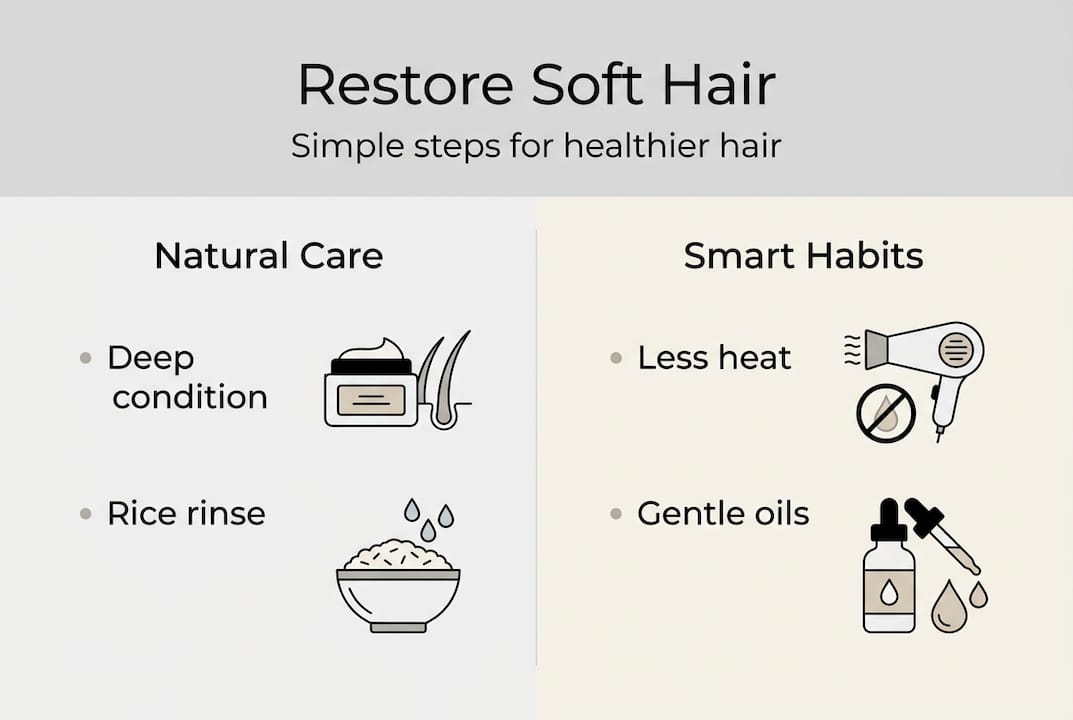
Oils play a crucial role in moisture retention. Coconut oil reduces protein loss during washing by penetrating the hair shaft and forming a protective barrier. Argan oil contains vitamin E and fatty acids that smooth cuticles and add shine. Olive oil seals moisture and improves elasticity. Apply oils to damp hair, focusing on mid-lengths and ends where damage concentrates most.
The LOC method (Liquid-Oil-Cream) creates an effective hydration system:
- Apply a water-based leave-in conditioner to damp hair
- Seal with natural oil to trap moisture inside
- Lock everything with a cream or butter for extended protection
This layering technique prevents moisture evaporation whilst providing multiple levels of nourishment. Each layer serves a specific purpose, working synergistically to maintain hydration throughout the day.
Rice water rinses offer unique benefits. The inositol in rice water repairs hair from inside the shaft, strengthening weakened areas and improving elasticity. Ferment rice water for 24 hours before use to increase nutrient concentration. Apply after shampooing, leave for 20 minutes, then rinse thoroughly.
| Treatment | Primary benefit | Application frequency |
|---|---|---|
| Deep conditioning mask | Intensive moisture and protein | Weekly |
| Coconut oil treatment | Reduces protein loss, seals cuticles | Twice weekly |
| LOC method | Sustained moisture retention | Daily or as needed |
| Rice water rinse | Internal repair and strengthening | Weekly |
| Aloe vera gel | Soothes scalp, adds lightweight moisture | 2-3 times weekly |
Pro Tip: Warm oils slightly before application to improve penetration. The gentle heat opens cuticles temporarily, allowing nutrients to reach deeper layers where they provide maximum benefit.
Avoid products containing sulphates, which strip natural oils aggressively. Similarly, real soap bars with high pH levels disrupt hair’s natural acidity, lifting cuticles and increasing roughness. Choose gentle, pH-balanced cleansers that clean without compromising moisture balance.
Consistency matters more than intensity. Regular gentle treatments produce better long-term results than occasional intensive interventions. Establish a weekly routine incorporating deep conditioning, oil treatments, and protective styling. Over time, cumulative benefits transform hair texture noticeably. Discover more techniques in our guide on how to repair damaged hair naturally.
Supporting hair health from within: nutrition and advanced remedies
External treatments address surface damage, but internal support strengthens hair at its source. Nutraceutical supplements increase hair shaft diameter and reduce breakage by providing concentrated nutrients that support follicle function. Formulations containing marine proteins, biotin, and botanical extracts show measurable improvements in hair density and strength.
Botanical oils offer remarkable growth-enhancing properties. Rosemary and lavender oil combinations boost growth rate by 57% whilst significantly increasing hair thickness. These essential oils improve scalp circulation, delivering more nutrients to follicles whilst creating an environment conducive to healthy growth. Dilute essential oils in carrier oils before applying to avoid irritation.
Protein-moisture balance becomes even more critical when using advanced treatments. Excess protein causes brittleness and breakage, particularly in already damaged hair. Monitor how your hair responds to protein treatments. If strands feel stiff or snap easily, reduce protein and increase moisture-focused treatments.
Specific botanicals address particular concerns:
- Saw palmetto blocks DHT, potentially slowing hair loss
- Ginseng stimulates follicles and extends the growth phase
- Green tea extract provides antioxidants that protect against environmental damage
- Horsetail extract supplies silica for improved hair structure
Dietary considerations significantly impact hair health. Omega-3 fatty acids from fish, flaxseed, and walnuts reduce inflammation and support scalp health. Biotin supports keratin production, the protein that forms hair structure. Zinc regulates oil production and supports follicle function. Iron deficiency commonly causes hair thinning and texture changes, particularly in women.
| Nutrient | Hair benefit | Food sources |
|---|---|---|
| Omega-3 fatty acids | Reduces inflammation, supports scalp health | Salmon, flaxseed, walnuts |
| Biotin | Supports keratin production | Eggs, almonds, sweet potatoes |
| Zinc | Regulates oil production, supports follicles | Oysters, pumpkin seeds, lentils |
| Iron | Prevents thinning and texture changes | Red meat, spinach, lentils |
| Vitamin E | Protects against oxidative stress | Avocado, sunflower seeds, almonds |
Menopausal women face unique hair challenges due to hormonal changes. Botanical supplements containing phytoestrogens may help maintain hair density and texture during this transition. Consult healthcare providers before starting new supplements, particularly if taking medications or managing health conditions.
Combining internal and external approaches creates comprehensive hair restoration. Whilst topical treatments repair existing damage, nutritional support ensures new growth emerges healthy and strong. This dual strategy produces faster, more sustainable improvements than either approach alone. Learn more about growth-supporting nutrients in our article on niacinamide for hair growth.
Explore Luxeva’s natural haircare solutions
Transforming straw-like hair requires premium products formulated with science-backed natural ingredients. Luxeva specialises in botanical-rich treatments that balance moisture and protein whilst delivering essential nutrients directly to damaged strands. Our LUXEVA 3-in-1 biotin & rosemary shampoo set combines growth-stimulating rosemary with strengthening biotin, creating a gentle yet effective daily care system.

Each formula excludes harsh sulphates and parabens, protecting your hair’s natural moisture barrier whilst delivering targeted repair. Our scalp and haircare sets provide complete regimens designed to work synergistically, addressing multiple damage factors simultaneously. Whether you need intensive moisture, protein reinforcement, or growth stimulation, our curated collections offer cruelty-free solutions backed by botanical science and crafted specifically for women seeking natural hair restoration.
FAQ
Why does my hair feel like straw even after conditioning?
Conditioning alone cannot restore severely damaged cuticles or replace lost structural proteins. If cuticle damage is extensive, moisture escapes faster than conditioning can replenish it. You need treatments that seal moisture inside using oils and create a protective barrier. The LOC method addresses this by layering hydration and sealing it effectively, whilst protein treatments rebuild weakened structures that conditioning cannot repair.
Can natural oils really improve hair texture and shine?
Natural oils demonstrably improve texture by reducing protein loss and sealing moisture inside hair shafts. Coconut oil penetrates deeply, preventing structural damage during washing. Argan and olive oils smooth cuticles, creating the light reflection that produces shine. Regular oil treatments rebuild the protective lipid layer that heat and chemicals strip away. Results appear within weeks of consistent application, with continued improvement over months. Discover application techniques in our guide on using argan oil for hair.
What role does diet play in repairing damaged hair?
Diet directly influences hair strength and growth capacity. Nutraceuticals increase hair diameter and reduce breakage by providing concentrated nutrients that support follicle function. Omega-3 fatty acids reduce scalp inflammation, biotin supports keratin production, and zinc regulates oil production. Deficiencies in these nutrients compromise hair quality regardless of external treatments. Combining proper nutrition with topical care produces faster, more sustainable improvements than either approach alone. Explore growth-supporting nutrients in our article on niacinamide for hair growth.
How long does it take to restore straw-like hair to softness?
Restoration timelines vary based on damage severity and treatment consistency. Mild damage responds within 2-4 weeks of regular deep conditioning and oil treatments. Moderate damage requires 6-8 weeks of intensive care including protein treatments and protective styling. Severe damage from repeated chemical processing may need 3-6 months of dedicated treatment. New growth always emerges healthier when you address nutritional factors and eliminate damaging habits. Patience and consistency produce the most dramatic transformations.
Should I cut off damaged hair or try to repair it?
Severely damaged ends often cannot be fully restored and may continue splitting upwards if left untreated. Regular trims every 6-8 weeks remove the most damaged portions whilst allowing you to repair mid-lengths and roots. This balanced approach prevents damage from travelling up the hair shaft whilst maximising length retention. Focus intensive treatments on repairable sections and accept that some damage requires removal. Healthy new growth gradually replaces damaged hair as you maintain protective routines.
Recommended
- Restore damaged dry frizzy hair naturally with premium care – LUXEVA
- How to Revive Damaged Hair Naturally for Luxurious Results – LUXEVA
- How to Reduce Hair Breakage Naturally for Healthier Hair – LUXEVA
- Damaged Hair Repair Naturally: Restore Strength and Shine – LUXEVA
- How to Stop Hair Breakage and Strengthen Your Strands – Cocomera