


If you’ve ever felt the relentless tightness of an extremely dry scalp, you know it’s more than a minor irritation. It’s a daily discomfort that can shake your confidence and leave you searching for relief. Many women find that standard shop-bought products fall short, offering only temporary fixes. This guide shares evidence-based natural remedies and expert strategies designed to deliver long-lasting scalp hydration and genuine comfort.
Table of Contents
- Understanding extreme dry scalp in women
- What you need: Natural remedies, tools, and prep
- Step-by-step: How to treat extremely dry scalp
- Verifying results and adjusting your routine
- Premium natural products for deep scalp hydration
- Frequently asked questions
Key Takeaways
| Point | Details |
|---|---|
| Diagnose with care | Identify if your issue is true dryness or another scalp condition before choosing a remedy. |
| Choose natural blends | Oils like rosemary and aloe vera have clinically backed benefits for dry scalp relief. |
| Routine matters | Consistency with weekly treatments and gentle shampoos leads to the best results. |
| Watch and adapt | Monitor your scalp’s response and switch strategies or seek help if you see no improvement. |
Understanding extreme dry scalp in women
Extreme dry scalp is characterised by persistent tightness, fine white flakes, and relentless itchiness that disrupts your day. Unlike dandruff or seborrhoeic dermatitis, which produce oily, larger flakes and often involve fungal components, dry scalp stems from a lack of moisture and oil production. The distinction matters because treatments differ significantly.
For women, hormonal changes such as menopause can exacerbate scalp dryness, making it a particularly common concern during life transitions. Other culprits include dehydration, product build-up from styling agents, and harsh shampoos that strip natural oils. Understanding these root causes helps you choose the right remedy.
Natural remedies are often preferred for sensitive scalps because they avoid sulphates, parabens, and synthetic fragrances that can worsen irritation. They work with your scalp’s biology rather than against it. If you’re exploring scalp care for women, recognising your specific condition is the first step.
Key symptoms of extreme dry scalp:
- Persistent tightness and discomfort
- Fine, powdery white flakes
- Intense itchiness that worsens after washing
- Dull, lacklustre hair appearance
“Dry scalp results from insufficient moisture, whilst dandruff involves fungal overgrowth and inflammation. Misdiagnosing the two leads to ineffective treatment.”
If you notice oily, yellowish flakes or redness, you may be dealing with dandruff or seborrhoeic dermatitis instead. In such cases, antifungal treatments may be necessary before hydrating remedies can work effectively. For straightforward dryness, the natural approaches outlined here offer powerful relief.
Many women also benefit from learning natural scalp care tips that complement these remedies, creating a holistic routine that addresses both immediate symptoms and long-term scalp health.
What you need: Natural remedies, tools, and prep
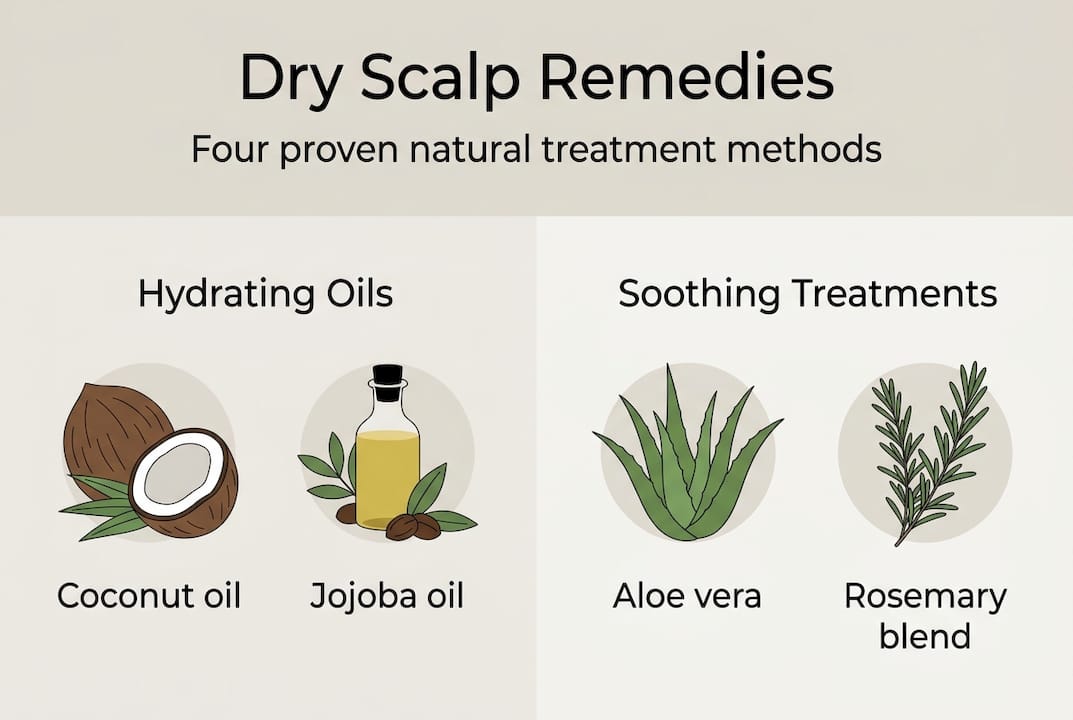
Gathering the right remedies and tools sets you up for success. The most effective natural treatments combine hydration, anti-inflammatory properties, and gentle nourishment. Below is a comparison of top remedies backed by clinical evidence.
| Remedy | Key Benefits | Best For | Application Frequency |
|---|---|---|---|
| Coconut oil | Reduces itchiness and flakiness, deeply moisturises | All hair types, especially thick or coarse | Weekly, 30 min to overnight |
| Rosemary-lavender blend | Superior hydration, promotes circulation | Fine to medium hair, sensitive scalps | Twice weekly, 20-30 minutes |
| Aloe vera gel | Soothes and hydrates with anti-inflammatory action | Sensitive or irritated scalps | After each wash or as needed |
| Hydrating shampoo | Ceramides, hyaluronic acid outperform standard cleansers | Daily or regular washing | Every wash |
| Jojoba oil | Lightweight, mimics natural sebum | Fine or oily-prone hair | Weekly, 20-30 minutes |
Safety is paramount when using natural remedies. Always patch test new oils or gels on your inner forearm 24 hours before applying to your scalp, especially if you have sensitive skin or known allergies. Even natural ingredients can trigger reactions in some individuals.
Optional tools to enhance your routine:
- Scalp massager for improved circulation and product absorption
- Wide-tooth comb to detangle without stress
- Soft microfibre towel to reduce friction and breakage
- Gentle, sulphate-free shampoo to cleanse without stripping
Pro Tip: For very fine or sensitive hair, light oils like jojoba or grapeseed may be preferable to heavier coconut oil. They absorb quickly and won’t weigh down delicate strands.
If you’re comparing options, explore this natural treatments comparison to understand which ingredients align with your hair type and scalp needs. Preparation also includes understanding how to apply hair oil correctly to maximise absorption and avoid greasy residue.
Once you’ve assembled your remedies and tools, you’re ready to implement a treatment routine that delivers real, measurable relief.
Step-by-step: How to treat extremely dry scalp
Following a structured approach ensures you get the most from your chosen remedies. This step-by-step process is designed for flexibility, allowing you to customise based on your hair type and severity of dryness.
Step 1: Pre-treat your scalp
Begin by gently exfoliating or massaging your scalp to remove product build-up and dead skin cells. Use your fingertips in small, circular motions, applying light pressure. This prepares your scalp to absorb oils and treatments more effectively. If you have a scalp massager, this is the perfect time to use it. Spend 3-5 minutes on this step.

Step 2: Warm and apply your chosen remedy
Warm your oil or aloe vera slightly (test temperature on your wrist first). Apply directly to your scalp in sections, using a dropper or your fingertips. Massage thoroughly using circular motions, ensuring even coverage. Weekly use of warmed coconut oil reduces itch and flakes significantly. Leave the treatment on for at least 30 minutes, or overnight for deeper hydration. Cover with a shower cap if leaving on for extended periods.
Step 3: Rinse with gentle, hydrating shampoo
When it’s time to rinse, use a gentle, sulphate-free shampoo to cleanse without stripping natural oils. Massage your scalp lightly whilst shampooing, then rinse thoroughly with lukewarm water. Hot water can exacerbate dryness, so keep the temperature moderate.
Step 4: Reapply hydration after washing
After towel-drying, apply a small amount of aloe vera gel or a lightweight leave-in treatment to your scalp. Avoid heavy oils if your scalp tends towards oiliness or acne. This final layer locks in moisture and soothes any residual irritation.
Pro Tip: Blending rosemary oil with a carrier oil can enhance results. Rosemary-lavender and rosemary-castor blends outperform coconut oil for hydration in some studies, making them excellent choices for persistent dryness.
Clinical evidence:
A randomised controlled trial demonstrated that enriched coconut oil formulations reduced hair fall and dandruff by more than 50% within four weeks. Whilst your primary goal is scalp hydration, these benefits often accompany improved scalp health.
For those interested in maximising treatment effectiveness, learn about using scalp massagers with oils to boost absorption. Proper scalp massaging technique can transform your routine from adequate to exceptional.
Consistency is key. Most women notice visible improvement within two to three weeks of regular treatment. If you’re building a comprehensive routine, explore hair growth rituals that integrate scalp care with overall hair health strategies.
Verifying results and adjusting your routine
Tracking your progress helps you understand what’s working and where adjustments are needed. Use the table below to monitor key indicators and make informed changes to your routine.
| Sign to Track | Week 1 | Week 2 | Week 3 | Suggested Adjustment if No Progress |
|---|---|---|---|---|
| Itchiness level | High | Moderate | Low | Try a different oil or add aloe vera |
| Flaking frequency | Daily | Every 2-3 days | Minimal | Increase treatment frequency |
| Scalp comfort | Tight, uncomfortable | Slightly better | Comfortable | Continue current routine |
| Hair shine | Dull | Improving | Noticeable | Add leave-in conditioner |
Recognising when to adjust is crucial. If you experience increased redness, swelling, or burning after applying a remedy, discontinue use immediately and rinse thoroughly. These symptoms may indicate an allergic reaction or sensitivity.
When to seek medical advice:
- Persistent redness or inflammation after two weeks
- Swelling or painful lesions on the scalp
- Burning sensation that doesn’t subside
- Flaking that worsens despite treatment
- Symptoms that spread beyond the scalp
“Safety note: Avoid heavy oils on oily or acne-prone scalps, as they can clog pores and worsen breakouts. Opt for lightweight alternatives like jojoba or grapeseed oil instead.”
Clinical studies demonstrate that herbal coconut oil reduces hair fall and dandruff by more than 50% in four weeks, but individual results vary. If your scalp shows no improvement after three weeks of consistent treatment, consider consulting a dermatologist to rule out underlying conditions.
For ongoing support, explore different types of hair treatments that complement your scalp care routine. If you’re considering tools to enhance your regimen, review head and scalp massager recommendations to find options that suit your needs.
Adjusting your routine based on real feedback from your scalp ensures you’re always moving towards optimal health and comfort.
Premium natural products for deep scalp hydration
You’ve learned the fundamentals of treating extreme dry scalp naturally. Now it’s time to elevate your results with expertly crafted, evidence-backed formulas designed specifically for deep hydration and scalp revival.
LUXEVA’s biotin-rosemary shampoo and conditioner combines the clinical benefits of rosemary oil with biotin’s strengthening properties. This premium set is formulated without sulphates or parabens, making it ideal for sensitive, dry scalps that need gentle yet effective care.

The rosemary-biotin blend works synergistically to hydrate whilst promoting circulation, addressing both immediate dryness and long-term scalp health. Clinical studies back rosemary’s superior hydration performance, and biotin supports the structural integrity of hair follicles. It’s a smart choice for women seeking science-backed, natural solutions.
Explore the full range of premium hair care at LUXEVA to discover sets and rituals tailored to your unique needs. Every product is crafted with clean, cruelty-free ingredients and backed by rigorous testing. Your scalp deserves the best.
Frequently asked questions
How often should I apply oil to an extremely dry scalp?
Apply warmed coconut oil weekly, leaving it on for 30 minutes to overnight, for best results. Consistency is more important than frequency.
Is aloe vera safe for all scalp types?
Aloe vera gel soothes and hydrates dry scalp with anti-inflammatory properties, but always patch test first, especially on sensitive or allergy-prone skin.
Can a dry scalp routine help with hair growth?
Hydrating the scalp can indirectly support healthier hair, as hydrating remedies reduced hair fall in clinical studies. However, hair growth results depend on individual factors.
What if my scalp stays flaky after using natural remedies?
If flaking persists with redness or discomfort, consult a dermatologist, as it may indicate seborrhoeic dermatitis requiring medicated treatment before hydrating remedies can work.
Are rosemary oil blends better than coconut oil?
Some studies show rosemary-lavender blends outperform coconut oil for hydration, particularly for fine to medium hair. Experiment to find what works best for your scalp.