


Most British women find that over 60 percent of hair treatments on the market contain harsh chemicals and animal byproducts, making it tough to choose truly gentle solutions. For those aiming for healthier hair growth while avoiding cruelty and toxins, daily routines matter. This guide brings together premium, natural oils and scalp massage techniques to help you nurture your scalp and encourage strong, vibrant hair with every step.
Table of Contents
- Step 1: Prepare Hair Growth Oils For Scalp Application
- Step 2: Apply Oils Evenly Across The Scalp
- Step 3: Use A Scalp Massager To Distribute Oils Thoroughly
- Step 4: Monitor And Assess Hair Growth And Scalp Health
Quick Summary
| Key Point | Explanation |
|---|---|
| 1. Choose Suitable Carrier Oils | Natural oils like Coconut, Castor, and Rosemary each offer unique benefits based on your hair type. |
| 2. Cleanse Scalp Before Application | Thoroughly cleanse to remove buildup, enhancing the oils’ absorption and effectiveness. |
| 3. Use Circular Motions for Application | Apply oils using circular motions, starting at the front to ensure even coverage across the scalp. |
| 4. Employ a Scalp Massager | A scalp massager can improve oil distribution and stimulate blood circulation for better results. |
| 5. Regularly Monitor Hair Growth | Document changes monthly using photographs, logs, and inspections for objective tracking of progress. |
Step 1: Prepare hair growth oils for scalp application
Preparing your hair growth oils requires careful selection and strategic application to maximise absorption and effectiveness. Maintaining scalp hygiene plays a critical role in ensuring your hair growth treatment delivers optimal results.
Begin by selecting natural carrier oils suited to your specific hair type. Coconut, castor, and rosemary oils are excellent choices, each offering unique benefits for hair and scalp health. Warming these oils slightly can enhance absorption and improve circulation. Mix your chosen carrier oil with a few drops of essential oils like lavender or peppermint to create a personalised hair growth treatment. Ensure the oil blend is at a comfortable temperature before application, typically around body temperature.
Here is a summary of popular carrier oils and their unique properties:
| Oil Type | Main Benefit | Suitable Hair Types |
|---|---|---|
| Coconut | Deep moisturising | Dry, brittle, damaged |
| Castor | Promotes thickness | Thinning, fragile |
| Rosemary | Stimulates circulation | All types, especially thinning |
Before applying the oil, thoroughly cleanse your scalp to remove any product buildup or residue. This preparation step allows the oils to penetrate deeply and work more effectively. Gently massage the oil mixture into your scalp using circular motions, promoting blood circulation and helping the nutrients absorb more efficiently.
Expert recommendation: Always perform a small patch test with your oil blend to check for any potential allergic reactions before full application.
Step 2: Apply oils evenly across the scalp
Applying hair growth oils requires a strategic approach to ensure maximum absorption and effectiveness across your entire scalp. Applying oils thoroughly involves creating a systematic method that distributes nutrients evenly and stimulates hair follicles.
Begin by dividing your hair into manageable sections, which will help you apply the oil systematically and ensure complete scalp coverage. Use your fingertips to gently massage the oil mixture directly onto your scalp, working in small circular motions. Start at the front of your scalp and gradually move towards the back, ensuring each area receives equal attention. The key is to use gentle yet firm pressure that stimulates blood circulation without causing discomfort.
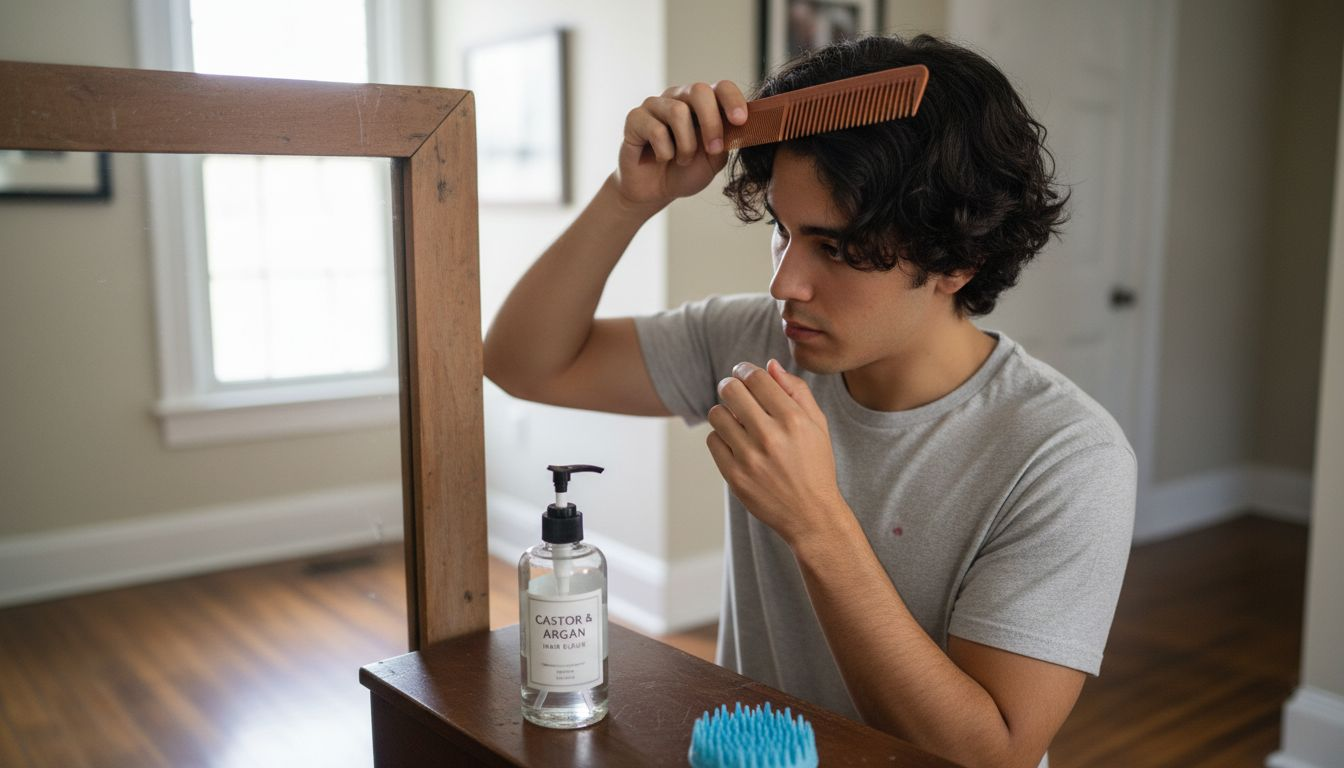
Focus on distributing the oil from the roots to the tips, paying special attention to areas with thinning hair or noticeable scalp dryness. Take your time during application, allowing the oil to penetrate deeply into the hair follicles. A consistent and thorough application technique will help maximise the potential benefits of your chosen hair growth oil blend.
Expert recommendation: Use a soft scalp massager to enhance oil distribution and improve blood circulation during your application routine.
Step 3: Use a scalp massager to distribute oils thoroughly
Scalp massagers are essential tools for maximising the effectiveness of your hair growth oil treatment. Scalp massager techniques can dramatically improve oil absorption and stimulate blood circulation across your scalp.
Select a scalp massager with soft silicone tips that will gently work the oils into your scalp without causing irritation. Position the massager at your scalp’s front and use slow circular motions, moving systematically from the front to the back of your head. Apply consistent yet gentle pressure to ensure even distribution of the oil and to stimulate hair follicles. Different massagers offer various designs from manual handheld options to electric versions with multiple motion patterns. Choose one that feels comfortable and allows you to reach all areas of your scalp effectively.
Pay special attention to areas with thinning hair or noticeable dryness, spending extra time massaging these regions. The mechanical stimulation helps break up product buildup while encouraging nutrient absorption. Aim for a massage duration of approximately 5 to 10 minutes, ensuring you cover your entire scalp thoroughly and evenly.
Expert recommendation: Clean your scalp massager thoroughly after each use to prevent bacteria buildup and maintain optimal hygiene.
Step 4: Monitor and assess hair growth and scalp health
Tracking your hair growth journey requires systematic observation and careful documentation. Hair and scalp examination helps you understand the effectiveness of your hair growth treatment and identify potential improvements.
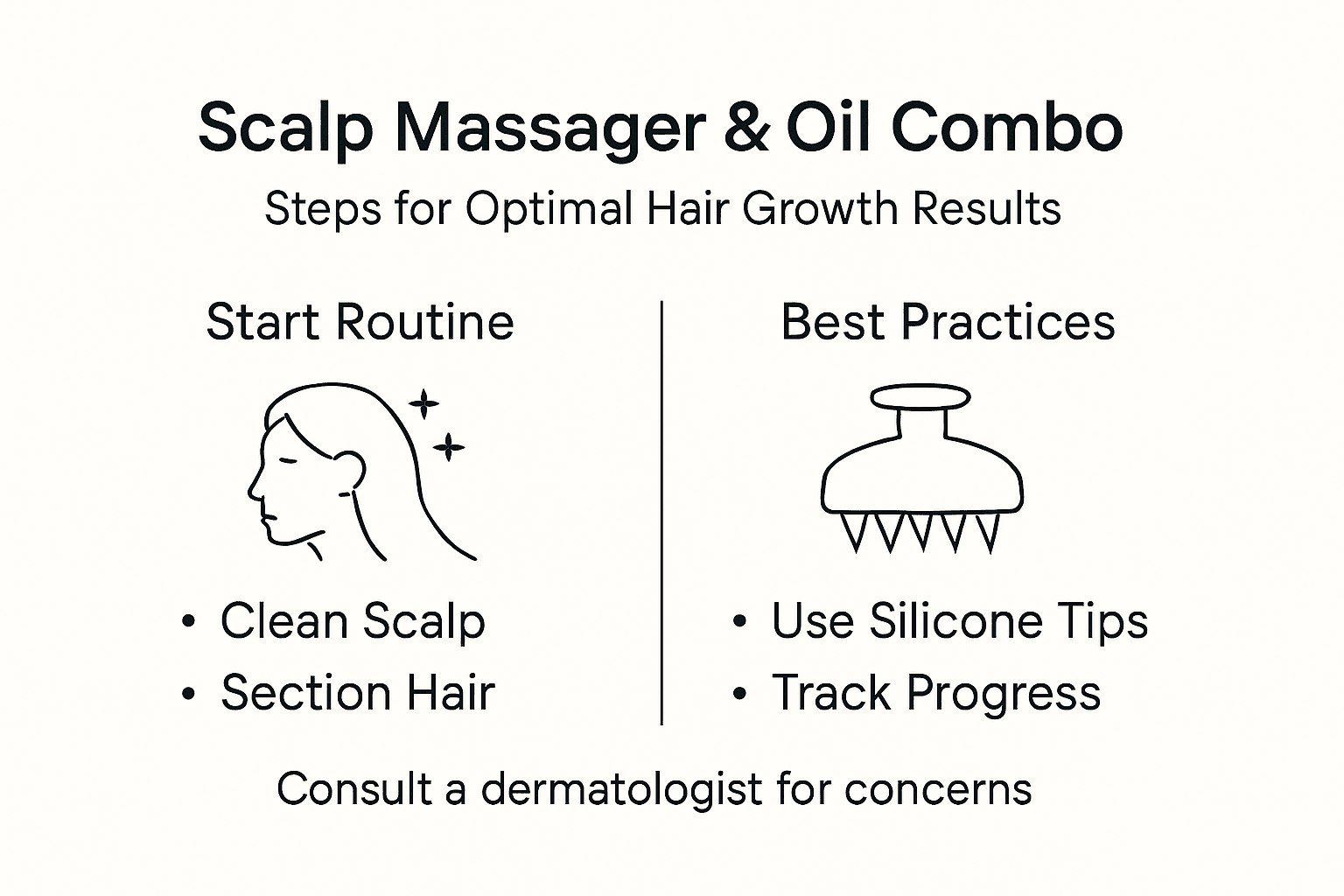
Begin by taking clear photographs of your scalp and hair from multiple angles under consistent lighting conditions. Create a monthly tracking log where you record key observations such as hair density, scalp condition, and any visible changes in hair thickness or texture. Pay attention to signs of scalp health including potential inflammation, dryness, or unusual hair shedding. Use a bright mirror and natural light to conduct thorough visual inspections, focusing on areas with previous thinning or hair loss.
Consider using digital tools or smartphone apps that can help you track hair growth progress more objectively. Take measurements of hair thickness at specific points and note the length of new growth. Look for consistent improvements in hair texture, reduced breakage, and overall scalp health. Remember that hair growth is a gradual process typically requiring consistent treatment for 3 to 6 months before significant changes become noticeable.
For effective tracking, here is a guide to monitoring hair growth and scalp condition:
| Tracking Method | Purpose | Recommended Frequency |
|---|---|---|
| Scalp Photograph | Visual record of progress | Monthly |
| Hair Density Log | Notes on thickness and texture | Monthly |
| Scalp Inspection | Detect inflammation or dryness | Weekly |
| App Measurement | Objective growth tracking | Monthly |
Expert recommendation: Take progress photos from the same angle and in similar lighting each month to create an accurate visual record of your hair growth journey.
Unlock the Full Potential of Your Hair Growth Oils with Premium Tools and Treatments
If you have been wondering how to maximise the benefits of scalp massagers used with hair growth oils this article highlights the critical steps to improve absorption and stimulate circulation for healthier hair. Common challenges include ensuring even oil distribution and choosing the right nourishing ingredients that truly support scalp health and hair thickness. At LUXEVASTORE.com you can discover a curated selection of natural and scientifically-backed haircare products such as argan oil and rosemary mint blends formulated to enhance your scalp ritual.

Take charge of your hair growth journey today and explore luxurious, cruelty-free solutions designed to work perfectly with your scalp massager. Visit LUXEVASTORE.com to find premium oils and treatment sets that elevate your routine. Act now to benefit from exclusive offers and step into a world where natural beauty meets effective science. Start your transformation by choosing products that align with your goals and experience the difference of expert care made just for you.
Frequently Asked Questions
Can I use a scalp massager with hair growth oils?
Yes, you can use a scalp massager with hair growth oils. To achieve optimal results, apply the oils first and then use the massager for 5 to 10 minutes to enhance absorption and stimulate blood circulation.
How often should I use a scalp massager with hair growth oils?
For best results, use a scalp massager with hair growth oils at least twice a week. Regular use allows for consistent stimulation of hair follicles and can contribute to improved scalp health over time.
What type of scalp massager should I choose for oil application?
Select a scalp massager with soft silicone tips for gentle application without irritation. Ensure it fits comfortably in your hand and allows you to reach all areas of your scalp effectively while distributing the oil evenly.
How can I maximise the effectiveness of hair growth oils with a scalp massager?
To maximise effectiveness, perform a thorough scalp cleansing before applying oils and using the massager. Focus on massaging areas with thinning hair for a few extra minutes to promote better absorption of nutrients.
Can I combine different hair growth oils when using a scalp massager?
Yes, you can combine various hair growth oils to create a personalised blend. Mix oils like coconut, castor, or rosemary before massaging them into your scalp for enhanced benefits tailored to your specific hair type.
How do I monitor progress when using hair growth oils and a massager?
Monitor progress by taking monthly photographs of your scalp and hair. Record observations regarding hair density and scalp condition, allowing you to track improvements in texture and overall health over time.