


Finding a scalp care routine that truly nourishes can feel elusive when every shelf promises lush, resilient locks. Yet the connection between scalp health and hair vitality is more than skin deep. Research reveals a direct cause-and-effect link between scalp condition and hair quality, with poor scalp health leading to brittle, fragile strands. For British women prioritising natural, cruelty-free solutions, understanding this relationship changes everything. This guide explores how science-backed, gentle ingredients nurture your scalp for stronger, healthier hair that lasts.
Table of Contents
- Scalp Care Explained: Healthy Hair Starts Here
- Common Scalp Types and Key Challenges
- Science-Backed Natural Ingredients to Use
- Modern Scalp Care Rituals and Treatments
- Risks, Myths, and Mistakes to Avoid
Key Takeaways
| Point | Details |
|---|---|
| Scalp Health is Fundamental | Healthy hair growth relies directly on a thriving scalp, making scalp care essential for overall hair vitality. |
| Targeted Scalp Care Products are Necessary | Generic hair products often fail; effective care should focus on individual scalp types and specific needs. |
| Natural Ingredients are Beneficial | Ingredients like Argan Oil and Aloe Vera have scientifically proven benefits for scalp health, supporting hair vitality without harsh chemicals. |
| Establish Consistent Rituals | A structured scalp care ritual performed regularly is crucial for long-term scalp health and hair quality improvement. |
Scalp Care Explained: Healthy Hair Starts Here
Your scalp is not simply skin that happens to sit beneath your hair. It’s the foundation upon which healthy, vibrant hair grows. When your scalp thrives, your hair follows. When your scalp struggles, even the most expensive treatments cannot fully compensate for what’s happening at the root. The relationship between scalp condition and hair quality is direct and measurable. Research shows a clear cause-and-effect link: when scalp health deteriorates, hair becomes brittle and fragile due to disrupted keratinisation of the hair cuticle, leading to accelerated degradation and vulnerability to damage. The good news? This process is reversible. By restoring scalp health, you actively reverse these damaging effects and create an environment where strong, resilient hair can flourish.
What makes scalp health so powerful is that it operates at a biological level you cannot see but absolutely feel. Your scalp hosts a complex ecosystem of microorganisms known as the microbiome. A healthy scalp microbiome plays a vital role in maintaining scalp balance and regulating inflammation. When this microbial community is in harmony, it actively supports hair health and prevents dermatological conditions. When balance is disrupted, inflammation increases, follicles weaken, and hair suffers. This is why general hair products often fail for women dealing with scalp issues. They address the hair shaft itself rather than the living ecosystem that must sustain it. You need scalp care that works with your body’s natural processes, not against them. Natural, scientifically-backed treatments containing clean ingredients support this biological balance far more effectively than harsh, synthetic formulations.
Here’s what practical scalp care looks like. Start by understanding what your scalp actually needs. A dry, flaky scalp requires different attention than an oily, congested one. Both require consistency. Scalp health develops over weeks, not days. Many women expect overnight transformation when introducing new routines, but your scalp microbiome and skin barrier rebuild gradually as you provide consistent nourishment. Look for products featuring natural ingredients such as argan oil, plant-based botanicals, and biotin that support both scalp condition and hair vitality. Cruelty-free formulations matter not just ethically but also because they typically exclude harsh surfactants and parabens that damage your scalp’s delicate balance. When you commit to genuine scalp care rather than simply washing and conditioning your hair, you fundamentally change what’s possible for your hair health.
Pro tip: Massage your scalp with your fingertips for two minutes whilst applying your scalp treatment, as this increases blood circulation to hair follicles and helps nourishing ingredients penetrate more effectively into the scalp layers.
Common Scalp Types and Key Challenges
Not all scalps are created equal. Your scalp type is determined by a combination of genetics, environmental factors, lifestyle habits, and underlying health conditions. Understanding which category your scalp falls into is the first step toward providing it with genuinely effective care. The mistake most women make is treating their scalp like everyone else’s, then wondering why recommended products fail to deliver results. A routine that transforms one woman’s scalp might irritate another’s. This is why identifying your specific scalp type matters far more than following generic advice. Scalp health factors vary significantly across individuals, meaning your care approach must be tailored to your unique situation rather than based on what worked for your friend or sister.
Dry scalps present challenges that go beyond mere flakiness. A dry scalp lacks sufficient moisture and natural oils, which weakens the skin barrier and leaves it vulnerable to irritation and inflammation. You might notice visible flaking, itching, or a tight sensation when you touch your scalp. The temptation is often to wash more frequently, but this strips away remaining moisture and worsens the problem. Dry scalps require nourishing treatments featuring ingredients like argan oil and plant-based botanicals that replenish moisture without heavy buildup. Oily scalps, by contrast, produce excess sebum that can clog hair follicles and create an environment where dandruff-causing microbes thrive. Your hair may look limp or greasy within hours of washing, and you might experience stubborn scalp itching. Oily scalps still require moisture, but from lightweight, balancing formulations rather than heavy oils. Sensitive scalps react to triggers including certain ingredients, environmental changes, or stress. Redness, burning sensations, or unexplained inflammation signal sensitivity. These scalps benefit from gentle, fragrance-free products with minimal ingredients. Normal scalps, whilst appearing straightforward, still need consistent care to maintain their balanced state and prevent problems from developing.

To help identify and address your scalp’s needs, here is a comparison of different scalp types and recommended care approaches:
| Scalp Type | Main Challenge | Signs to Identify | Best Care Approach |
|---|---|---|---|
| Dry | Lacks moisture, barrier weak | Flaking, itching, tightness | Use nourishing oils, gentle washing |
| Oily | Excess sebum, clogged follicles | Greasiness, limp hair, itching | Lightweight, balancing products |
| Sensitive | Reacts to triggers easily | Redness, burning, soreness | Fragrance-free, minimal formula |
| Normal | Maintains natural balance | Comfortable, no symptoms | Gentle, consistent maintenance |
Dandruff represents one of the most common scalp challenges, regardless of scalp type. Contrary to popular belief, dandruff is not simply dry skin. It’s a condition involving inflammation and an imbalance in your scalp microbiome. Similarly, hair loss concerns often originate from scalp health issues rather than the hair itself. When scalp conditions deteriorate, follicles weaken and cannot support healthy growth. The interconnection between your scalp’s wellbeing and your hair’s vitality becomes undeniable when you witness how addressing one improves the other. Women in the UK increasingly recognise that investing time in scalp care delivers far more dramatic hair improvements than focusing exclusively on conditioning the hair shaft itself.
Pro tip: Patch test any new scalp product on a small area behind your ear first, as this reveals how your specific scalp will respond without risking irritation across your entire head.
Science-Backed Natural Ingredients to Use
The gap between “natural” marketing claims and actual scientific efficacy is wider than most women realise. Just because an ingredient comes from a plant does not automatically mean it works. However, certain natural compounds have been rigorously tested and proven to deliver measurable results for scalp and hair health. These are the ingredients worth seeking out when selecting scalp care products. Phytochemicals, derived from herbs, essential oils, and plant extracts, represent the intersection of nature and science where real transformation happens. Aloe vera reduces inflammation and soothes irritated scalp tissue whilst providing hydration to dehydrated areas. Rosemary stimulates blood circulation to hair follicles and has been shown to reduce dandruff-causing microbes. Jojoba oil mimics your scalp’s natural sebum composition, making it exceptionally compatible with your skin barrier. These ingredients do not simply feel pleasant or smell appealing. They actively modify scalp chemistry and support healthier hair growth at the biological level.
Argan oil deserves specific attention because it addresses multiple scalp challenges simultaneously. Rich in antioxidants and essential fatty acids, argan oil nourishes dry, compromised scalps without leaving the greasy residue that many oils create. For women with sensitive scalps, it reduces redness and irritation. For those with oily scalps, it provides lightweight moisture that prevents the overproduction of sebum. Biotin supports keratin production, which directly strengthens hair structure and reduces breakage. Plant-based botanicals work synergistically with your scalp’s natural microbiome rather than disrupting it, maintaining the microbial balance essential for long-term scalp health. The science here is straightforward: sustainable haircare formulations utilise botanical extracts and renewable ingredients that enhance scalp health by nourishing hair surfaces and maintaining microbial equilibrium. This represents a fundamental shift away from harsh synthetic ingredients toward solutions that work with your body’s biology rather than against it.
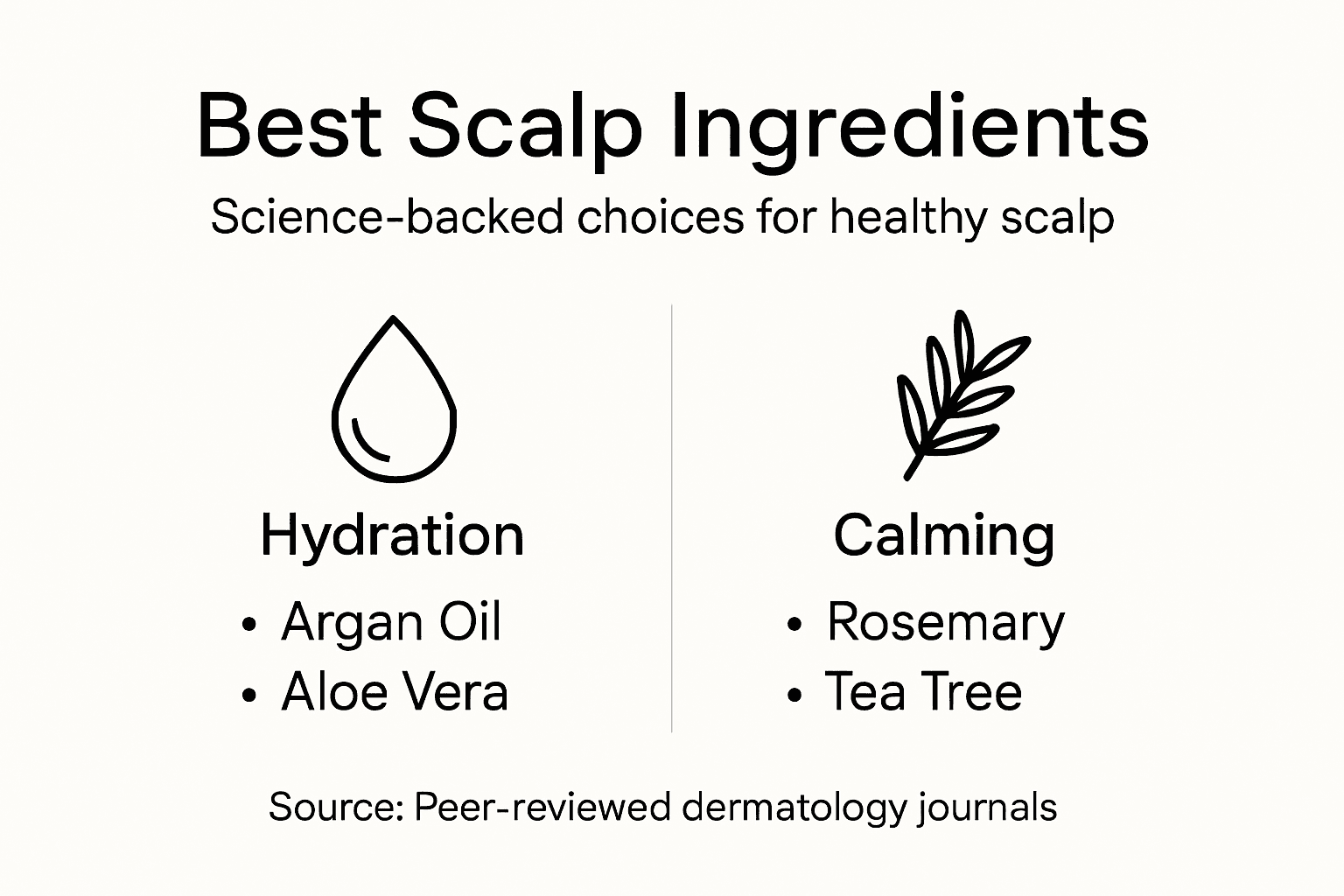
Below is a quick reference guide to science-backed natural ingredients frequently used in modern scalp care:
| Ingredient | Main Benefit | Ideal For |
|---|---|---|
| Argan Oil | Hydrates, soothes, protects | Dry or sensitive scalps |
| Aloe Vera | Reduces inflammation, hydrates | Irritated areas |
| Rosemary | Boosts circulation, fights microbes | Flaky or oily issues |
| Jojoba Oil | Balances sebum, supports barrier | Oily or balanced types |
| Biotin | Strengthens hair structure | Weak or thinning hair |
| Botanical Extracts | Support microbiome, gentle care | All scalp types |
When evaluating scalp care products, look for specific natural ingredients rather than vague marketing language like “botanical blend” or “herbal infusion.” A product listing argan oil, rosemary extract, and biotin with clear percentages demonstrates transparency and confidence in its formulation. Cruelty-free certifications matter because they typically correlate with higher standards for ingredient sourcing and formulation safety. Avoid products containing sulphates and parabens, which damage your scalp barrier and disrupt microbial balance. The most effective scalp care combines multiple scientifically-proven natural ingredients rather than relying on a single “hero” component. Women in the UK increasingly prefer products that balance efficacy with ethical production, recognising that true luxury comes from ingredients that genuinely work, not from marketing hype. Your scalp responds to consistency and quality more than to price point. A moderately-priced product with proven natural ingredients will outperform expensive formulations with questionable ingredient profiles.
Pro tip: When starting any new scalp treatment with natural ingredients, apply it to a small section first and wait forty-eight hours to observe how your scalp responds, as even excellent natural ingredients occasionally trigger sensitivity in individuals with particularly reactive scalps.
Modern Scalp Care Rituals and Treatments
Scalp care has transitioned from an afterthought to a wellness ritual in its own right. The old approach of simply shampooing and conditioning no longer meets the demands of women seeking genuine scalp health. Modern scalp care recognises that your scalp deserves the same intentional attention you give to your facial skin. This shift reflects decades of research demonstrating that comprehensive scalp treatment drives measurable improvements in hair quality, texture, and growth. Today’s most effective rituals incorporate multiple treatment layers designed to exfoliate, nourish, and revitalise the scalp environment. Scalp exfoliants remove dead skin cells and product buildup that suffocate hair follicles. These can be gentle physical exfoliants featuring fine minerals or enzymatic formulations using fruit acids and botanical enzymes. Following exfoliation, nourishing serums deliver concentrated doses of beneficial ingredients directly to the scalp. Scalp masks provide intensive hydration and treatment, functioning much like face masks but formulated specifically for scalp chemistry. These three components together create the foundation of modern scalp wellness.
Modern scalp treatment approaches now combine therapeutic and cosmetic strategies that promote both immediate scalp health and long-term hair regrowth. This means treatments include anti-inflammatory agents that calm irritation and redness, growth-supporting compounds that strengthen follicles, and probiotic formulations that restore microbial balance. The most sophisticated routines adopt a holistic framework integrating topical products with lifestyle modifications and consistent treatment protocols. A woman with a dry, flaky scalp might follow a weekly ritual of gentle exfoliation followed by a nourishing mask infused with argan oil and rosemary extract. Someone managing an oily scalp might use lightweight balancing serums and clarifying treatments twice weekly. The key difference between casual haircare and genuine scalp ritual is intentionality and specificity. You are no longer simply washing your hair. You are actively treating your scalp as the organ it is, recognising that scalp massage benefits extend beyond relaxation to include improved circulation and enhanced ingredient absorption.
Building your personal scalp care ritual requires starting with assessment, then selecting treatments matching your specific scalp type. Begin with weekly exfoliation to remove barriers preventing ingredient penetration. Follow with a targeted serum addressing your scalp’s primary concern, whether that is hydration, oil control, inflammation reduction, or growth stimulation. Monthly intensive treatments such as scalp masks provide deeper nourishment and reset your scalp environment. Consistency matters more than complexity. A simple weekly routine performed faithfully delivers superior results compared to elaborate treatments used sporadically. Women in the UK report that adopting structured scalp rituals transforms not only their hair health but also their relationship with beauty routines. The ritual aspect itself becomes grounding, a dedicated moment of self-care rather than a rushed chore. Natural, cruelty-free formulations enhance this experience because they align with values of mindful wellness and ethical consumption. Over four to eight weeks of consistent ritual, most women observe visible improvements in scalp appearance, reduced itching or irritation, and noticeably stronger, more resilient hair.
Pro tip: Apply your scalp treatment before showering and let it sit for five to ten minutes, allowing natural heat from your body and the shower environment to enhance ingredient penetration and maximise the treatment’s effectiveness.
Risks, Myths, and Mistakes to Avoid
The scalp care landscape is cluttered with misconceptions that actively harm the very people trying to help themselves. One pervasive myth is that stronger shampoos clean better. The opposite is true. Harsh chemical shampoos strip your scalp’s natural protective oils, damage your skin barrier, and trigger compensatory oil production that leaves hair greasier than before. Another widespread mistake involves treating scalp concerns with topical products alone whilst ignoring the systemic factors driving those concerns. You cannot fix a scalp struggling with chronic stress, poor nutrition, or sleep deprivation through serums and masks alone. Effective scalp health management requires a holistic approach that integrates topical treatments with lifestyle modifications including stress management, adequate sleep, and nutritional support. This distinction separates women who see modest improvements from those who experience transformative results.
Washing your scalp too frequently ranks among the most common mistakes, particularly amongst women with oily scalp concerns. Paradoxically, excessive washing intensifies oiliness because it signals your scalp to produce even more sebum to compensate for the stripped natural oils. Most scalps thrive when washed two to three times weekly, not daily. Similarly, many women believe that scalp pain or itching requires more aggressive treatment when it actually signals your scalp is overloaded and needs gentler care. Mistake number three involves using products formulated for skin or body on the scalp. Your scalp’s pH, sebum composition, and microbiome differ substantially from facial skin. Using a facial moisturiser on your scalp often exacerbates problems rather than solving them. The myth that natural ingredients cannot be as effective as synthetic chemicals causes many women to dismiss plant-based solutions prematurely. The evidence directly contradicts this. Argan oil, rosemary extract, and biotin deliver measurable results that match or exceed synthetic alternatives, with significantly fewer side effects and no damage to your scalp barrier.
Another critical mistake involves changing products too frequently. Your scalp microbiome needs time to adjust to new treatments. Switching products weekly or fortnightly prevents your scalp from receiving consistent stimulus and prevents you from accurately assessing what actually works. Most scalp conditions require four to eight weeks of consistent treatment before meaningful improvement appears. Women often abandon effective products prematurely because they expect overnight results. Additionally, avoid the temptation to use multiple actives simultaneously. Combining exfoliating treatments with strong acids or multiple growth-stimulating serums simultaneously overwhelms your scalp and triggers sensitivity. Build your routine gradually, introducing one new product every two weeks. Finally, resist the misconception that more expensive products guarantee better results. A moderately priced product containing proven natural ingredients like argan oil and rosemary will outperform an expensive formulation with questionable ingredient profiles and harsh chemical bases. Price reflects marketing budgets and packaging far more often than actual efficacy.
Pro tip: Track your scalp’s response to new treatments using a simple calendar, noting any changes in itching, flaking, oiliness, or hair texture over four weeks so you can identify which products genuinely work versus which are wasting money.
Transform Your Scalp Care Routine for Stronger, Healthier Hair
Struggling with dryness, oiliness or irritation? The key to vibrant hair starts with restoring your scalp’s natural balance. At LUXEVASTORE, discover tailored solutions that nourish your scalp microbiome and revive your hair from the root. Our Scalp & Haircare Sets – LUXEVA include clean, cruelty-free formulas enriched with argan oil, biotin and rosemary to soothe inflammation and support hair vitality.

Don’t wait to see the difference consistent, science-backed scalp care can make. Explore our Sulphate Free Shampoo Sets: Elevate Your Haircare Ritual with LUXEVA and Top Hair Growth Oils & Sprays: Conditioners, Detanglers, Protectants – LUXEVA designed for all scalp types. Visit LUXEVASTORE.com today and begin your journey to healthy, resilient hair that radiates wellness from scalp to tip.
Frequently Asked Questions
What is the importance of scalp health for hair vitality?
Scalp health is crucial for hair vitality because a healthy scalp provides the foundation for strong, vibrant hair growth. When the scalp struggles, hair can become brittle and fragile, leading to damage and hair loss.
How can I identify my scalp type?
You can identify your scalp type by observing the condition of your scalp and hair. Dry scalps may feel flaky and tight, while oily scalps often appear greasy and limp. Sensitive scalps may react with redness or irritation, while normal scalps typically have no symptoms.
What are the best natural ingredients for scalp care?
Effective natural ingredients for scalp care include argan oil for hydration, aloe vera for inflammation reduction, rosemary for stimulating circulation, jojoba oil for balancing sebum, and biotin for strengthening hair structure.
How often should I perform scalp treatments to see improvement?
Scalp treatments should be performed consistently, ideally weekly for exfoliation and nourishing masks, with serums applied regularly. Most women will start to see visible improvements in about four to eight weeks of consistent care.
Recommended
- 7 Proven Hair Wellness Habits for Luxurious, Healthy Hair – LUXEVA
- Scalp Massage and Hair Growth: Science and Real Impact – LUXEVA
- Scalp Massagers and Hair Growth: Evidence and Benefits – LUXEVA
- 7 Biotin Haircare Advantages Every Woman Should Know – LUXEVA
- Understanding How to Improve Scalp Health Effectively | MyHair