


TL;DR:
- Women’s hair loss is caused by genetic, hormonal, nutritional, and lifestyle factors.
- Early diagnosis and personalized treatment strategies are essential for effective hair restoration.
- Natural and medical solutions, combined with lifestyle changes, can improve hair health over time.
Over 50% of women experience noticeable hair loss at some point in their lives, yet the conversation around it remains frustratingly vague. Most advice points to ageing or stress and stops there. But hair fall in women is far more layered than that. Genetics, hormones, nutrition, lifestyle, and even certain medications all play a role. This guide breaks down the real causes, explains the biology behind them in plain language, and gives you practical, evidence-based steps to take back control of your hair health.
Table of Contents
- The main causes of hair fall in women
- How hormones, genetics, and lifestyle impact your hair
- Recognising the signs and when to seek help
- Evidence-based and natural solutions for women’s hair fall
- A fresh perspective: why a one-size-fits-all approach to hair fall fails women
- Find your next step with premium, natural hair care
- Frequently asked questions
Key Takeaways
| Point | Details |
|---|---|
| Most common causes | Female pattern hair loss and telogen effluvium are responsible for most hair fall in women. |
| Triggers and risk factors | Stress, hormonal shifts, and nutritional gaps can all sharply increase shedding. |
| Recognising problems | Losing more than 100 hairs a day or seeing visible thinning means medical advice is needed. |
| Natural solutions | Science supports several botanical ingredients and lifestyle tweaks for better hair health. |
| Personalised approach | No single remedy suits all—tailor choices based on your cause and health profile. |
The main causes of hair fall in women
Hair loss is not a single condition. It is a symptom with many possible origins, and understanding which one applies to you is the first step towards addressing it properly.
Female pattern hair loss (FPHL) is the most widespread type. FPHL affects over 50% of women at some stage of life. It typically shows up as gradual thinning at the crown and along the parting, rather than a receding hairline as seen in men. Genetics and hormonal shifts, particularly around menopause, are the primary drivers.
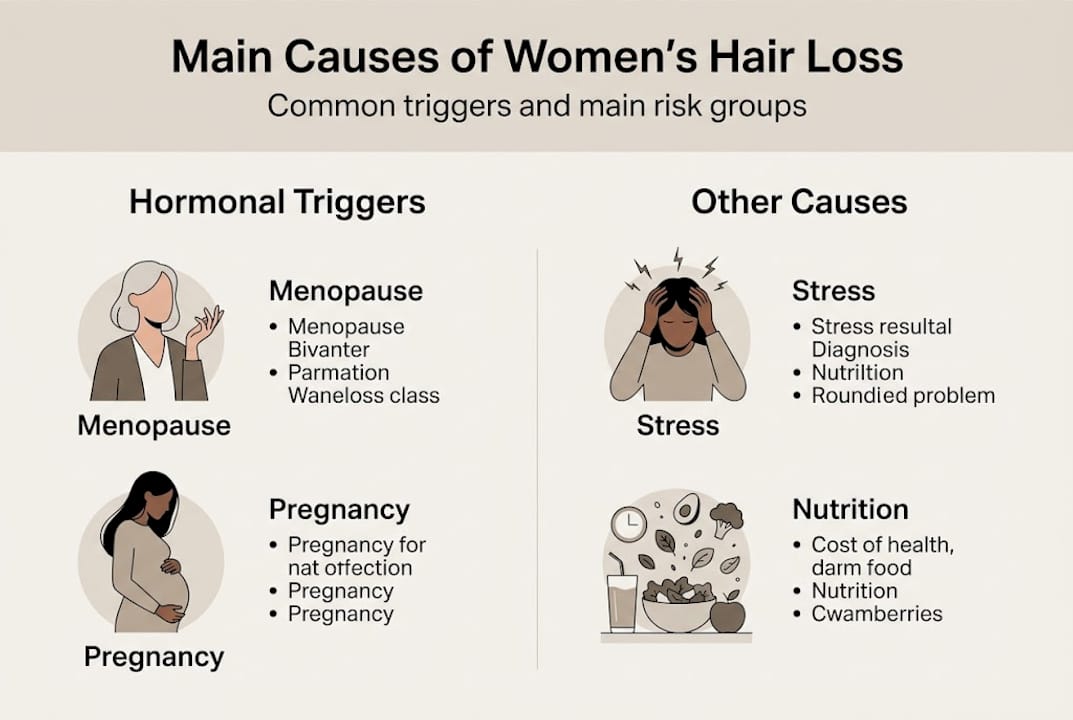
Telogen effluvium (TE) is the second most common cause. This happens when a large number of hair follicles are pushed into the resting phase simultaneously, causing widespread shedding two to four months after a trigger event. Triggers include illness, surgery, rapid weight loss, postpartum hormonal changes, and severe emotional stress. Research shows that ferritin is low in 46.5% of telogen effluvium patients, making iron deficiency one of the most overlooked contributing factors.
Other causes worth knowing about include:
- Thyroid disorders: Both hypothyroidism and hyperthyroidism disrupt the hair growth cycle.
- Anaemia: Low red blood cell counts reduce oxygen delivery to follicles.
- Polycystic ovary syndrome (PCOS): Elevated androgens can trigger thinning, particularly at the temples.
- Traction alopecia: Tight hairstyles like braids or high ponytails cause mechanical damage over time.
- Autoimmune conditions: Alopecia areata causes patchy loss when the immune system attacks follicles.
- Chemotherapy: Targets rapidly dividing cells, including those in hair follicles.
| Cause | Onset | Pattern | Who is most at risk |
|---|---|---|---|
| FPHL | Gradual | Crown and parting | Women 40+ and postmenopausal |
| Telogen effluvium | 2–4 months post-trigger | Diffuse, all over | Women after illness, birth, or stress |
| Alopecia areata | Sudden | Patchy | Any age, often autoimmune |
| Traction alopecia | Gradual | Temples and hairline | Women who wear tight styles |
| Thyroid-related | Variable | Diffuse | Women with thyroid conditions |
It is worth noting that losing 50 to 100 hairs per day is entirely normal. Hair naturally cycles through growth, transition, and resting phases. It is only when shedding exceeds this consistently, or when thinning becomes visible, that intervention is worth considering.
Pro Tip: If you notice rapid, diffuse thinning across the whole scalp rather than a specific area, telogen effluvium is more likely than FPHL. Tracking the timeline of any recent stressors or illnesses can help pinpoint the trigger. You can also explore hair thinning natural solutions to support recovery during this phase.
“Hair fall is rarely caused by just one thing. It is almost always a combination of factors working together, which is why a single product or fix rarely solves the problem entirely.”
How hormones, genetics, and lifestyle impact your hair
Understanding the biology behind hair loss makes it far easier to choose the right approach. Let’s look at what is actually happening inside your follicles.
Oestrogen and progesterone support the growth phase of the hair cycle. When these hormones drop, as they do during perimenopause and menopause, hair spends less time growing and more time resting. This is why many women notice thinning in their 40s and 50s even without a family history of hair loss.
Androgens and DHT (dihydrotestosterone) are often associated with male hair loss, but they affect women too. In androgen-sensitive follicles, DHT causes miniaturisation, meaning each hair grows back finer and shorter over successive cycles until the follicle stops producing visible hair altogether. Importantly, not all FPHL is androgen-dependent. Some women develop FPHL with completely normal androgen levels, which is why anti-androgen treatments do not work for everyone.
Genetics also play a significant role. If your mother or grandmother experienced thinning, your risk is higher. But genetics are not destiny. Environmental and lifestyle factors can either accelerate or slow the process considerably.
Lifestyle triggers that are frequently underestimated include:
- Rapid weight loss or very restrictive diets that cut protein and micronutrients
- Prolonged illness, including post-COVID-19 hair shedding, which became widely reported from 2021 onwards
- Certain medications including blood thinners, antidepressants, and hormonal contraceptives
- Chronic psychological stress, which elevates cortisol and disrupts the hair cycle
- Overuse of heat styling tools, which weakens the hair shaft over time
The hormonal hair loss causes are often intertwined with nutritional deficiencies. Low ferritin (the stored form of iron), vitamin D, and vitamin B12 are consistently linked to excess shedding in women. These nutrients are critical for cell production in the follicle, and even a subtle deficiency can tip the balance towards increased hair fall.
| Type | Hormonal trigger | Non-hormonal trigger | Key nutrient link |
|---|---|---|---|
| FPHL | DHT, oestrogen decline | Genetics | Iron, vitamin D |
| Telogen effluvium | Postpartum hormones | Stress, illness, diet | Ferritin, B12 |
| Thyroid-related | Thyroid hormones | N/A | Selenium, iodine |
| PCOS-related | Elevated androgens | Insulin resistance | Zinc, inositol |
For a deeper look at science-backed scalp solutions, the evidence consistently points to a multi-factor approach rather than a single remedy.
Recognising the signs and when to seek help
Spotting the difference between normal shedding and a real problem is not always straightforward. But there are clear signals worth watching for.
Normal daily shedding of 50 to 100 hairs looks like a few strands on your brush or in the shower. When TE causes over 125 hairs per day of shedding, it becomes noticeably more dramatic. You might find clumps in the shower drain, significant amounts on your pillow, or handfuls when running fingers through your hair.
Common patterns by cause:
- FPHL: Widening of the central parting, thinning at the crown, overall reduced volume
- Telogen effluvium: Diffuse thinning across the entire scalp, no specific pattern
- Alopecia areata: Smooth, circular patches of complete hair loss
- Traction alopecia: Thinning along the hairline and temples
- Thyroid-related: Diffuse thinning, often with dry or brittle texture
Pro Tip: Keep a simple daily count for one week by collecting shed hairs from your brush, shower, and pillow. If you consistently count well above 100 strands, or if the number has suddenly increased, that is worth discussing with a doctor.
When to consult a healthcare provider or dermatologist:
- You notice sudden or rapid thinning over a few weeks
- Hair loss is patchy or asymmetrical
- The scalp is itchy, sore, or inflamed
- Thinning is accompanied by other symptoms such as fatigue, weight changes, or irregular periods
- Hair loss continues for more than six months without improvement
- You have a family history of autoimmune conditions
Early intervention matters. The sooner an underlying cause is identified, the better the chances of meaningful recovery. If you have recently given birth, it is also worth reading about the postpartum hair loss timeline, as postpartum shedding follows a very specific pattern and is usually temporary.
Evidence-based and natural solutions for women’s hair fall
Knowing the signs, what can you actually do, especially if you favour natural, cruelty-free approaches?
Medical options remain the most clinically proven for significant hair loss. Minoxidil, applied topically, is the only FDA-approved treatment for women and works by extending the growth phase of follicles. Spironolactone is sometimes prescribed for androgen-driven FPHL. Correcting iron, vitamin D, or B12 deficiencies through supplementation or dietary changes can also produce noticeable improvements in shedding within a few months.
Natural and botanical solutions are gaining strong scientific interest. Pumpkin seed oil, saw palmetto, and botanical shampoos demonstrate measurable improvements in hair density, though they work best as part of a broader routine rather than standalone fixes. Rosemary oil has shown comparable results to minoxidil in some studies for scalp stimulation. Biotin, while widely marketed, is most effective when there is an actual deficiency rather than as a general supplement.
Additional natural approaches include egg yolk oil, which contains fatty acids and vitamins that may support follicle health, and scalp massage, which has been shown to increase follicle stimulation and thickness over time.
Easy routine swaps for healthier hair:
- Switch to a sulphate-free, gentle shampoo to reduce scalp irritation
- Use a wide-tooth comb on wet hair to minimise breakage
- Loosen tight hairstyles and give your scalp rest days from heat tools
- Add an omega-3 rich food source to your daily diet
- Apply a scalp serum with proven botanicals two to three times per week
Explore hair growth serums and hair loss remedies designed specifically for women, or look into structured hair growth rituals that combine multiple steps for better results.
Pro Tip: Give any new treatment at least six months before judging its effectiveness. Hair grows approximately 1.25 centimetres per month, so visible results take time. Patience is not optional here.
“Prioritise cruelty-free, botanical care for scalp health improvement.”
A fresh perspective: why a one-size-fits-all approach to hair fall fails women
Here is something most hair loss content will not tell you directly: the reason so many women feel stuck is not a lack of products. It is a lack of personalisation.
Mainstream advice often points women towards the same mass-market shampoos and gimmick serums regardless of cause. But a woman losing hair due to low ferritin needs something entirely different from a woman experiencing androgen-driven FPHL. Treating them the same way is not just ineffective. It is a waste of time and money.
The invisible causes are the hardest to address. Chronic stress, subtle hormonal shifts, and borderline nutritional deficiencies do not show up dramatically. They creep in slowly. And chronic TE persists without a clear cause in at least one third of patients, which means even specialists sometimes struggle to pinpoint the trigger.
Real transformation starts with self-advocacy. Get blood tests. Ask specifically about ferritin, not just general iron. Question whether your hair loss pattern matches the treatment being offered. And be willing to try natural hair treatments as part of a layered strategy, not a shortcut. Gentle persistence, backed by evidence, is the only approach that consistently delivers results.
Find your next step with premium, natural hair care
You now understand that hair fall in women is complex, multi-layered, and absolutely addressable. The next step is finding products that match your specific needs rather than generic promises.

At LUXEVASTORE, every product is formulated with clean, science-backed ingredients and is 100% cruelty-free. From biotin-enriched treatments to rosemary mint scalp serums and argan oil rituals, the range is built for women who want results without compromise. Explore premium natural hair care curated for your hair concerns. Real ingredients. Real results. No guesswork. ✨
Frequently asked questions
How much daily hair shedding is considered normal for women?
Losing 50 to 100 hairs per day is within the normal range. Consistently shedding more than this, or noticing sudden increases, may indicate an underlying issue worth investigating.
Can stress really cause significant hair loss in women?
Yes. Major physical or emotional stress can trigger telogen effluvium, causing diffuse shedding that typically appears two to four months after the stressful event.
Which nutrients are most important to address for hair regrowth?
Iron (specifically ferritin), vitamin D, and vitamin B12 are the most critical. Ferritin is low in 46.5% of women with telogen effluvium, making it one of the first things to check.
Are natural hair treatments effective for reducing women’s hair fall?
Certain botanical ingredients show real promise. Pumpkin seed oil and saw palmetto can improve hair density when used consistently as part of a broader hair care routine.
When should a woman seek medical advice about hair loss?
See a healthcare provider if you experience sudden, patchy, or rapidly progressing thinning, or if hair loss is accompanied by scalp discomfort, fatigue, or other physical symptoms.
Recommended
- Scalp hair loss in women: clean, science-backed solutions – LUXEVA
- Hair thinning in women: 50% affected and natural fixes – LUXEVA
- Thinning hair in women: 50% affected and what helps – LUXEVA
- How to help with hair growth: a step-by-step guide – LUXEVA
- Po co stosować doczepiane włosy: zalety, bezpieczeństwo i porady
- Anti Hair Fall Oil | (Sesame & Herbs With Basil) - Nourishing & – naturessoulshop