


TL;DR:
- Hair thinning in women has multiple causes, including genetics, hormones, and nutritional deficiencies.
- Establishing a foundation with medical checks, diet, stress management, and gentle products is essential.
- Consistency across lifestyle, targeted treatments, and tracking progress is key for effective hair regrowth.
Hair thinning affects millions of women across the UK, and the emotional weight of watching your hair change can feel overwhelming. Whether it’s a widening parting, more strands on the pillow, or simply less volume than you once had, you are not alone. The good news? There are evidence-based, natural steps you can take right now. This guide walks you through understanding the causes, building the right foundations, taking daily action, and tracking real progress. No miracle promises. Just practical, cruelty-free solutions that actually work.
Table of Contents
- Understanding the causes of hair loss in women
- Preparing your hair growth journey: Essential foundations
- Step-by-step actions to encourage hair growth
- Evaluating progress: What results to expect and how to track growth
- A fresh perspective: Why holistic consistency matters more than quick fixes
- Find premium, cruelty-free hair growth support at LUXEVA
- Frequently asked questions
Key Takeaways
| Point | Details |
|---|---|
| Diagnose root causes | Understanding your unique hair loss triggers is key to effective recovery. |
| Build a healthy foundation | Balanced nutrition, specialist tests, and the right products set you up for regrowth success. |
| Action matters most | Consistent daily routines and evidence-backed treatments support visible improvement. |
| Track and adapt | Monitor progress over 3–6 months and adjust strategies as needed. |
| Avoid quick-fix traps | Sustained, holistic care works better than single miracle solutions. |
Understanding the causes of hair loss in women
Before reaching for any product, knowing why your hair is thinning is the single most powerful thing you can do. Hair loss is not one condition. It’s a symptom with many possible roots, and treating the wrong cause is a fast route to wasted money and frustration.
The most common culprits fall into a few clear categories:
- Genetics: Female pattern hair loss causes gradual thinning at the crown and central parting. It’s hereditary and progressive, though manageable.
- Hormonal shifts: Pregnancy, postpartum recovery, menopause, and conditions like PCOS all disrupt the hormonal balance that keeps follicles active.
- Nutrient deficiencies: Iron, biotin, zinc, and omega-3s are directly linked to hair loss in women. Addressing them through diet supports regrowth.
- Stress and illness: Telogen effluvium is a temporary but distressing type of shedding triggered by physical or emotional stress. Stress-related shedding is usually reversible once the trigger is resolved.
- Scalp conditions: Inflammation, product build-up, and fungal issues can all impede healthy growth.
Here’s a quick comparison to help you identify what you might be experiencing:
| Type of hair loss | Pattern | Likely cause | Reversible? |
|---|---|---|---|
| Female pattern loss | Crown/central thinning | Genetics/hormones | Manageable |
| Telogen effluvium | Diffuse shedding | Stress/illness | Usually yes |
| Nutritional loss | General thinning | Deficiency | Yes, with diet |
| PCOS-related | Temples and crown | Androgens | Partially |
Visiting your GP is essential if you notice sudden or significant shedding. A simple blood test can flag iron deficiency, thyroid dysfunction, or hormonal imbalances. Many women discover a treatable deficiency is the root cause, which makes the path forward far clearer. Exploring hair thinning natural solutions becomes far more targeted once you know what you’re dealing with.
For those curious about whether clinical interventions like hair filler treatments might be appropriate, a GP or trichologist can advise based on your specific diagnosis.
“Not all hair loss is the same. Understanding the root cause is the most important first step before starting any treatment or product routine.”
Preparing your hair growth journey: Essential foundations
Now that you recognise potential causes, it’s time to lay the groundwork for optimal hair regrowth. Think of this phase as building the soil before planting seeds. Without it, even the best products will underperform.
Start with these foundational steps in order:
- Book a GP appointment. Request blood tests for ferritin (stored iron), vitamin D, thyroid function, and hormones. Iron deficiency is common in menstruating women and is a leading reversible cause of hair loss.
- Audit your diet. Prioritise protein, leafy greens, eggs, oily fish, and nuts. Your hair is made of keratin, a protein, so adequate intake is non-negotiable.
- Reduce chronic stress. Cortisol disrupts the hair growth cycle. Even small changes like better sleep hygiene and short daily walks make a measurable difference.
- Switch to gentle, cruelty-free products. Sulphates and harsh chemicals weaken the hair shaft and irritate the scalp. Choosing clean formulations protects the progress you’re building.
- Set up a tracking system. Take a photo in consistent lighting every four weeks. Note your routine, diet changes, and any supplements. Accurate records help you identify what’s working.
Here’s a simple prep checklist to guide you:
| Foundation area | Action | Timeline |
|---|---|---|
| Medical | GP blood tests | Week 1 |
| Nutrition | Diet overhaul | Ongoing |
| Stress | Sleep and relaxation habits | Ongoing |
| Products | Switch to clean formulations | Week 1-2 |
| Tracking | Photo diary and notes | Monthly |
Pro Tip: Keep a dedicated hair journal. Note your energy levels, sleep quality, and diet alongside your hair observations. Hormonal and nutritional shifts often show in hair weeks after they occur, so context matters enormously when reviewing progress.

For a deeper look at the science behind starting well, the natural hair growth basics guide covers the key principles worth knowing before you begin.
Step-by-step actions to encourage hair growth
With a strong foundation in place, you’re ready for practical actions you can start today. These steps are ordered by impact and ease of implementation.
- Daily scalp massage (5 minutes). Use your fingertips or a scalp massager to stimulate blood flow to follicles. Research supports this as a low-cost, high-reward habit.
- Apply a growth oil or serum. Rosemary oil, argan oil, and biotin-enriched serums have strong evidence behind them. Check out top biotin shampoo picks for product guidance.
- Minimise heat styling. Heat damages the cuticle and leads to breakage. Air dry where possible and use a heat protectant when styling is unavoidable.
- Consider targeted supplements. Nutrafol Women increased hair shaft diameter significantly in a six-month clinical study, with participants also reporting reduced shedding. Nutraceuticals formulated for women’s hair are a credible addition to your routine.
- Explore red light therapy. Red light therapy stimulates follicles via vasodilation and shows evidence for regrowth in thinning hair over several months. Clinical devices outperform most home tools.
- Avoid over-washing. Washing daily strips the scalp of natural oils. Two to three times per week is optimal for most hair types.
Pro Tip: Pair your scalp massage with a rosemary or peppermint oil blend. Both improve circulation and create a sensory ritual that makes consistency much easier to maintain.
For inspiration on structuring your week, the hair growth routine inspiration guide offers real examples from women at different stages of their journey.
Avoid the common mistake of skipping medical advice in favour of products alone. Products support the process. They rarely fix an underlying deficiency or hormonal imbalance on their own.
Evaluating progress: What results to expect and how to track growth
It’s vital to recognise both visible and subtle improvements, as well as understand when to adjust your approach. Managing expectations here is not about lowering them. It’s about staying motivated through the slower phases.
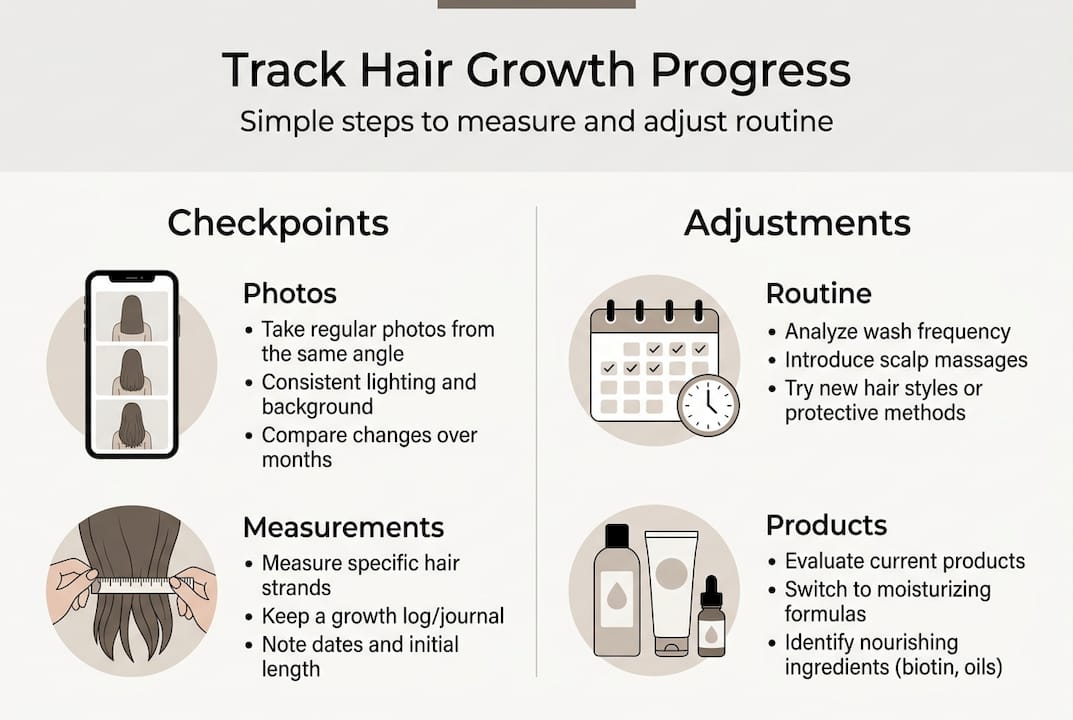
Most women begin to notice reduced shedding within six to eight weeks of addressing nutritional deficiencies. Visible new growth typically appears between three and six months. Texture improvements often come first, before length or density changes become obvious.
Here’s how to track effectively:
- Monthly photo diary: Same lighting, same angle, every four weeks. The camera captures changes your eyes miss day to day.
- Ponytail circumference: Measure the base of your ponytail with a soft tape measure. Even a few millimetres of increase signals real progress.
- Shedding count: Count strands in the shower drain or on your brush weekly. A gradual reduction is a reliable early indicator.
- Scalp health check: Less itching, flaking, or tightness means the scalp environment is improving, which precedes visible growth.
For context on what to expect from specific products, serum effectiveness insights and guidance on using hair oils correctly are worth reviewing alongside your progress tracking.
“Avoid miracle cures. Postpartum and menopausal hair loss respond best to targeted, evidence-based approaches, and peer support can make a significant difference to how you cope during the process.”
If progress stalls after six months of consistent effort, return to your GP. It may signal a hormonal shift, a new deficiency, or a need to adjust your supplement protocol. Stalling is information, not failure.
A fresh perspective: Why holistic consistency matters more than quick fixes
Here’s the uncomfortable truth the hair care industry rarely says out loud: no single product will fix hair loss. Not the most expensive serum. Not the trendiest oil. Not even a clinically tested supplement taken in isolation.
What actually works is consistency across multiple pillars at once. Nutrition, sleep, stress management, gentle product choices, and targeted treatments all compound over time. Miss one pillar and the others underperform. It’s the same principle as fitness. You can’t out-supplement a poor diet.
We’ve seen women spend hundreds on premium serums while still eating poorly, sleeping badly, and using sulphate-heavy shampoos. Results are always disappointing. Then the same women overhaul their diet, simplify their routine, and add one or two evidence-backed products like those backed by rosemary oil and biotin evidence. The difference is remarkable.
The other trap is chasing novelty. A new treatment launches, the marketing is compelling, and the cycle of hope and disappointment begins again. Guard against this. Stick with what the evidence supports. Stay consistent for at least three months before evaluating. Your hair growth journey is yours alone, and a tailored, realistic approach will always outperform the latest trend.
Find premium, cruelty-free hair growth support at LUXEVA
You’ve done the learning. Now it’s time to act. ✨ At LUXEVASTORE, every product is chosen to support exactly the kind of evidence-based, holistic routine this guide recommends.

Our hair oils and sprays are formulated with clean, plant-powered ingredients including rosemary, argan oil, and biotin. No sulphates. No parabens. Cruelty-free, always. 🌿 Our shampoo and conditioner sets are designed to complement your growth routine from root to tip. Real results. Real ingredients. Built for women who take their hair seriously. Shop now and give your hair the premium care it deserves. 🛒
Frequently asked questions
How long does it take to see visible hair growth results?
Most women see noticeable changes after three to six months with consistent routines and proper care. Clinical studies show nutraceuticals like Nutrafol improved hair shaft diameter significantly over a six-month period.
Are natural hair oils really effective for hair regrowth?
Certain natural oils support scalp health and hair resilience when used regularly, especially alongside a healthy lifestyle. Deficiencies in biotin, zinc, and omega-3s are linked to hair loss, and oils rich in these nutrients complement a balanced diet.
Is hair loss from stress or illness permanent?
Most temporary hair loss from acute stress or illness resolves on its own within months once the underlying cause is managed. Telogen effluvium is a well-documented, usually reversible condition.
Should I see a doctor before starting a hair growth routine?
Yes, medical evaluation helps identify nutritional or hormonal issues, ensuring the most effective approach for hair regrowth. Iron deficiency and thyroid issues are common and treatable causes that a GP can identify quickly with a blood test.