


TL;DR:
- Female pattern hair loss affects nearly 50% of women, especially after menopause.
- Hair thinning causes include hormonal shifts, nutritional deficiencies, stress, and mechanical damage.
- Effective management combines lifestyle changes, scalp care, and targeted treatments over several months.
Nearly 50% of women experience some degree of hair thinning in their lifetime, yet it remains one of the most misunderstood concerns in women’s health. Many assume it is purely a male issue, or that shedding is simply stress-related and will sort itself out. The truth is far more layered. From hormonal shifts to nutritional gaps, the causes vary enormously, and choosing the wrong solution wastes time you do not have. This guide cuts through the confusion, giving you a clear, science-backed breakdown of why hair thins, how to recognise your pattern, and which restorative approaches are genuinely worth your attention.
Table of Contents
- Why does women’s hair thin? The science explained
- Female pattern hair loss versus other types: Spotting the difference
- What triggers hair thinning in women? From hormones to habits
- Natural and restorative solutions: What is proven, what isn’t
- Our expert view: Getting hair health right means addressing the whole person
- Discover nurturing solutions for healthy, fuller hair
- Frequently asked questions
Key Takeaways
| Point | Details |
|---|---|
| Most common cause | Female pattern hair loss affects up to 50% of women and becomes more common after menopause. |
| Identify your triggers | Hair thinning can result from stress, nutritional deficits, hormones, or medical conditions. |
| Evidence-based solutions | Combining nutrition, scalp care, and cruelty-free products offers the best results for many women. |
| Expert diagnosis matters | A professional assessment helps distinguish between different types of hair thinning and guides treatment. |
Why does women’s hair thin? The science explained
Hair thinning is more common than you may have realised, and the causes are not always obvious. Understanding the science behind it is the first step towards choosing the right path forward.
FPHL (Female Pattern Hair Loss) is the single most common cause of hair thinning in women, affecting nearly 50% at some point in their lifetime. Rates climb even higher after menopause, making it a concern that touches the majority of women eventually. FPHL is not simply about genetics. The mechanism involves androgens (specifically DHT), a genetic predisposition, and a progressive shortening of the hair growth cycle, which causes follicles to miniaturise over time.
Beyond FPHL, several other causes are worth knowing:
- Telogen effluvium (TE): A temporary but dramatic shedding triggered by physical or emotional stress
- Traction alopecia: Caused by tight hairstyles that pull repeatedly on follicles
- Nutritional deficiencies: Low iron, vitamin D, or B12 can all stall hair growth
- Hormonal changes: Pregnancy, postpartum shifts, thyroid imbalances, and menopause all disrupt the hair cycle
- Medication side effects: Certain contraceptives, blood thinners, and antidepressants list hair loss as a known effect
Not all thinning looks or behaves the same way. That is why a one-size-fits-all product rarely works. Our science-backed hair loss guide explains how different causes call for different care strategies.
| Cause | Pattern | Reversible? |
|---|---|---|
| FPHL | Gradual widening at crown | Managed, not cured |
| Telogen effluvium | Diffuse shedding across scalp | Usually yes |
| Traction alopecia | Edges and hairline | Partially, if caught early |
| Nutritional deficiency | Generalised thinning | Yes, with correction |
For a broader overview of natural solutions for thinning hair, it helps to first understand which cause you are dealing with.
Pro Tip: Keep a simple diary noting when shedding increases, any recent life events, and where on your scalp thinning is most visible. This information is invaluable when speaking to a specialist or selecting targeted care.
Female pattern hair loss versus other types: Spotting the difference
Understanding the broad causes is helpful, but distinguishing which one you might be experiencing is even more important for choosing the right approach.
FPHL, TE, and traction alopecia each have distinct signatures. FPHL involves miniaturisation of follicles, presenting as a gradual widening of the parting or thinning at the crown. It tends to develop slowly over years. Telogen effluvium, by contrast, is diffuse shedding across the entire scalp and typically appears suddenly. TE triggers include stress, illness, surgery, or nutritional deficiencies, and shedding usually begins two to three months after the triggering event.
Traction alopecia is linked to specific habits. Tight ponytails, braids, or extensions worn repeatedly over time damage follicles along the hairline and edges. Unlike FPHL, traction alopecia has a clear mechanical cause and can often be halted by changing styling habits early.
Quick self-assessment checklist:
- Is the thinning gradual (years) or sudden (weeks to months)? Gradual points to FPHL; sudden points to TE
- Is it concentrated at the crown and parting, or spread evenly? Crown suggests FPHL
- Did it start after a stressful event, illness, or dietary change? Likely TE
- Is thinning mainly at the hairline or edges? Consider traction alopecia
- Are you noticing more hair on your pillow or in the shower? Sudden increase suggests TE
For more detailed guidance on identifying your pattern, explore these hair thinning solutions tailored to different types.
Steps for preliminary self-assessment before seeing a specialist:
- Photograph your parting and hairline in good lighting monthly
- Note the volume of hair shed daily (a rough count or pillow check)
- Review any major life changes in the past six months
- Check recent blood test results for iron, vitamin D, and thyroid markers
- List any new medications or supplements started in the past year
- Book a GP or dermatologist appointment with your notes and photos ready
What triggers hair thinning in women? From hormones to habits
Once you know the difference between types of hair loss, you can spot which triggers might be relevant for you.
Hair thinning rarely appears without reason. The timeline of triggers is telling. Postpartum shedding typically peaks around three to four months after birth. Menopause-related thinning builds gradually over years. Crash diets can cause visible shedding within weeks. Each trigger has its own rhythm, which is why timing matters so much in identifying the cause.
TE can involve shedding of up to 300 hairs per day, typically appearing two to three months after a physical or emotional event. That delay is one reason many women do not connect the shedding to its actual cause.
Common triggers to consider:
- Chronic stress: Elevates cortisol, which disrupts the hair growth cycle
- Iron deficiency: One of the most frequently overlooked causes in women
- Rapid weight loss: Crash diets deprive follicles of essential proteins and nutrients
- Hormonal shifts: Postpartum, perimenopause, and thyroid changes all affect hair density
- Medication side effects: Particularly hormonal contraceptives and certain antidepressants
- Over-styling: Heat damage and chemical treatments weaken the hair shaft over time
Triggers include iron deficiency, vitamin D and B12 deficiencies, thyroid changes, rapid weight loss, hormonal shifts, and certain medications, making blood tests a smart first step. Learning about nutrition and hair thickness can help you address gaps that topical products alone cannot fix.
| Trigger | Typical timing | Reversible? |
|---|---|---|
| Postpartum hormonal shift | 3 to 4 months post-birth | Yes, usually within a year |
| Iron or vitamin deficiency | Gradual | Yes, with supplementation |
| Crash diet or rapid weight loss | Weeks to months | Yes, with nutritional recovery |
| Chronic stress | Variable | Yes, if stress is managed |
| Menopause | Gradual over years | Managed, not fully reversed |
| Medication side effects | During use | Often yes, after stopping |
For practical, tested remedies for hair loss that work alongside lifestyle changes, it is worth exploring options that address multiple triggers at once.
Natural and restorative solutions: What is proven, what isn’t
Pinpointing your likely trigger makes it much easier to select the right path, so what actually works and what is just hype?
The natural hair care space is crowded with bold claims. The good news is that several ingredients do have genuine evidence behind them. Rosemary oil has shown comparable results to minoxidil in small studies for stimulating scalp circulation. Biotin supports keratin production, though it is most effective when a deficiency is present. Niacinamide (vitamin B3) improves scalp blood flow and reduces inflammation, both of which support a healthier hair growth environment.
Evidence-supported approaches:
- Rosemary oil applied to the scalp consistently over several months
- Biotin supplementation when blood levels are confirmed low
- Niacinamide-enriched topicals to support scalp health
- Gentle, sulphate-free cleansing to reduce scalp inflammation
- Reducing heat styling and tight hairstyles to prevent mechanical damage
Pro Tip: Before spending on serums and oils, get a blood panel done. Correcting a nutritional deficiency often produces more visible improvement than any topical product alone.
“Minoxidil is the only FDA-approved treatment for female hair loss, with a 30 to 40% response rate. Combination approaches, pairing topical treatments with lifestyle and nutritional correction, consistently outperform single-solution strategies.”
Topical-only approaches have real limits. If the root cause is hormonal or nutritional, no serum will fully compensate. Medical therapies, including minoxidil or hormone-balancing treatments, may be appropriate alongside natural care. Natural approaches should target root causes like nutrition, hormones, and scalp health rather than just the hair strand itself.
For guidance on choosing the right hair oil for your specific type of thinning, or to explore cruelty-free hair restoration options, and to compare hair growth serums with honest breakdowns, the evidence is there to help you choose wisely.
Our expert view: Getting hair health right means addressing the whole person
Having covered the research-backed practicalities, here is our real-world take.
The most effective hair restoration strategies we have seen combine inside-out and outside-in care. Inside-out means nutrition, stress management, and hormone balance. Outside-in means gentle, effective, cruelty-free topicals that support a healthy scalp environment. Neither alone is enough for most women.
The ‘miracle product’ myth is one of the most damaging ideas in hair care. Sustainable results take time, often three to six months of consistent effort before visible change occurs. Frustration is completely normal, and it is important to acknowledge the emotional weight that hair thinning carries. But science-led, patient approaches consistently outperform fads.
“A healthy scalp and a nourished body are the true foundation of hair resilience. Products enhance that foundation; they cannot replace it.”
We encourage you to compare hair serums with a critical eye, looking for transparency around ingredients and realistic claims. The brands worth trusting are the ones that do not promise overnight miracles.
Discover nurturing solutions for healthy, fuller hair
If you are ready to act on what you know, here are resources designed with your needs in mind.
At LUXEVASTORE, every product is formulated with clean, cruelty-free ingredients backed by science. No parabens. No sulphates. No empty promises. ✨

Our biotin and rosemary shampoo is designed specifically for women experiencing thinning, combining proven botanicals in one gentle, restorative formula. Explore the full science-backed hair care range and find options that align with your values and your hair goals. Real results. Real ingredients. Built for you. 🌿
Frequently asked questions
What is the leading cause of thinning hair in women?
Female pattern hair loss (FPHL) is the most common cause, affecting around 50% of women at some point in their lifetime.
Is thinning hair reversible for women?
Some forms, like telogen effluvium caused by stress or nutritional gaps, are usually reversible once the underlying cause is addressed. FPHL is typically managed rather than fully cured.
Can using natural products stop hair thinning?
Natural products can support scalp health and complement recovery, but they work best alongside lifestyle and nutritional changes that target root causes rather than surface symptoms alone.
How can I tell what type of hair thinning I have?
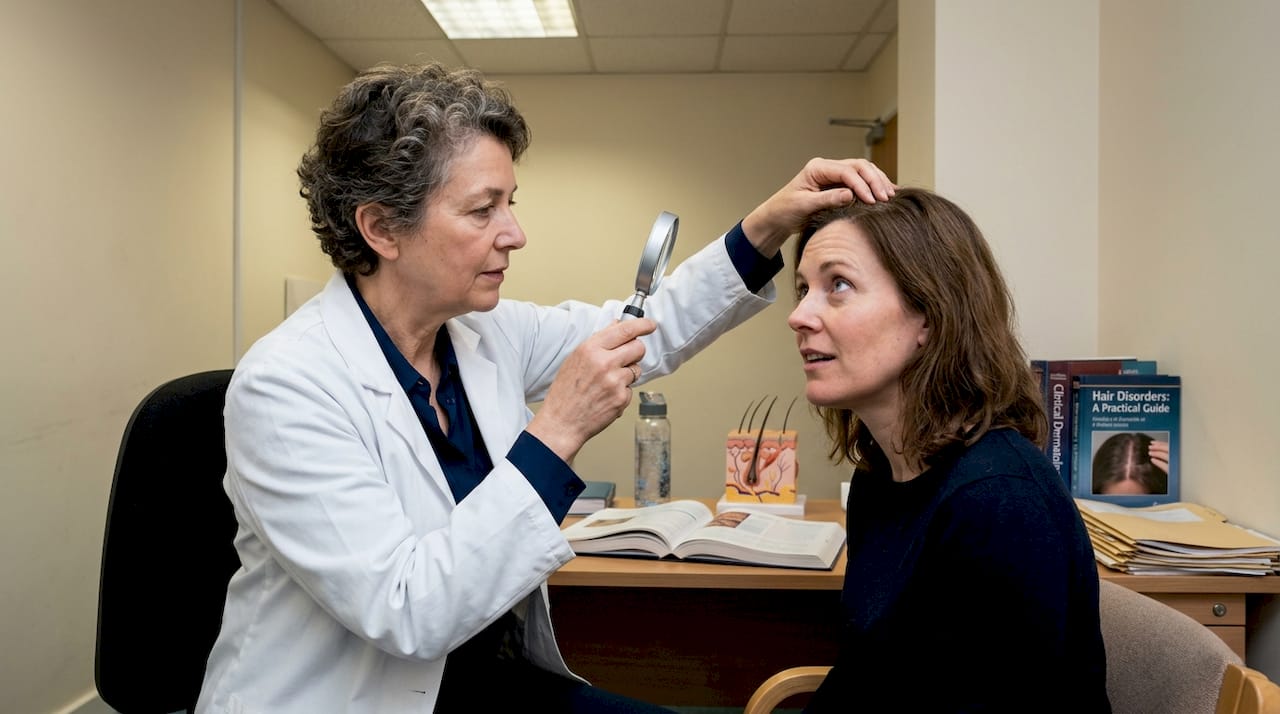
A specialist can use scalp examination, trichoscopy, or a biopsy to distinguish FPHL from TE and other types, especially when patterns or recent triggers are unclear.