


Finding the most effective hair growth solutions can be daunting for british women facing thinning hair. Studies show that over 40 percent of British women experience noticeable hair loss by age 40, especially through major life transitions. Understanding what causes thinning hair and knowing which oils truly support revitalized growth is key to reclaiming confidence and achieving healthier, fuller hair with natural choices that respect animal welfare and deliver proven results.
Table of Contents
- What Causes Thinning Hair and Who Is at Risk
- Types of Hair Growth Oils and Their Benefits
- Essential Ingredients: What to Look For
- Natural Versus Synthetic Formulations Compared
- How to Identify Quality and Efficacy Claims
- Mistakes to Avoid When Buying Hair Oils
Key Takeaways
| Point | Details |
|---|---|
| Genetic and Hormonal Factors | Genetic predisposition and hormonal changes significantly contribute to hair thinning, particularly in women between 25 and 45. |
| Nutritional Importance | Nutritional deficiencies, especially in iron, protein, and vitamin B12, can weaken hair structure and promote shedding. |
| Natural Oils for Scalp Health | Hair growth oils, particularly essential and carrier oils, provide natural support for hair growth and scalp health. |
| Research and Efficacy Claims | Look for hair growth oils backed by scientific validation, such as independent testing and peer-reviewed studies, to ensure quality and effectiveness. |
What Causes Thinning Hair and Who Is at Risk
Hair thinning is a complex biological phenomenon affecting millions of women worldwide. Understanding the root causes helps develop targeted treatment strategies. Underlying mechanisms of hair loss reveal multiple interconnected factors that trigger hair follicle disruption.
Genetic predisposition plays a significant role in hair thinning, with androgenetic alopecia representing the most common inherited pattern. Hormonal changes during pregnancy, menopause, and thyroid disorders can dramatically impact hair density. Nutritional deficiencies - particularly iron, protein, and vitamin B12 - weaken hair structure and accelerate shedding. Environmental stressors like pollution, UV exposure, and harsh styling practices further compromise hair health.
Women between 25 and 45 are most susceptible to hair thinning, with risk increasing through specific life stages. Stress, autoimmune conditions, and certain medications can trigger sudden hair loss known as telogen effluvium. Notably, chronic health conditions such as polycystic ovary syndrome (PCOS) and diabetes significantly elevate thinning hair risks.
Pro tip: Consider a comprehensive blood panel to identify potential nutritional or hormonal imbalances contributing to hair thinning.
Types of Hair Growth Oils and Their Benefits
Hair growth oils represent a powerful natural approach to addressing thinning hair and promoting scalp health. Essential oils for hair health offer a range of therapeutic benefits that go beyond traditional hair care strategies.
The most effective hair growth oils can be categorised into two primary groups: essential oils and carrier oils. Essential oils like rosemary, lavender, and peppermint provide potent antimicrobial and anti-inflammatory properties that stimulate hair follicles. Carrier oils such as coconut, jojoba, and argan oil deliver deep nourishment, creating an optimal environment for hair growth. These natural oils are rich in vitamins, antioxidants, and fatty acids that strengthen hair strands and improve scalp circulation.
Each oil offers unique benefits tailored to specific hair concerns. Coconut oil penetrates hair shafts, reducing protein loss and preventing damage. Argan oil provides intense hydration and protection against environmental stressors. Jojoba oil closely mimics natural scalp sebum, balancing oil production and supporting healthy hair growth. Tea tree oil offers antibacterial properties that can address scalp conditions, while castor oil is renowned for its potential to stimulate hair follicle activity.

Pro tip: Combine two to three complementary oils to create a personalised hair growth treatment that addresses multiple scalp and hair health concerns.
Here is a summary comparing the primary types of hair growth oils and their key advantages:
| Oil Type | Common Examples | Main Benefit | Best For |
|---|---|---|---|
| Essential Oils | Rosemary, Peppermint | Stimulate follicles | Thin, sluggish hair |
| Carrier Oils | Coconut, Argan, Jojoba | Deep nourishment | Dry or brittle hair |
| Plant Extracts | Amla, Hibiscus, Neem | Enhance scalp health | Sensitive, irritated scalp |
| Fatty Oil Mixes | Castor, Olive, Avocado | Boost thickness | Weak or sparse hair |
Essential Ingredients: What to Look For
Selecting the right hair growth oil requires a discerning understanding of key botanical ingredients that genuinely support hair health. Herbal ingredients in hair growth solutions reveal a complex array of natural compounds that can transform hair restoration strategies.
The most effective hair growth oils contain a strategic blend of active botanicals and nutrient-rich compounds. Alkaloids and flavonoids are critical ingredients that provide antioxidant protection, while essential fatty acids support follicle strength. Look for oils containing powerful herbal extracts like amla, which strengthens hair roots, hibiscus for colour protection, and fenugreek to stimulate hair growth. Neem offers exceptional antibacterial properties that support scalp health, making it a standout ingredient for addressing underlying hair thinning issues.
Key nutritional components should include vitamins A, E, and biotin, which work synergistically to improve hair structure and resilience. Minerals such as zinc and magnesium play crucial roles in hair follicle metabolism, while plant-based oils like argan, jojoba, and coconut provide deep conditioning and protective benefits. Natural ingredients that demonstrate anti-inflammatory properties are particularly valuable for women experiencing hormonal hair thinning or scalp sensitivity.
Pro tip: Prioritise hair growth oils with a transparent ingredient list that highlights multiple botanical extracts and avoids synthetic fillers or harsh chemicals.
Natural Versus Synthetic Formulations Compared
The debate between natural and synthetic hair growth oils centres on effectiveness, safety, and long-term hair health. Herbal versus synthetic hair treatment approaches reveal nuanced differences that impact hair restoration strategies.
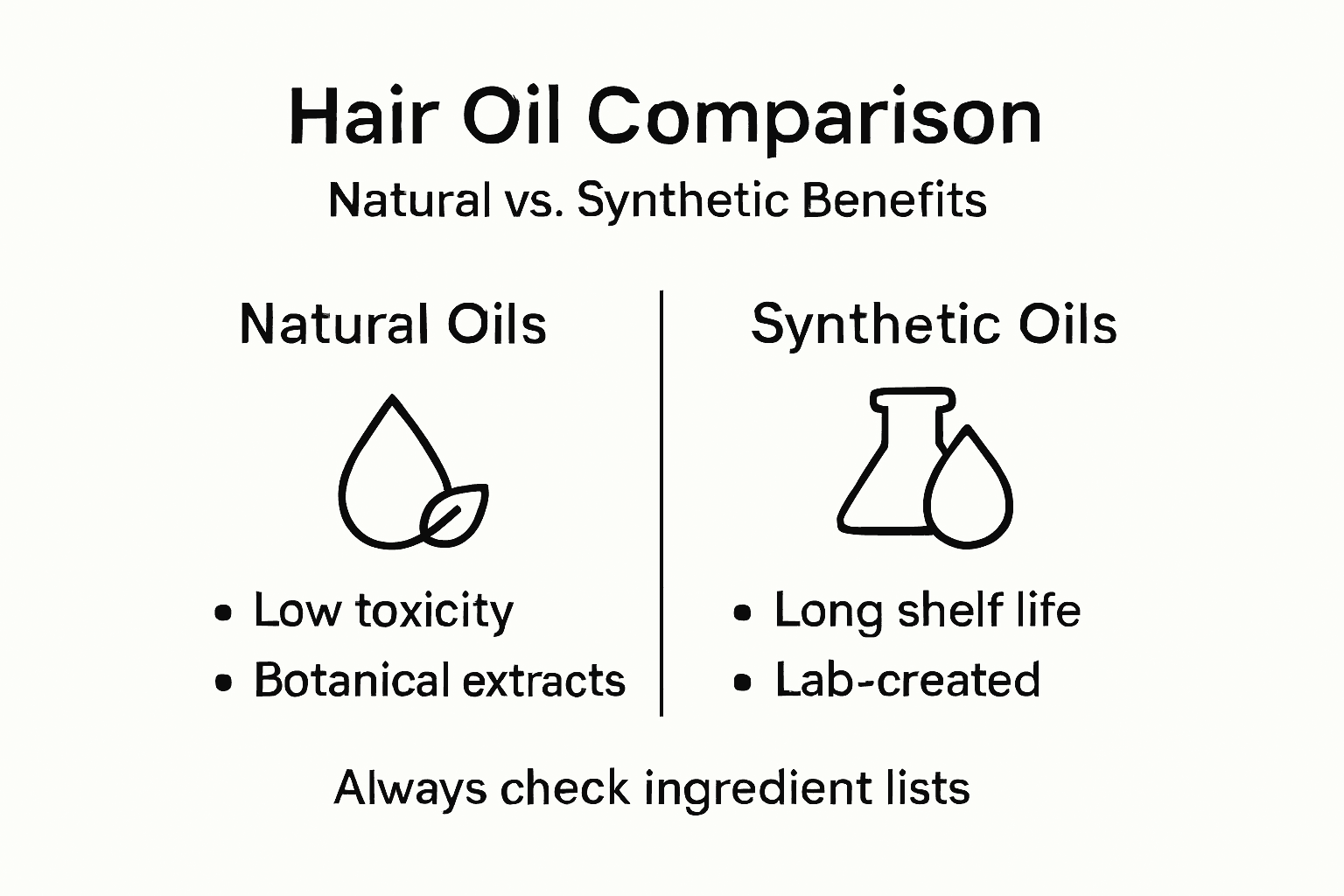
Natural formulations harness the power of botanical extracts, offering a gentler approach to hair care. Plant-based oils like coconut, argan, and jojoba contain essential vitamins, antioxidants, and fatty acids that nourish hair follicles from within. These ingredients provide multiple benefits including moisturising, anti-dandruff, and circulation-stimulating properties. In contrast, synthetic formulations often prioritise quick results through chemically engineered compounds that may deliver immediate but potentially superficial improvements.
Environmental and health considerations further distinguish these approaches. Natural oils demonstrate lower toxicity risks and better biodegradability, making them increasingly attractive for environmentally conscious consumers. Synthetic products typically offer more consistent performance but may cause scalp irritation and long-term damage. The key lies in understanding that not all natural ingredients are equally effective, and not all synthetic compounds are harmful. Careful formulation and scientific validation remain crucial in determining a hair growth oil’s true potential.
Pro tip: Examine ingredient lists closely, prioritising products with a balanced blend of scientifically-backed natural extracts and minimal synthetic additives.
Below is a concise comparison of natural versus synthetic hair growth oil formulations:
| Aspect | Natural Oils | Synthetic Oils |
|---|---|---|
| Core Ingredients | Botanical extracts, plant oils | Chemically engineered agents |
| Safety Profile | Lower irritation risk | May cause scalp sensitivity |
| Environmental Impact | Biodegradable, eco-friendly | Variable, often non-biodegradable |
| Effect Duration | Gradual, sustained improvements | Potentially faster, short-term results |
How to Identify Quality and Efficacy Claims
Navigating hair growth oil marketing requires a critical eye and understanding of scientific validation. Hair cosmetics efficacy assessment techniques reveal the complex methods used to substantiate product performance claims.
Quality hair growth oils undergo rigorous testing through multiple verification strategies. Instrumental tests provide objective measurements of hair health, including fiber integrity, hydration levels, and strand density. Clinical studies should demonstrate measurable improvements through microscopic imaging, documenting new hair growth, and assessing scalp condition. Reputable brands will transparently share research methodologies, including sample sizes, testing protocols, and statistical significance of their results.
Consumers should look for specific markers of credible efficacy claims. Independent laboratory testing, peer-reviewed research, and third-party certifications offer robust evidence of a product’s performance. Key indicators include precise numerical data about hair growth rates, detailed before-and-after documentation, and scientifically validated ingredient concentrations. Beware of vague language, unrealistic promises, and marketing claims that lack substantive scientific backing. Professional endorsements from trichologists, dermatologists, or hair care specialists can further validate a product’s genuine potential.
Pro tip: Request detailed research documentation from manufacturers and cross-reference their claims with independent scientific publications.
Mistakes to Avoid When Buying Hair Oils
Selecting the right hair growth oil requires careful consideration and informed decision-making. Common hair oil application errors reveal critical pitfalls that can compromise hair restoration efforts.
One of the most significant mistakes is applying oils without understanding your specific hair type and scalp condition. Inappropriate oil selection can lead to increased hair problems rather than solutions. Individuals with fine hair should avoid heavy, dense oils that cause follicle blockage, while those with thick, coarse hair require more intensive moisturising formulations. Equally crucial is recognising that different hair textures and scalp conditions demand tailored oil approaches.
Another critical error is expecting instantaneous results from hair growth oils. Genuine hair restoration is a gradual process requiring consistent application, patience, and realistic expectations. Consumers often make the mistake of over-applying oils, believing more product equals faster growth. In reality, excessive oil can create buildup, potentially suffocating hair follicles and causing scalp irritation. Always follow recommended application guidelines, start with minimal quantities, and observe how your hair responds to different formulations.
Pro tip: Perform a patch test with new hair oils and gradually introduce them into your hair care routine to assess compatibility and effectiveness.
Restore Your Thinning Hair with Nature and Science Combined
Struggling with hair thinning and searching for a real solution that addresses root causes like hormonal imbalances, nutritional gaps, or scalp health? You are not alone. The article highlights how essential oils such as rosemary and carrier oils like argan deeply nourish hair follicles and stimulate growth while avoiding harsh chemicals. If you want to embrace a personalised and gentle approach that balances botanicals with scientifically backed ingredients, starting with carefully crafted haircare rituals is key.
Discover Scalp & Haircare Sets – LUXEVA designed to transform your hair routine.

Take control of your hair journey today with LUXEVASTORE.com’s premium, cruelty-free collections. Explore natural formulas enriched with biotin, caviar, and rosemary mint to stimulate follicles while protecting against environmental stressors. Whether you need intensive nourishment or a gentle scalp-balancing ritual, find your perfect match now. Visit LUXEVASTORE.com or start elevating your regimen with our Sulphate Free Shampoo Sets: Elevate Your Haircare Ritual with LUXEVA. Your revitalised hair awaits.
Frequently Asked Questions
What are the main causes of hair thinning?
Hair thinning can be caused by genetic predisposition, hormonal changes, nutritional deficiencies, and environmental stressors like pollution. Conditions such as PCOS and thyroid disorders also play significant roles.
How do I choose the right hair growth oil for my hair type?
To choose the right hair growth oil, consider your hair type and scalp condition. For fine hair, opt for light oils, while thick, coarse hair may benefit from heavier, more hydrating formulations. Always personalise your choice based on individual needs.
What ingredients should I look for in hair growth oils?
Look for oils that contain active botanicals like amla, hibiscus, and essential fatty acids. Nutritional components such as vitamins A, E, and biotin, along with minerals like zinc and magnesium, are also beneficial for supporting hair health.
How long does it take to see results from using hair growth oils?
Results from using hair growth oils can vary, but it generally takes consistent application over several weeks or months to see noticeable improvements. Patience and adherence to application guidelines are crucial for true hair restoration.
Recommended
- 7 Best-Rated Hair Growth Oils Available in the UK Explained – LUXEVA
- Natural Oils for Hair – How They Transform Strength and Shine – LUXEVA
- Best Hair Growth Shampoos UK – What Really Works? – LUXEVA
- Hair Growth Serums: Revitalising Thinning Hair Naturally – LUXEVA
- The Benefits of GHK-Cu for Promoting Hair Growth
- How to Enhance Hair with Collagen for Healthier Growth