


Many health-conscious women struggle with dull hair and persistent scalp issues despite investing in countless products. The culprit is often excessive washing paired with harsh formulations that strip natural oils and irritate the scalp. A structured, cruelty-free scalp care ritual can transform your scalp health and restore hair vitality within weeks, combining ethical sourcing with proven results.
Table of Contents
- Introduction To Scalp Care Rituals
- Prerequisites: What You Need Before Starting Your Scalp Care Ritual
- Step-By-Step Scalp Care Ritual Using Cruelty-Free Products
- Common Mistakes And How To Fix Them
- Expected Results And Timelines
- Safety And Alternative Approaches
- Explore Our Premium Cruelty-Free Scalp Care Solutions
- Frequently Asked Questions
Key Takeaways
| Point | Details |
|---|---|
| Wash frequency matters | Cleanse 2 to 3 times weekly to prevent dryness and irritation |
| Choose ethical products | Use cruelty-free, natural ingredients certified by PETA or Leaping Bunny |
| Weekly exfoliation works | Gentle scalp scrubs and regular massage boost circulation and growth |
| Patience pays off | Visible improvements like reduced flakiness appear after 6 to 8 weeks |
| Avoid harsh treatments | Skip sulfates, parabens, silicones, and excessive heat styling |
Introduction to Scalp Care Rituals
Your scalp is the foundation for strong, shiny hair. Without a healthy scalp environment, even the most expensive treatments fail to deliver lasting results. Health-conscious women across the UK are increasingly seeking cruelty-free and vegan hair care products that align with their values while delivering genuine results.
Mindful, structured scalp rituals rejuvenate natural beauty by improving the scalp microbiome and circulation. These routines prioritize gentle, natural ingredients over aggressive chemicals that damage follicles and strip protective oils.
Ethical sourcing certifications matter more than ever. Organizations like PETA and Leaping Bunny verify that products meet strict cruelty-free standards, ensuring no animal testing occurs at any production stage. Demand for cruelty-free, natural ingredient-based hair care is rising among health-conscious women.
Key benefits of adopting a scalp care ritual include:
- Reduced scalp inflammation and irritation
- Improved hair follicle function and strength
- Enhanced nutrient delivery through better circulation
- Long-term hair wellness through preventative care
- Alignment with ethical beauty standards
Connection between scalp mindfulness and hair wellness runs deep. When you treat scalp care for hair vitality as a holistic practice rather than a quick fix, you create sustainable improvements that compound over time.
Prerequisites: What You Need Before Starting Your Scalp Care Ritual
Before diving into your ritual, identify your scalp type. Oily scalps produce excess sebum and may feel greasy within a day of washing. Dry scalps show flakiness, tightness, and occasional itching. Sensitive scalps react to many products with redness or discomfort.
Select products that meet strict ingredient standards. Choosing cruelty-free, vegan hair care brands certified by recognized bodies ensures product integrity and ethical sourcing. Your shopping list should exclude sulfates, parabens, silicones, and synthetic fragrances.
Essential items for your scalp care ritual:
- Gentle scalp exfoliating scrub (sugar or salt-based)
- Sulfate-free, pH-balanced shampoo
- Natural oils like argan, rosemary, or jojoba
- Paraben-free conditioner
- Scalp massage tool or clean fingertips
- Soft microfiber towel
Use this product checklist to guide your shopping:
| Product Type | Required Features | Certification to Look For |
|---|---|---|
| Shampoo | Sulfate-free, gentle surfactants | Leaping Bunny, PETA |
| Scalp scrub | Fine granules, natural exfoliants | Vegan, cruelty-free |
| Oil treatment | Cold-pressed, organic | Certified organic |
| Conditioner | Paraben-free, moisturizing | Cruelty-free certified |
Patch testing prevents unnecessary reactions. Apply a small amount of each new product to your inner forearm and wait 24 hours. If redness or itching appears, skip that product.
Pro tip: Start your transition to sulfate-free haircare transition tips gradually by alternating new products with your current routine for two weeks, allowing your scalp to adjust without shock.
Invest in quality over quantity. Three certified cruelty-free products that work for your scalp type outperform a cabinet full of mismatched formulas.
Step-by-Step Scalp Care Ritual Using Cruelty-Free Products
Confirm your scalp type before selecting products to ensure compatibility. This prevents wasted investment and potential irritation from unsuitable formulations.
Follow these steps for optimal scalp health:
- Pre-cleanse oil treatment: Apply natural oil to dry scalp, massage for 5 minutes, leave for 15 to 30 minutes
- Gentle cleansing: Wet hair with lukewarm water, apply sulfate-free shampoo, focus on scalp not lengths, rinse thoroughly
- Weekly exfoliation: Use gentle scrub on damp scalp once or twice weekly, massage in circular motions for 2 to 3 minutes, rinse completely
- Conditioning: Apply paraben-free conditioner from mid-length to ends, avoid scalp, leave for 2 to 3 minutes, rinse with cool water
- Final massage: After washing, massage scalp with fingertips for 3 to 5 minutes to boost circulation
Weekly scalp exfoliation with gentle scrubs removes dead skin and excess sebum, improving scalp health and hair follicle function. This step transforms your ritual from basic cleansing to active scalp renewal.
Frequency guidelines:
- Cleanse 2 to 3 times weekly (adjust based on activity level)
- Exfoliate 1 to 2 times weekly maximum
- Daily or alternate-day scalp massage with or without oil
- Deep conditioning treatment once weekly
Scalp massages increase blood circulation, which can promote hair growth and reduce tension. Dedicating just 5 minutes daily delivers measurable benefits over weeks.

Compare these two essential practices:
| Aspect | Exfoliating Scrub | Sulfate-Free Shampoo |
|---|---|---|
| Purpose | Remove buildup and dead cells | Gentle daily cleansing |
| Frequency | 1 to 2 times weekly | 2 to 3 times weekly |
| Texture | Granular, physical exfoliant | Liquid, chemical cleanser |
| Best for | Oily scalp, product buildup | All scalp types |
Incorporating natural oils like argan, rosemary, and biotin-enriched formulas can strengthen hair and improve scalp moisture balance. These ingredients work synergistically to nourish follicles while protecting against environmental damage.
Practice mindfulness during every step. Focus on the sensation of massage, the scent of natural oils, and the warmth of water. This transforms routine maintenance into a therapeutic self-care ritual that benefits both scalp and mental wellness.
Pro tip: Use lukewarm water for washing and cool water for final rinse to seal hair cuticles without shocking the scalp or causing dryness.
For detailed guidance, explore detailed scalp care steps and learn about understanding haircare rituals. Master scalp massage techniques and perfect applying natural hair oils for maximum benefit.
Common Mistakes and How to Fix Them
Excessive shampooing strips natural oils faster than your scalp can replace them. Washing more than three times weekly increases irritation risk significantly.
Over-cleansing can increase scalp irritation risk by 25%, disrupting the natural pH balance and protective barrier function.
Over-cleansing causes dryness and irritation, and neglecting scalp massage limits blood flow benefits. Your scalp needs its natural oils to maintain moisture balance and protect against environmental stressors.
Frequent errors to avoid:
- Skipping scalp massage reduces circulation benefits by up to 40%
- Using hot water temperature damages scalp barrier function
- Applying conditioner directly to scalp clogs follicles
- Neglecting to rinse products completely leaves residue buildup
- Rubbing hair aggressively with towels causes breakage
- Ignoring scalp type leads to product incompatibility
Using products with sulfates, parabens, or silicones contradicts cruelty-free principles and may trigger sensitivity. These ingredients offer short-term cosmetic benefits while causing long-term scalp damage.
Pro tip: Adjust your routine frequency seasonally. Winter air requires more moisture, while summer heat may need slightly more frequent cleansing. Listen to your scalp and respond to its changing needs.
If you notice increased flaking or irritation after starting a new routine, reduce frequency temporarily. Your scalp may need time to adjust to gentler products after years of harsh formulations.
Learn more about avoiding common scalp care mistakes and discover why certain common scalp care mistakes persist despite widespread information availability.
Expected Results and Timelines
Realistic expectations prevent premature routine abandonment. Your scalp took months or years to reach its current state, so improvement requires patience and consistency.
Timeline for visible changes:
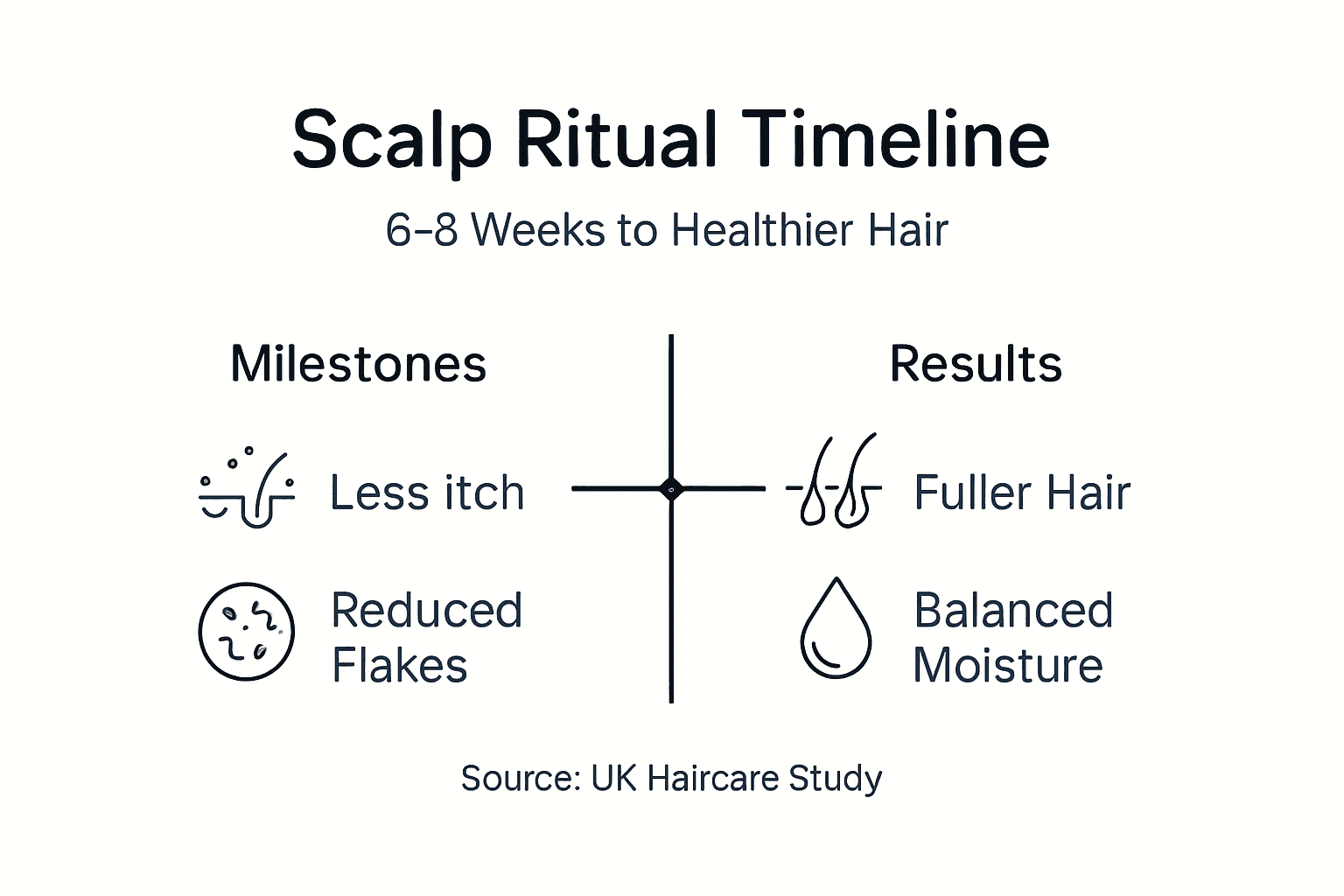
- Weeks 1 to 2: Reduced immediate irritation, improved scalp comfort
- Weeks 3 to 4: Decreased dryness, less frequent itching
- Weeks 4 to 6: Noticeable reduction in flakiness, improved scalp appearance
- Weeks 6 to 8: Stronger hair strands, increased shine, reduced breakage
- Week 8 onwards: Enhanced overall hair health, sustained scalp balance
Visible improvements in scalp health typically appear after 6 to 8 weeks of regular care, including reduced flakiness and stronger hair. This timeline represents the natural hair growth cycle and cellular renewal process.
6 to 8 weeks is the proven timeframe for consistent scalp care benefits to become visible and measurable.
Improved scalp moisture balance creates a cascade of benefits. Less itchiness means less scratching, which prevents micro-damage to follicles. Better hydration supports the scalp barrier, protecting against pollution and styling stress.
Consistency matters more than perfection. Missing occasional treatments has minimal impact, but abandoning the routine entirely resets progress. Mindful application ensures you extract maximum benefit from each step.
Hair quality improvements manifest gradually. You might notice reduced shower drain hair before seeing increased volume. Strand strength improves before visible shine enhancement. Trust the process and document progress with photos.
Safety and Alternative Approaches
Heat styling and chemical treatments during active scalp care compromise results. These processes damage both scalp tissue and hair structure, counteracting your ritual’s benefits.
Excessive heat or harsh chemical treatments can reduce hair strength by up to 70% when applied without proper heat protection.
Avoid excessive heat or harsh chemical treatments during scalp care to prevent damage reducing hair strength by up to 70%. If you must use heat tools, apply a protective spray and keep temperature below 180°C.
Alternative treatments for specific conditions:
- Medicated shampoos for seborrheic dermatitis or psoriasis
- Prescription topical treatments for severe dandruff
- Professional scalp treatments at specialized clinics
- Dermatologist-supervised care for persistent issues
Compare natural versus medicated approaches:
| Treatment Type | Primary Effects | Best For | Usage Frequency | Cruelty-Free Status |
|---|---|---|---|---|
| Natural oil massage | Moisturizes, improves circulation | Dry scalp, general wellness | Daily to 3 times weekly | Yes, when certified |
| Medicated topical | Treats specific conditions | Medical diagnoses | As prescribed | Often not cruelty-free |
| Scalp exfoliation | Removes buildup, renews cells | Oily scalp, product buildup | 1 to 2 times weekly | Yes, with natural scrubs |
| Prescription treatment | Manages chronic conditions | Severe scalp disorders | As directed | Varies by product |
Pro tip: Consult a dermatologist if scalp irritation persists beyond four weeks despite proper ritual practice, or if you notice sudden hair loss, severe redness, or bleeding.
Natural approaches work best for prevention and maintenance. Medical conditions require professional diagnosis and treatment. Your ritual complements but does not replace medical care when needed.
For holistic hair recovery, review natural hair repair steps and understand how to avoid heat damage to scalp and hair while maintaining your styling preferences.
Explore Our Premium Cruelty-Free Scalp Care Solutions
Ready to transform your scalp health with products that match your values? Discover premium formulations designed specifically for health-conscious women seeking ethical, effective solutions.

Our curated collections feature sulfate-free cleansers, nourishing argan oil treatments, and complete ritual sets that support hair rejuvenation. Every product meets strict cruelty-free standards and harnesses natural ingredients backed by science.
Explore our hair scalp ritual set for a complete solution, or try the argan oil haircare set for intensive nourishment. Build sustainable hair wellness habits that complement your new ritual for lasting results.
Frequently Asked Questions
How often should I exfoliate my scalp without causing irritation?
Exfoliate once or twice weekly maximum, adjusting based on scalp sensitivity. Start with once weekly for the first month, then increase to twice if your scalp tolerates it well. Over-exfoliation strips protective oils and damages the scalp barrier.
Can I use scalp oils if I have an oily scalp type?
Yes, lightweight oils like jojoba actually help balance sebum production by signaling your scalp to produce less oil. Apply small amounts to scalp only, massage thoroughly, and rinse after 15 to 20 minutes rather than leaving in overnight.
Are cruelty-free scalp care products less effective than conventional ones?
No, cruelty-free products often perform better because they prioritize gentle, biocompatible ingredients that work with your scalp’s natural processes. Harsh chemicals may show faster cosmetic results but damage scalp health long-term, while natural formulations build sustainable improvements.
What should I do if I experience scalp redness after trying a new product?
Stop using the product immediately and rinse your scalp thoroughly with cool water. Apply a cold compress for 10 minutes to reduce inflammation. If redness persists beyond 48 hours or worsens, consult a dermatologist to rule out allergic reactions.
Can scalp massages help with hair loss prevention?
Scalp massages improve circulation and may support hair retention by strengthening follicles and reducing stress-related shedding. While not a cure for genetic hair loss, regular massage enhances overall scalp health and creates optimal conditions for existing hair to thrive. Consistency over months delivers the best results.