


Greasy hair can leave even the most carefully crafted look feeling undone, no matter how many premium products you try. For many British women, discovering that sebum overproduction is mainly driven by hormones and genetics—not poor hygiene—feels both surprising and liberating. Understanding the science behind scalp oiliness reveals why common myths persist and how embracing your individual hair type helps you create a more tailored and cruelty-free routine for lasting shine and confidence.
Table of Contents
- Greasy Hair Explained: Causes And Myths
- Hair Types And How They Affect Oiliness
- Physical Signs And Scalp Health Impacts
- Lifestyle, Diet And Product Choices
- Risks, Mistakes And Sustainable Solutions
Key Takeaways
| Point | Details |
|---|---|
| Understanding Greasy Hair | Greasy hair results from hormonal fluctuations, genetics, and lifestyle factors, not merely poor hygiene. |
| Hair Type Influence | Different hair types affect oil distribution and management; identifying yours helps tailor care. |
| Scalp Health Implications | Excessive sebum can lead to scalp disorders; a suitable hair care routine is vital for maintaining scalp health. |
| Diet and Lifestyle Impact | Nutrition and lifestyle modifications play a significant role in sebum production; monitoring these factors can aid in managing greasiness. |
Greasy hair explained: causes and myths
Greasy hair is far more complex than most women understand. Sebum overproduction isn’t simply about poor hygiene - it’s a nuanced biological process regulated by multiple internal factors. Hormonal triggers impact sebaceous gland activity in ways many people misunderstand.
The science behind greasy hair involves several key mechanisms:
- Hormonal fluctuations affecting sebum production
- Genetic predispositions toward oil secretion
- Environmental and stress-related influences
- Individual scalp microbiome variations
Common myths about greasy hair perpetuate misunderstandings about hair health. Many women believe frequent washing causes increased oil production, but scientific research demonstrates that sebum generation is primarily controlled by internal biochemical processes rather than external cleaning habits.
Understanding your hair’s unique characteristics means recognising that sebaceous gland activity varies dramatically between individuals. Some women experience significant oil production due to factors like:
- Hormonal conditions such as polycystic ovary syndrome
- Stress and cortisol levels
- Genetic inheritance patterns
- Nutritional intake and metabolic processes
Pro tip: Track your hair’s oil production patterns across your monthly hormonal cycle to develop a more personalised hair care approach.
Hair types and how they affect oiliness
Hair types are not created equal when it comes to oil production and management. Multinational research reveals significant variations in how different hair textures interact with sebum, making each hair type’s relationship with greasiness unique.
The primary hair types impacting oil distribution include:
- Straight hair: Most prone to visible oil accumulation
- Wavy hair: Moderate oil distribution
- Curly hair: Natural oil retention and slower spreading
- Kinky hair: Least visible oil production
Lipid composition plays a crucial role in understanding hair oiliness. Lipid variations influence moisture retention across different hair textures, creating complex interactions between hair structure and sebum production.

Ethnic and environmental factors significantly contribute to these variations. Denser, coarser hair types experience different sebaceous gland activity compared to finer hair, which means oil production and perception can vary dramatically between individuals.
Pro tip: Understand your specific hair type’s unique oil characteristics to develop a personalised hair care routine that balances moisture and shine.
The following table summarises how different hair types manage sebum and how this impacts their care requirements:
| Hair Type | Sebum Spread Speed | Visible Greasiness | Tailored Care Tip |
|---|---|---|---|
| Straight | Rapid, even | High | Gentle cleansing, daily possible |
| Wavy | Moderate, partial | Moderate | Alternate-day washing works well |
| Curly | Slow, uneven | Low-moderate | Focus on hydration, less washing |
| Kinky | Very slow, minimal | Low | Moisturising, infrequent washing |
Physical signs and scalp health impacts
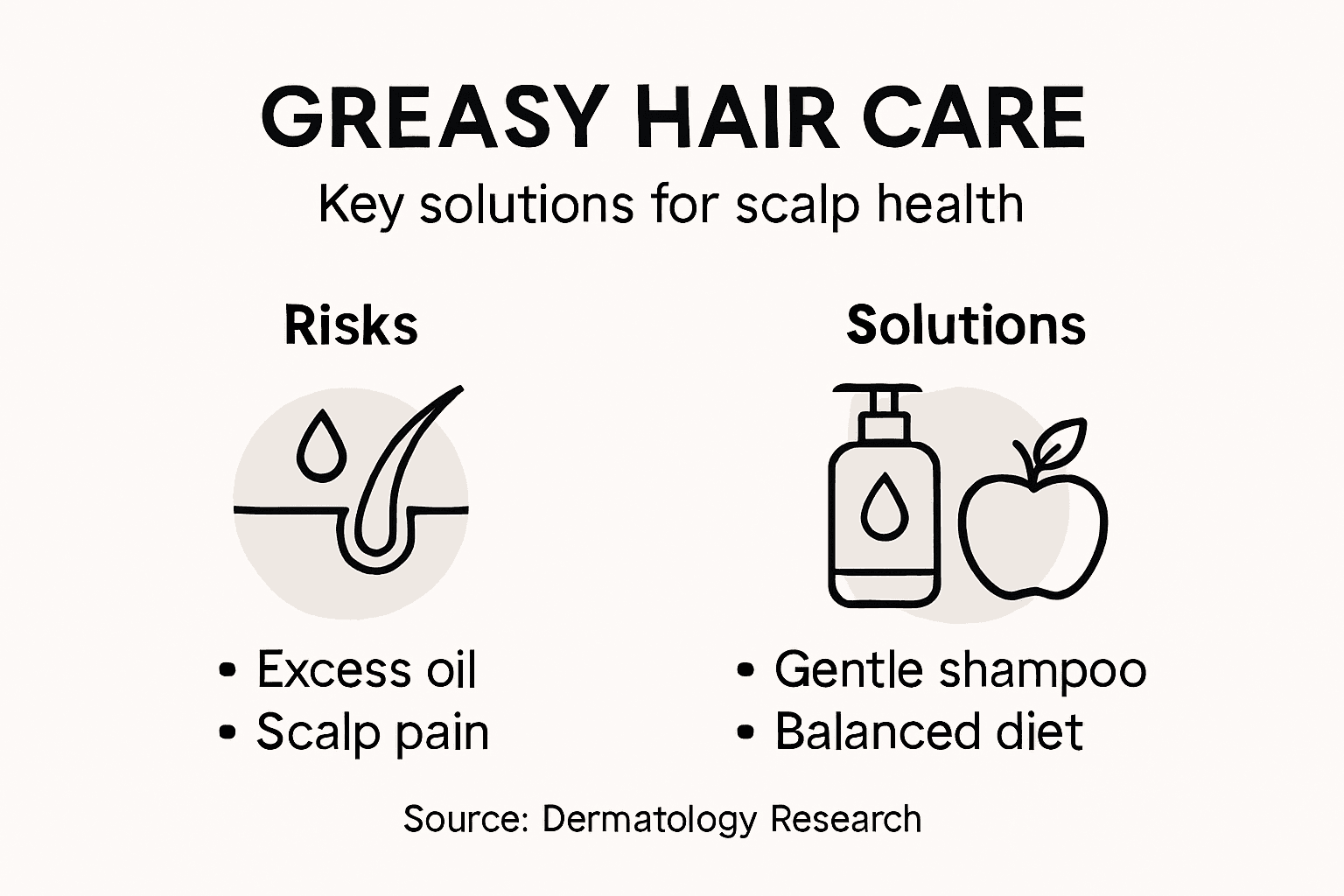
Clinical evidence demonstrates profound consequences of excessive sebum production on scalp and hair health. Greasy hair isn’t merely an aesthetic concern but a complex physiological issue that can trigger significant underlying scalp disorders.
Physical manifestations of compromised scalp health include:
- Persistent itching and irritation
- Visible scalp inflammation
- Increased dandruff production
- Hair follicle blockage
- Reduced hair growth potential
Biochemical mechanisms play a crucial role in understanding scalp reactions. Scalp tenderness and pain emerge from complex interactions between excess sebum, microbial overgrowth, and inflammatory responses. Oleic acid and other biochemical compounds can trigger nerve activation, leading to heightened sensitivity.
Oxidative stress further compromises scalp barrier function, disrupting the natural keratinization process. This disruption can result in fragile hair strands, increased breakage, and diminished overall hair quality. The intricate relationship between sebum production and scalp health highlights the importance of maintaining a balanced hair care routine.
Pro tip: Monitor your scalp’s response to different hair care products and adjust your routine to minimise inflammation and excess oil production.
Lifestyle, diet and product choices
Dietary and lifestyle factors profoundly impact hair health and sebum production. Understanding these interconnections can transform your approach to managing greasy hair, revealing how daily choices directly influence scalp condition.
Key nutritional factors affecting hair oiliness include:
- Protein intake and amino acid balance
- Essential vitamin and mineral levels
- Healthy fat consumption
- Hydration status
- Stress management techniques
Nutritional research indicates that careful selection of hair products plays a crucial role in managing scalp health. Specific dietary interventions can help regulate inflammation and oxidative stress, potentially reducing excessive sebum production.
Genetic predispositions interact complexly with environmental influences, meaning no single approach works universally. Lifestyle modifications such as reducing stress, improving sleep quality, and maintaining a balanced diet can significantly mitigate greasy hair symptoms. Avoiding harsh chemical products and focusing on gentle, natural hair care routines emerges as a critical strategy.
Pro tip: Maintain a food and hair condition diary to identify personal dietary triggers that might contribute to scalp oiliness.
Risks, mistakes and sustainable solutions
Environmental and health risks associated with synthetic hair products represent a critical concern for conscientious consumers. Understanding these risks can help individuals make more informed choices about their hair care routines, protecting both personal health and environmental sustainability.
Common mistakes in hair care that contribute to scalp and environmental problems include:
- Overusing harsh chemical shampoos
- Selecting non-biodegradable hair products
- Ignoring individual scalp microbiome needs
- Purchasing products with toxic ingredient profiles
- Disregarding long-term environmental impact
Sustainable hair care solutions are emerging as a powerful alternative to traditional synthetic formulations. Natural biopolymer-based products offer promising approaches to managing greasy hair while minimising ecological footprint. These innovative formulations utilise ingredients like chitin, which provide effective cleansing without compromising scalp health or environmental integrity.
The transition towards sustainable hair care requires a holistic approach that considers product efficacy, personal health, and ecological responsibility. Consumers must prioritise products that balance performance with environmental consciousness, seeking out formulations that use renewable, biodegradable compounds and minimise synthetic chemical interventions.
Pro tip: Research product ingredients thoroughly and opt for hair care solutions that prioritise both your scalp’s health and environmental sustainability.
Here is a comparison of sustainable versus synthetic hair care approaches and their respective benefits:
| Approach | Scalp Health Impact | Environmental Benefit | Key Ingredient Feature |
|---|---|---|---|
| Sustainable (natural) | Reduces irritation | Biodegradable, low pollution | Biopolymers, plant extracts |
| Conventional (synthetic) | May cause dryness | Higher pollution, non-renewable | Petrochemicals, fillers |
Restore Your Natural Beauty with Effective Greasy Hair Care
Managing greasy hair requires more than just frequent washing. The article highlights how internal factors like hormonal fluctuations, scalp sensitivity, and individual hair type influence excess oil production and scalp health. If you are struggling with persistent greasiness, scalp irritation, or want to embrace a personalised hair care routine that respects your unique hair needs, you deserve solutions that combine nature and science.

Explore the premium, cruelty-free range at LUXEVASTORE.com where you will find carefully formulated hair treatments enriched with ingredients like argan oil, biotin, and rosemary mint. These products are designed to balance sebum production and soothe your scalp while promoting natural shine and vitality. Take advantage of our limited-time discounts and holiday specials today and transform your hair care ritual into a revitalising experience. Discover more about luxurious, plant-powered solutions at LUXEVASTORE.com and start your journey towards healthier hair now.
Frequently Asked Questions
What causes greasy hair?
Greasy hair can be caused by various factors, including hormonal fluctuations, genetic predispositions, environmental influences, and individual scalp microbiome variations.
Does washing my hair frequently increase oil production?
No, frequent washing does not increase oil production. Sebum generation is primarily controlled by internal biochemical processes, not external cleaning habits.
How do different hair types affect oiliness?
Different hair types manage oil differently; straight hair is most prone to visible oil accumulation, whereas kinky hair has the least visible oil production. The speed at which sebum spreads and the overall appearance of greasiness vary significantly with hair texture.
What dietary factors can help manage greasy hair?
Key nutritional factors include maintaining a balanced diet rich in protein, essential vitamins and minerals, healthy fats, and proper hydration. Stress management techniques can also contribute to improved scalp health.