


Choosing hair oils can feel like navigating a luxury beauty aisle where every bottle promises a miracle, yet the right match depends on your unique needs. For British women who value premium, cruelty-free routines, the right blend offers more than gloss—it delivers long-term scalp health and visible repair. This guide highlights how understanding your hair type unlocks the power of natural oils like coconut, argan, jojoba, and castor for a truly restorative experience.
Table of Contents
- Step 1: Choose the Right Oils and Products
- Step 2: Prepare Your Scalp and Hair
- Step 3: Apply Massage Techniques Effectively
- Step 4: Assess and Maintain Results
Quick Summary
| Main Insight | Clear Explanation |
|---|---|
| 1. Choose oils for your hair type | Tailor your oil selection to your specific hair type and scalp condition for optimal results. |
| 2. Properly prepare your scalp | Clean and relax your scalp to enhance absorption of oils during the massage. |
| 3. Use effective massage techniques | Apply gentle pressure with circular motions to stimulate circulation and nourish hair follicles. |
| 4. Maintain consistency for results | Schedule regular sessions to build a routine that promotes sustained hair and scalp health. |
| 5. Document progress to adjust methods | Take photos and notes to track improvements and refine your approach over time. |
Step 1: Choose the Right Oils and Products
Selecting the right oils transforms a hair massage from pleasant to genuinely therapeutic. Your choice shapes whether the treatment nourishes your scalp, strengthens your strands, or both. The key is matching oils to your hair type and what your scalp actually needs.
Start by identifying your hair and scalp profile. Are you dealing with dryness, oiliness, frizz, or thinning? Different botanical oils address different concerns. Natural oils like coconut, argan, jojoba, and castor each bring unique nutrient profiles to the table. Coconut oil penetrates deeply and adds shine. Argan oil is lightweight and won’t weigh fine hair down. Jojoba mimics your scalp’s natural sebum, making it ideal for balance. Castor oil boasts growth-stimulating properties.
Consider these factors when choosing:
- Hair type (fine, thick, wavy, curly, coily)
- Scalp condition (dry, oily, sensitive, flaky)
- Your main goal (hydration, growth, shine, dandruff relief)
- Oil weight (heavy vs. light texture)
If you’re new to oils, start with one. Test it on a small area first to check for irritation. Many women find that mixing two oils creates a more personalised treatment. You might combine lightweight jojoba with growth-focused castor, or blend hydrating coconut with silky argan.
Here’s a quick comparison of popular oils for scalp massage and their unique benefits:
| Oil Type | Key Benefit | Hair Suitability |
|---|---|---|
| Coconut | Deep nourishment | Dry, thick, or frizzy hair |
| Argan | Lightweight shine | Fine or limp hair |
| Jojoba | Sebum balancing | Oily or sensitive scalp |
| Castor | Stimulates growth | Thinning or brittle hair |
When selecting a product, prioritise clean formulations. Look for cold-pressed, organic, and cruelty-free options that align with your values. Avoid oils laden with synthetic fragrances or fillers that can irritate your scalp. When using scalp massagers with hair growth oils, consistency matters far more than occasional expensive treatments. One quality oil used regularly beats premium products gathering dust.
Quality oils with anti-inflammatory and nutrient delivery properties work best when they match your specific scalp needs.
Warm your oil before application. Cold oil absorbs slowly and feels uninviting on your scalp. A few seconds under warm water or between your palms is all you need. This simple step dramatically improves how thoroughly the oil nourishes your hair follicles and scalp.
Pro tip: Decant your chosen oil into a small dark glass bottle and keep it in a cool, dark place; this preserves nutrient integrity and makes it easier to warm and apply during your massage routine.
Step 2: Prepare Your Scalp and Hair
Preparation makes or breaks your massage experience. A clean, relaxed scalp absorbs treatment far more effectively than one weighed down by product buildup or tension. This step takes just a few minutes but dramatically enhances what comes next.
Start by cleansing your scalp thoroughly. Use warm water and a mild shampoo to remove oils, product residue, and dead skin cells that might block treatment absorption. This isn’t about stripping your scalp bare—it’s about creating a clean canvas. If your scalp feels particularly congested, a gentle exfoliating shampoo works beautifully. Pay special attention to your roots and hairline where buildup tends to accumulate.
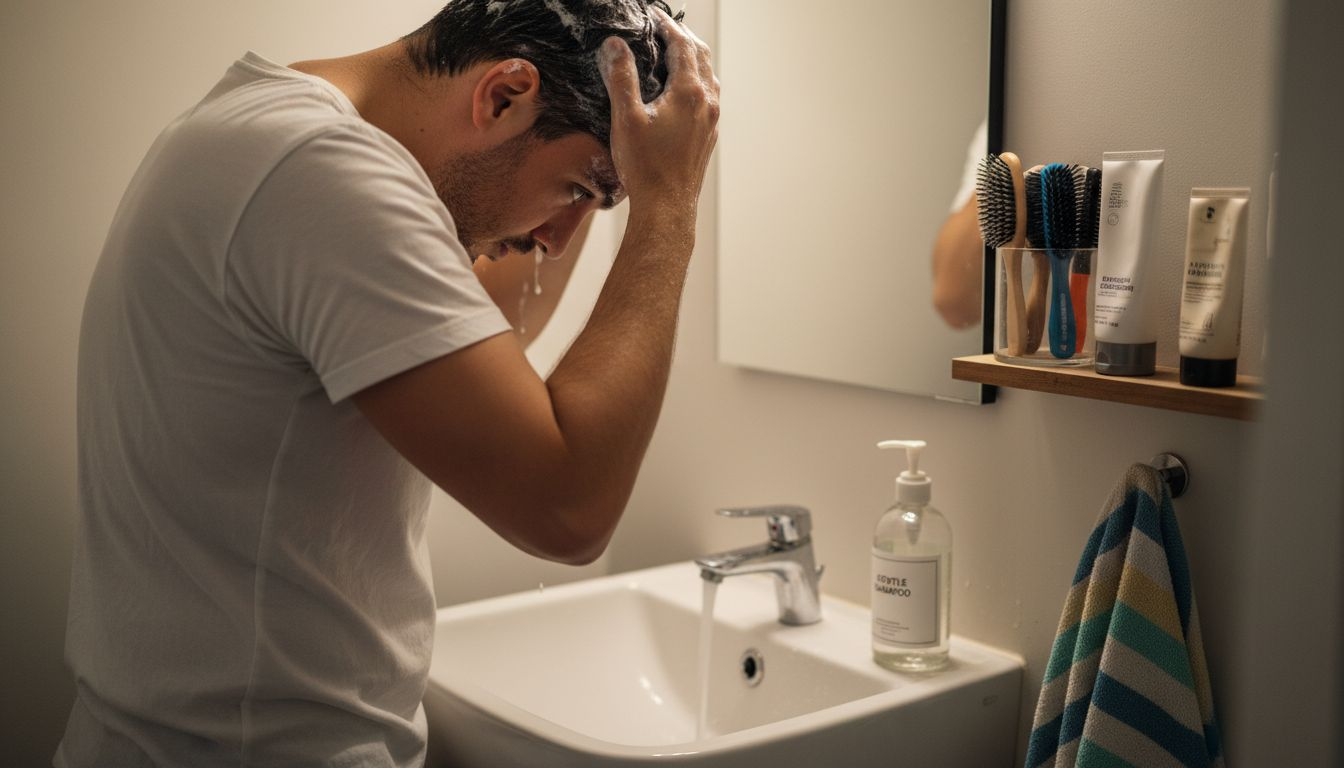
After cleansing, gently detangle your hair while it’s still damp. Use a wide-tooth comb or soft brush, working from the ends upwards to avoid breakage. Detangling gently prevents damage during the massage when your hands will be moving through your strands.
Next, prepare your environment and mindset. Choose a comfortable space where you can relax without interruption. Dim lighting and a warm, peaceful atmosphere reduce stress, which amplifies the therapeutic benefits of your massage. Your scalp responds to relaxation.
Create the perfect prep routine with these steps:
- Cleanse with mild shampoo and warm water
- Pat hair damp (not soaking wet)
- Detangle gently from ends upward
- Set your space for calm and comfort
- Allow 5 minutes to settle before beginning
Now your scalp is primed and receptive. Light pre-massage conditioning can further prepare your skin by adding moisture and relaxation. A few drops of your chosen oil warmed between your palms and applied to your scalp creates the optimal foundation. Scalp care fundamentally supports hair vitality by ensuring your follicles are nourished and stress-free.
A clean, relaxed scalp absorbs treatment more effectively and responds better to massage techniques.
Timing matters too. Avoid rushing into massage immediately after a stressful day. Your body needs time to transition into a receptive state. Even just sitting quietly for five minutes allows your nervous system to settle.
Pro tip: Perform your preparation routine on damp rather than soaking wet hair; damp hair is easier to detangle and allows oils to absorb more readily during the massage itself.
Step 3: Apply Massage Techniques Effectively
Now comes the heart of your treatment. Effective massage technique transforms oil application into genuine scalp stimulation that boosts circulation and nourishes hair follicles. The key is using the right motions with appropriate pressure, not brute force.
Start at your forehead and work systematically across your entire scalp. Use your fingertips or a silicone massager to apply gentle circular motions. Begin with medium pressure, firm enough to feel the massage but never painful. Your scalp should feel stimulated, not irritated.
Progress through these zones:
- Forehead to crown using upward circular strokes
- Temples with small, deliberate circles
- Sides of the head working upwards
- Back of the scalp moving towards the neck
- Nape of neck with lighter pressure
Vary your technique to engage different areas. Circular, upward strokes and kneading motions stimulate circulation while tapping with your fingertips awakens nerve endings. Slow, deliberate movements work better than rushed pressure. Spend 5 to 10 minutes on your massage, allowing time for proper stimulation without exhaustion.
Maintain comfortable positioning throughout. Sit upright or recline slightly, supporting your neck and shoulders so your hands can move freely. Poor posture leads to tension creeping back into the very areas you’re trying to relax. Your body’s comfort directly affects massage effectiveness.
Pressure matters tremendously. Too light and you miss the therapeutic benefit. Too heavy and you risk irritation or scalp sensitivity. The ideal pressure feels firm yet soothing, releasing tension rather than creating it. Adjust as you go based on your scalp’s response.
Consistent 5 to 10-minute sessions work better than occasional aggressive massage sessions.
Your massage doesn’t need to be perfectly executed. Consistency matters far more than technique perfection. Regular, gentle massage trains your scalp to respond better over time. Scalp massage and hair growth benefit from sustained practice rather than occasional intensive sessions.
End your session gradually, slowing your movements and reducing pressure over the final minute. This allows your nervous system to transition smoothly rather than jolting back to normal.
Pro tip: Set a timer for 7 minutes on your first few sessions to build the habit without overthinking technique; consistency matters more than perfection, and your body will naturally improve its response with regular practice.
Step 4: Assess and Maintain Results
Results don’t appear overnight, but they do appear. Tracking your progress keeps you motivated and helps you understand what’s working for your unique hair and scalp. This step transforms guesswork into informed maintenance.
Start by establishing a baseline. Take clear photos of your scalp from multiple angles in consistent lighting before you begin your massage routine. Photograph the crown, sides, and hairline areas where changes typically show first. These become your reference point for measuring improvement.
Document your observations weekly using these markers:
- Hair texture and shine
- Scalp comfort and irritation levels
- Hair shedding during brushing
- Density at the roots
- Overall scalp health
After four to six weeks, compare your baseline photos with new ones taken in identical conditions. Look for increased volume, reduced flaking, healthier shine, or less breakage. These signs indicate your routine is working. Hair growth takes time, but scalp health improvements appear much sooner.
Documenting progress through photos and scalp examination tracks improvements effectively and reveals patterns you might otherwise miss. Keep notes about your massage frequency, which oils you used, and how your scalp responded. Over time, this data reveals what your hair loves.
Adjust your routine based on what you discover. If your scalp feels irritated, reduce frequency or try lighter pressure. If you’re seeing results, maintain consistency. If progress stalls after eight weeks, tweak your oil selection or massage technique slightly. Your scalp changes seasonally too, so be prepared to adapt.
Consistency matters more than perfection. Regular maintenance beats sporadic intensive treatments.
Combine massage with complementary practices for best outcomes. Use a nourishing conditioner, minimise heat styling, and stay hydrated. Scalp massage works synergistically with these habits rather than in isolation. Think of it as one part of a comprehensive hair care system.
For best results, combine massage with these additional practices:
| Supporting Habit | Purpose | Benefit for Scalp Health |
|---|---|---|
| Nourishing conditioner | Maintains moisture | Prevents dryness and flaking |
| Limiting heat styling | Reduces cuticle damage | Minimises breakage over time |
| Staying hydrated | Improves scalp circulation | Supports hair growth and shine |
Schedule your massage sessions like any other important appointment. Aim for 3 to 5 sessions weekly, each lasting 7 to 10 minutes. This consistency compounds over time, delivering visible results by week 8 to 12.
Pro tip: Keep a simple spreadsheet or notes app entry with monthly photos and brief observations; this removes guesswork and helps you identify seasonal patterns, product sensitivities, and which techniques truly deliver results for your specific hair type.
Elevate Your Hair Massage Routine with Premium Natural Oils and Care Sets
Mastering the art of scalp massage requires not only proper technique but also the perfect blend of oils and dedicated scalp care products. Whether your goal is to boost hair growth, soothe a sensitive scalp, or enhance shine and hydration, choosing high-quality, clean formulations is essential. Our curated selection at LUXEVA focuses on cruelty-free, plant-powered treatments that align with your personal hair and scalp needs as discussed in the article.
Discover our Top Hair Growth Oils & Sprays: Conditioners, Detanglers, Protectants – LUXEVA designed to nourish deeply and complement your massage routine perfectly. Combine that with our Scalp & Haircare Sets – LUXEVA to prepare your scalp and hair for maximum absorption and long-lasting results.

Transform your regular hair massage into a revitalising ritual with products that support each crucial step from cleansing and detangling to massage and maintenance. Start today to experience visible improvements in scalp health, reduced irritation, and stronger, shinier hair. Explore the full range and take control of your haircare journey at LUXEVA now.
Frequently Asked Questions
What oils are best for hair massages?
Choosing the right oils depends on your hair and scalp type. For example, coconut oil is excellent for deep nourishment, while jojoba oil balances oily scalps. Start by assessing your specific needs and select an oil that addresses them effectively.
How often should I perform scalp massages for best results?
Aim for 3 to 5 massage sessions each week, each lasting 7 to 10 minutes. This consistency over several weeks will lead to visible improvements in your hair and scalp health, typically within 8 to 12 weeks.
Can I mix different types of oils for scalp massages?
Yes, mixing different oils can create a personalised treatment that better suits your needs. For instance, combining lightweight jojoba with growth-focused castor oil can yield a balance of benefits tailored to your hair type.
How can I prepare my scalp for a massage?
Start by thoroughly cleansing your scalp with warm water and a mild shampoo to remove product buildup. After cleansing, gently detangle your hair while it’s still damp, and set a calm environment to enhance relaxation and absorption during the massage.
What techniques should I use during a scalp massage?
Use gentle circular motions starting from your forehead and systematically moving across your scalp. Maintain medium pressure to stimulate circulation without causing discomfort, spending about 5 to 10 minutes to ensure proper stimulation.
How do I track the results of my hair massage routine?
Establish a baseline by taking clear photos of your scalp at the start. Document your observations weekly regarding hair texture, scalp comfort, and any changes in shedding, then compare these with your baseline after 4 to 6 weeks to assess progress.