


Greasy hair can feel like a never-ending battle, but its root causes go far deeper than daily routine. For women mindful of wellness and keen on premium, cruelty-free hair care, understanding the science behind sebum production helps address both appearance and scalp health. By decoding the interplay of hormones, diet, genetics, and the unique role of the scalp microbiome, you’ll discover actionable ways to foster naturally vibrant hair without harsh ingredients.
Table of Contents
- What Causes Greasy Hair and Scalp
- How Sebum and Hair Types Interact
- Lifestyle, Diet, and Hormonal Influences
- Common Myths About Oily Hair
- Clean Beauty Solutions for Greasy Hair
- Mistakes to Avoid in Oil Control
Key Takeaways
| Point | Details |
|---|---|
| Sebum Production | Greasy hair results from sebum secretion by sebaceous glands, influenced by hormonal fluctuations, genetics, diet, stress, and environmental conditions. |
| Hair Type Interaction | Different hair types interact with sebum uniquely, requiring tailored hair care routines to manage oil effectively. |
| Lifestyle Impact | Diet, hormonal changes, and stress significantly affect sebum production, making holistic lifestyle adjustments essential for control. |
| Common Myths | Misconceptions about greasy hair often lead to ineffective care strategies; understanding the unique physiological factors is crucial for effective management. |
What Causes Greasy Hair and Scalp
Greasy hair isn’t just an inconvenience - it’s a complex biological response involving your scalp’s intricate ecosystem. Understanding the underlying mechanisms behind sebum production helps women develop targeted strategies for managing hair health.
The primary culprit behind greasy hair is the sebaceous glands, microscopic structures embedded within your scalp that produce natural oils called sebum. Sebum secretion levels vary significantly based on multiple physiological factors, creating a nuanced landscape of hair and scalp conditions.
Several key factors contribute to excessive greasiness:
- Hormonal Fluctuations: Androgens like testosterone stimulate sebum production
- Genetics: Some individuals are predisposed to higher sebum output
- Diet and Nutrition: High carbohydrate and fat consumption can impact oil production
- Stress Levels: Elevated cortisol can trigger increased sebum secretion
- Environmental Conditions: Humidity and temperature affect scalp oil balance
The scalp microbiome plays a critical role in this process. A delicate balance of bacteria and natural oils determines whether your scalp remains healthy or develops excessive greasiness. When this microbiome becomes disrupted, it can lead to increased oil production and potential scalp complications.
Excessive sebum doesn’t just make hair look greasy - it can create an environment conducive to bacterial growth and potential scalp issues.
Stress, dietary choices, and hormonal changes interact dynamically to influence sebum production. Women experiencing persistent greasy hair might need a multifaceted approach addressing internal physiological factors and external hair care practices.
Pro tip: Track your diet, stress levels, and hair washing frequency to identify personal triggers for excessive scalp oil production.
How Sebum and Hair Types Interact
The relationship between sebum and hair types is far more complex than most women realise. Sebum distribution varies dramatically across different hair textures, creating unique challenges for managing scalp health and hair appearance.
Each hair type interacts with sebum differently, creating a nuanced landscape of oil management. Straight hair allows sebum to travel more easily along the hair shaft, spreading oils from root to tip relatively uniformly. In contrast, curly and textured hair presents a more intricate challenge, with natural oils struggling to navigate the twists and turns of each strand.
Key differences in sebum interaction across hair types include:
- Straight Hair: Even oil distribution, faster grease appearance
- Wavy Hair: Moderate oil spread, potential for uneven coating
- Curly Hair: Limited oil movement, increased risk of dryness at ends
- Coily Hair: Minimal natural oil distribution, highest risk of breakage
The hair shaft diameter plays a crucial role in how sebum behaves. Thicker hair strands tend to trap more oil, while finer hair shows greasiness more quickly. This means women with fine, straight hair might notice an oily appearance faster than those with thicker, curlier textures.

To help differentiate how sebum interacts with various hair types, consider the following table:
| Hair Type | Sebum Distribution | Common Challenges | Recommended Care Adjustment |
|---|---|---|---|
| Straight | Even, root to tip | Quick oil build-up | Lighter cleansers, frequent washes |
| Wavy | Partial coverage | Patchy oil patterns | Moderate washing, gentle detangling |
| Curly | Uneven, root-heavy | Dry ends, oily scalp | Extra conditioning, root focus |
| Coily | Poor, mostly roots | Dryness, breakage, scalp oiliness | Regular moisturising, soft cleansers |
Sebum isn’t just about appearance - it’s a critical protective mechanism that maintains hair and scalp health.
Hormonal changes, genetics, and environmental factors further complicate this delicate balance. The scalp’s unique microenvironment means that no two individuals will experience sebum production exactly the same way, making personalised hair care essential.
Pro tip: Adjust your hair washing and conditioning routine based on your specific hair type to optimise sebum management and maintain natural hair health.
Lifestyle, Diet, and Hormonal Influences
The intricate dance between lifestyle, nutrition, and hormonal balance plays a pivotal role in sebum production. Nutrition significantly impacts hormone signaling, creating a complex web of interactions that directly influence scalp health and hair appearance.
Hormonal fluctuations represent a critical factor in sebum production. During key life stages such as puberty, menstruation, pregnancy, and menopause, women experience dramatic shifts in androgen and cortisol levels that can dramatically alter scalp oil production. These hormonal changes trigger increased sebaceous gland activity, leading to more pronounced greasiness.
Dietary factors that impact hormonal balance and sebum production include:
- High-Glycemic Foods: Trigger insulin spikes that can increase sebum synthesis
- Dairy Products: Potentially stimulate androgen production
- Processed Sugars: Disrupt hormonal equilibrium
- Excessive Saturated Fats: Can influence inflammatory responses
- Caffeine and Alcohol: Potentially increase cortisol levels
Stress emerges as another significant contributor to sebum overproduction. The hypothalamic-pituitary-adrenal axis responds to psychological pressures by releasing cortisol, which directly stimulates sebaceous glands and can lead to increased oil production.
Hormonal health is not just about appearance - it’s a holistic indicator of overall physiological balance.
Genetic predispositions further complicate this intricate system. Some individuals are more susceptible to hormonal fluctuations, meaning lifestyle interventions must be personalised and nuanced.
Pro tip: Consider maintaining a detailed food and stress diary to identify personal triggers that might be contributing to excessive scalp oil production.
Common Myths About Oily Hair
Misconceptions about greasy hair are widespread, often leading women to adopt ineffective or even counterproductive hair care strategies. Common myths about oily hair persist despite scientific evidence that challenges these long-held beliefs.
Contrary to popular belief, oily hair is not simply a result of poor hygiene or lack of washing. The reality is far more complex, involving intricate hormonal, genetic, and physiological mechanisms that determine sebum production. Overwashing can actually trigger a counterintuitive response, causing the scalp to compensate by producing even more oil.
Prevailing myths about greasy hair include:
-
Myth: Washing Hair Daily Reduces Oiliness
- Reality: Frequent washing can strip natural oils, prompting increased sebum production
-
Myth: Greasy Hair Means Poor Personal Hygiene
- Reality: Sebum production is primarily controlled by hormones and genetics
-
Myth: All Oils Are Bad for Oily Hair
- Reality: Some natural oils can help balance scalp microbiome
-
Myth: Diet Has No Impact on Hair Greasiness
- Reality: Nutrition significantly influences hormonal balance and oil production
-
Myth: Oily Hair Cannot Be Managed
- Reality: Targeted strategies can effectively control sebum production
Hormonal factors play a crucial role that many individuals fail to recognise. Androgens and growth hormones regulate sebum production at a fundamental biological level, meaning that individual variations are not just normal but expected.
Understanding your unique physiological makeup is key to effectively managing hair greasiness.
Genetic predispositions further complicate this landscape, making personalised approaches essential. What works for one person may be entirely ineffective for another, highlighting the importance of tailored hair care strategies.
Pro tip: Consult with a trichology specialist to develop a personalised hair care routine that addresses your specific scalp and hair characteristics.
Clean Beauty Solutions for Greasy Hair
Clean beauty offers a holistic approach to managing greasy hair, focusing on gentle, natural solutions that restore scalp balance without harsh chemical interventions. Maintaining scalp hygiene requires strategic care that prioritises the delicate ecosystem of your hair and skin.
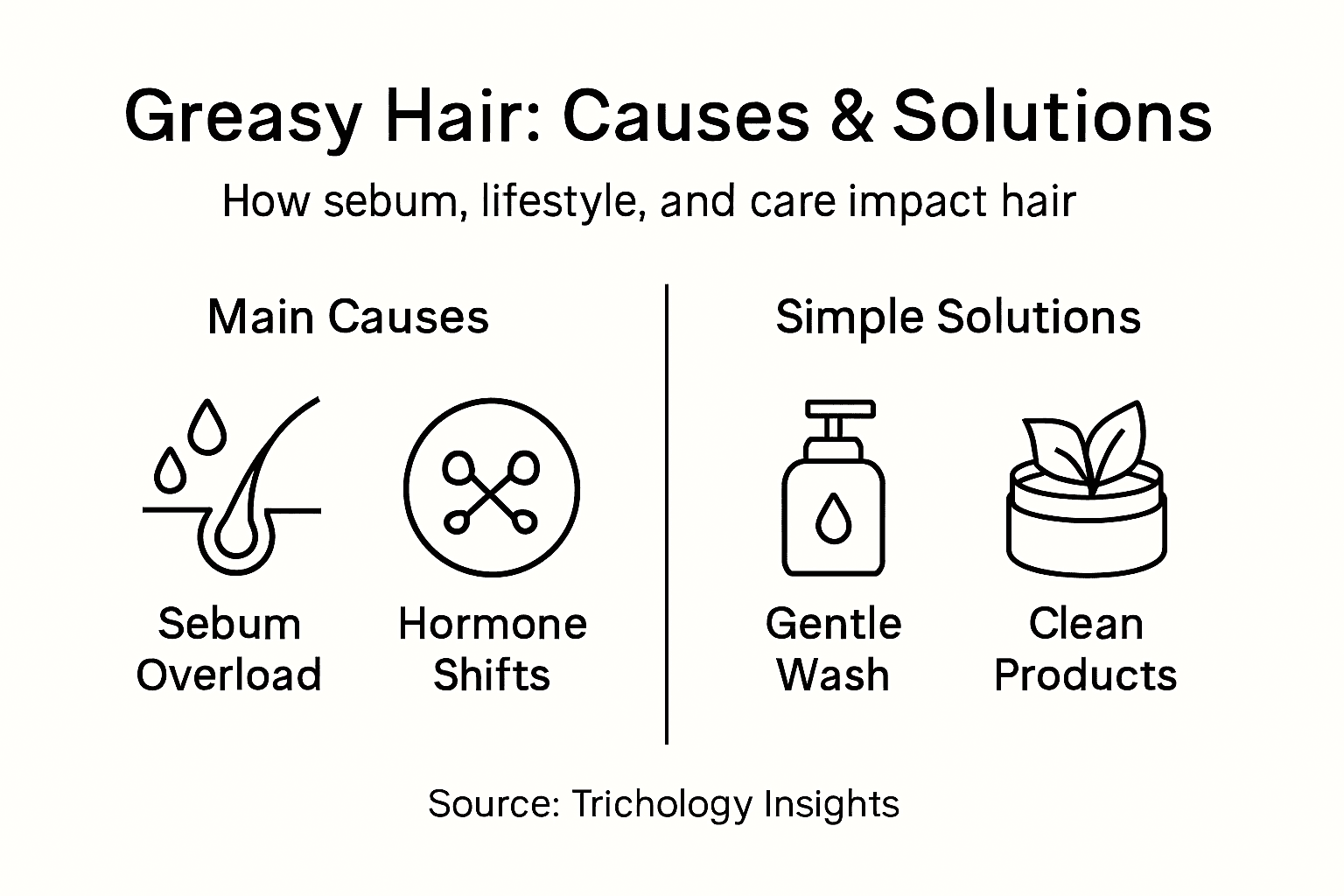
The fundamental principle of clean beauty for greasy hair revolves around understanding and supporting the scalp’s natural mechanisms. Instead of stripping away natural oils, these approaches aim to regulate sebum production through thoughtful, nurturing ingredients that work in harmony with your body’s intrinsic processes.
Key clean beauty strategies for managing oily hair include:
- Plant-Based Cleansers: Gentle surfactants derived from coconut or sugar derivatives
- Balancing Essential Oils: Natural ingredients like tea tree, rosemary, and lavender
- Scalp Exfoliation: Mild, natural exfoliants to remove excess sebum and product buildup
- Microbiome-Friendly Ingredients: Prebiotics and probiotics that support healthy scalp bacteria
- Adaptogenic Herbal Extracts: Ingredients that help regulate sebum production naturally
Botanical extracts play a crucial role in clean beauty approaches, offering targeted solutions that address underlying scalp conditions without disrupting natural oil production. These natural ingredients work subtly to restore balance, unlike aggressive chemical treatments.
Clean beauty isn’t just about avoiding harmful ingredients - it’s about actively nourishing your scalp’s natural healing mechanisms.
Hormonal balance and stress management are equally critical components of a comprehensive clean beauty strategy. By addressing internal factors alongside topical treatments, women can achieve more sustainable, long-term solutions for greasy hair.
Here is a summary of clean beauty ingredients versus conventional oil-control agents for oily hair:
| Approach | Key Ingredients | Effect on Scalp Oils | Long-Term Scalp Health |
|---|---|---|---|
| Clean Beauty | Tea tree, aloe, probiotics | Gently balances sebum | Supports microbiome balance |
| Conventional | Sulphates, silicones, parabens | Strips oils aggressively | May disrupt skin barrier |
| Natural Exfoliants | Oat kernel, sugar, clay | Removes excess and buildup | Maintains scalp clarity |
| Adaptogenic Herbal | Ashwagandha, holy basil | Modulates oil production | Calms inflammation cycle |
Pro tip: Select haircare products with transparent ingredient lists, focusing on plant-derived, non-comedogenic components that support your scalp’s natural equilibrium.
Mistakes to Avoid in Oil Control
Managing greasy hair requires a nuanced approach, with many women inadvertently making counterproductive choices that exacerbate their scalp’s oil production. Hair and scalp hygiene demands strategic care that goes beyond simple washing techniques.
The most common misconception is that aggressive hair cleaning will solve oily scalp issues. In reality, overcleansing can trigger a defensive response from sebaceous glands, causing them to produce even more oil as a protective mechanism. This biological feedback loop creates a frustrating cycle of increasing greasiness that many women struggle to break.
Critical mistakes in oil control include:
-
Overwashing Hair: Stripping natural protective oils
- Triggers increased sebum production
- Disrupts natural scalp microbiome
-
Using Harsh Chemical Shampoos: Damages scalp barrier
- Causes inflammation
- Stimulates excessive oil production
-
Incorrect Product Selection: Applying unsuitable hair products
- Heavy conditioners near roots
- Products not matched to hair type
-
Ignoring Stress Management: Overlooking hormonal influences
- Cortisol impacts sebum production
- Neglecting holistic hair health
-
Poor Dietary Habits: Consuming oil-triggering foods
- High glycemic index ingredients
- Insufficient hydration
Hormonal fluctuations play a significant role in oil production that many individuals underestimate. Stress, diet, and lifestyle directly influence these hormonal patterns, making a holistic approach essential for managing scalp health.
Understanding your body’s unique responses is key to breaking the cycle of persistent greasiness.
Genetic predispositions and individual physiological differences mean that a one-size-fits-all approach to hair care is fundamentally flawed. Personalisation becomes crucial in developing an effective oil control strategy.
Pro tip: Maintain a detailed journal tracking your diet, stress levels, and hair care routine to identify personalised triggers for excess oil production.
Discover Effective Clean Beauty Solutions for Managing Greasy Hair
Struggling with persistent greasy hair caused by excess sebum and hormonal imbalances can be frustrating. You deserve hair care that respects your scalp’s natural balance while tackling oiliness gently and effectively. At LUXEVASTORE.com, we offer a premium selection of scientifically-backed, plant-powered hair treatments designed to support your scalp microbiome and regulate oil production using clean, cruelty-free ingredients.

Explore our curated rituals featuring nourishing botanicals like rosemary, argan oil and biotin that work in harmony with your unique hair type. Act now to restore your scalp’s health with products that combine nature and science. Start your personalised hair revival journey today at LUXEVASTORE.com and experience luxurious, effective solutions tailored for managing greasy hair.
Frequently Asked Questions
What causes hair to get greasy?
Greasy hair is primarily caused by overactive sebaceous glands on the scalp that produce excess sebum. Factors influencing this include hormonal fluctuations, genetics, diet, stress levels, and environmental conditions.
How does hair type affect sebum distribution?
Hair type significantly impacts how sebum is distributed. Straight hair allows even oil spread, while curly and coily hair may struggle with oil distribution, resulting in dry ends and increased greasiness at the roots.
Can diet influence how greasy my hair gets?
Yes, dietary choices have a direct impact on hormonal balance and sebaceous gland activity. High-glycemic foods, dairy, and processed sugars can trigger increased sebum production, contributing to greasiness.
What are effective ways to manage greasy hair?
To manage greasy hair, consider using lighter cleansers, adjusting washing frequency based on hair type, incorporating plant-based ingredients, and maintaining a balanced diet that supports hormonal health.
Recommended
- Greasy Hair – How It Impacts Natural Beauty – LUXEVA
- Science Behind Hair Growth: Nature Meets Innovation – LUXEVA
- Natural Oils for Hair – How They Transform Strength and Shine – LUXEVA
- Scalp Care for Women – The Key to Hair Vitality – LUXEVA
- Hair Oiling Routine 2025: Boost Growth and Reduce Hair Loss | MyHair