


Heat styling and unpredictable British weather can leave hair feeling dry, lifeless, and in need of real nourishment. For women who want cruelty-free, high-performance care, finding the right ingredient is more than a luxury—it is about making choices that match your values and deliver visible results. Discover how the lightweight, skin-mimicking benefits of plant-based squalane offer intense hydration and repair, all while aligning with your commitment to sustainability.
Table of Contents
- What Is Squalane Oil and How Is It Made?
- Plant-Based Versus Synthetic Squalane Explained
- Key Hair Benefits and Science-Backed Effects
- How to Apply Squalane Oil for Best Results
- Safety, Suitability, and Comparing Alternatives
Key Takeaways
| Point | Details |
|---|---|
| Squalane’s Origin and Types | Squalane can be derived from various sources including vegetables and synthetic processes, with plant-based options being more sustainable. |
| Benefits for Hair Health | Squalane effectively hydrates hair, improves scalp health, and reduces breakage without leaving a greasy residue. |
| Application Techniques | For optimal results, apply 2-3 drops on damp hair, focusing on mid-lengths and ends, and consider scalp application for enhanced benefits. |
| Safety and Suitability | Squalane is safe for all hair types, mimicking natural sebum to integrate seamlessly without irritation or clogging pores. |
What Is Squalane Oil and How Is It Made?
Squalane is a lightweight, odourless liquid that mirrors your skin’s natural oils. It’s a hydrogenated derivative of squalene, a naturally occurring compound your body produces to maintain moisture barriers. Unlike other oils that feel heavy or greasy, squalane absorbs quickly without leaving residue—which is why it’s become a staple in premium haircare.
Your hair needs squalane because it restores what daily stress strips away. Heat styling, pollution, and harsh water deplete your hair’s natural moisture. Squalane replenishes this, mimicking the protective layer your scalp naturally creates.
Where Squalane Originally Came From
Historically, squalane came from shark liver oil. The problem? Meeting global demand meant harvesting sharks at unsustainable rates, causing significant environmental damage. This source is now widely rejected by ethical brands—and rightfully so.
Today, the industry has moved toward more responsible alternatives:
- Vegetable squalane: Extracted from olive oil and sugarcane through a process called hydrogenation, which stabilises the oil
- Synthetic squalane: Made from petroleum hydrocarbons, but far less environmentally friendly than plant-based versions
- Fermented squalane: Created using biotechnology and genetically modified organisms to produce squalene sustainably
Most premium haircare brands now prioritise vegetable squalane because it delivers results without harming marine ecosystems.
Below is a comparison table highlighting the main production sources of squalane and their respective sustainability and functional outcomes:
| Source | Sustainability Impact | Purity & Functionality | Ethical Considerations |
|---|---|---|---|
| Shark liver oil | Severe environmental harm | High, but controversial | Widely rejected, non-sustainable |
| Olive oil | Renewable, responsible | High purity, stable | Strong ethical support |
| Sugarcane fermentation | Very low impact, innovative | Highly pure, mimics natural oils | Advanced biotech, fully sustainable |
| Petrochemical synthesis | Non-renewable, higher impact | Pure, but concerns about residue | Least favoured by ethical brands |
How Modern Squalane Is Made
The production process depends on the source. For sugarcane-derived squalane, manufacturers ferment sugars to produce a compound called farnesene. This undergoes dimerisation (molecules bond together), then hydrogenation stabilises the final product.
Olive oil-derived squalane follows a similar path:
- Extract squalene from olive oil
- Hydrogenate the squalene to stabilise it
- Filter and refine to create the pure oil
This hydrogenation step is crucial. It transforms unstable squalene into stable squalane, which won’t oxidise or degrade quickly. That’s why squalane lasts longer in your bottles and performs better on your hair.
Vegetable squalane performs identically to the original shark-derived version—but without the environmental cost.
When you’re shopping for squalane hair oils, look for products listing “plant-derived squalane” or “vegetable squalane” on the label. This tells you the brand chose sustainability without compromising efficacy. Some brands blend squalane with complementary oils like argan or rosemary to enhance repair and growth benefits—worth exploring if you’re interested in additional squalane benefits for hair.
Pro tip: Squalane works best when applied to damp hair, as it locks moisture into your strands. Apply 2-3 drops to the mid-lengths and ends before styling for optimal hydration and repair.
Plant-Based Versus Synthetic Squalane Explained
Both plant-based and synthetic squalane are chemically identical once produced. Your hair can’t tell the difference between them. What differs is where they come from, how they’re made, and their environmental footprint—factors that matter to conscious consumers.
Plant-based squalane comes from hydrogenation of squalene extracted from plants. Common sources include olive oil, amaranth oil, and rice bran oil. The extraction and hydrogenation process is straightforward: squalene is removed from the plant source, then stabilised through hydrogenation to create the final oil.
Synthetic squalane uses chemical or biotechnological routes instead. One modern method involves fermentation of sugarcane sugars to produce intermediates, which are then hydrogenated. Some synthetic versions derive from petrochemical hydrocarbons, though this approach is less popular due to environmental concerns.
Key Differences That Matter
The choice between plant-based and synthetic comes down to four factors:
- Source: Plant oils versus sugarcane fermentation or petrochemicals
- Purity: Both can achieve high purity, though processing methods slightly affect viscosity
- Environmental impact: Plant-based typically has lower impact; petrochemical routes conflict with sustainability values
- Cost: Synthetic versions may cost less, but quality plant-based oils remain affordable
For your hair specifically, the performance is identical. Both hydrate equally, both repair damage, both absorb without leaving residue. The functional outcome is the same.
The real difference lies in your values and the brand’s commitment to sustainability, not in how well the oil performs on your strands.
Why This Matters for Your Haircare Routine
If you’re investing in premium haircare, you’re likely seeking products that align with your ethics. Plant-based squalane signals a brand prioritises environmental responsibility. It tells you they’ve rejected petrochemical shortcuts and shark-derived sources.
When shopping, check the product label for terms like “plant-derived squalane” or “vegetable squalane.” Avoid vague language like “squalane” without qualification—responsible brands specify their source.
Many premium UK haircare brands now blend plant-based squalane with complementary ingredients to enhance results. Pairing squalane with other proven haircare ingredients amplifies hydration and repair benefits significantly.
Pro tip: Read the ingredient list carefully—if squalane appears early and the brand specifies “plant-derived” or “vegetable-sourced,” you’ve found a genuinely sustainable product that delivers without compromise.
Key Hair Benefits and Science-Backed Effects
Squalane doesn’t just sit on your hair—it actually works at the fibre and scalp level. The science behind it is straightforward: squalane mimics your body’s natural sebum, the protective oil your scalp produces naturally. This similarity means your hair recognises it as beneficial rather than foreign.
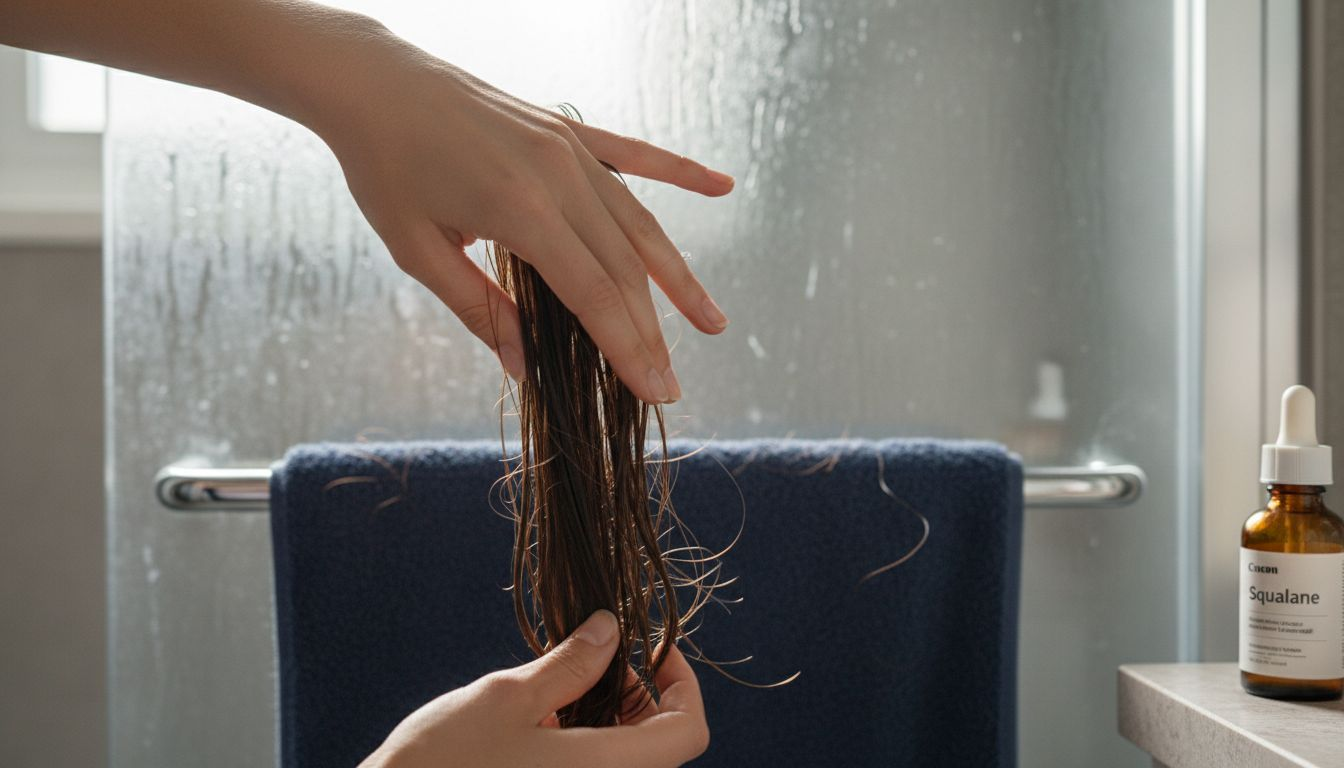
Your hair needs this protection. Environmental stressors like sun exposure, pollution, and hard water constantly damage your strands. Squalane creates a hydrolipidic film that shields against these aggressors whilst maintaining moisture balance. The result? Healthier hair that feels softer and looks shinier.
What Squalane Actually Does for Your Hair
The benefits break down into three core areas:
- Hydration without greasiness: Squalane coats each fibre without weighing hair down or leaving residue
- Scalp health improvement: It balances oil production and strengthens your skin barrier, reducing itching and dandruff
- Reduced breakage: Stronger, more flexible strands break less during styling and washing
Unlike heavy oils that sit on top of your hair, squalane penetrates because your scalp naturally recognises it. This is why protective hydrolipidic films enhance both softness and flexibility simultaneously.
The Scalp Connection You Can’t Ignore
Your scalp’s health directly determines your hair’s health. If your scalp is dry, irritated, or imbalanced, your hair suffers. Squalane addresses this by maintaining your scalp’s natural moisture barrier—the invisible shield that keeps irritants out and hydration in.
This matters because a healthier scalp environment supports stronger hair growth. Whilst squalane doesn’t directly stimulate growth, it removes obstacles to it. When your scalp isn’t fighting dryness or inflammation, your hair can focus on growing properly.
Squalane works best when you understand it as a scalp treatment first and a hair oil second.
Many women see improvements in scalp comfort within 2-3 weeks of consistent use. Itching decreases, dandruff reduces, and overall scalp tension eases. Your hair then responds by feeling stronger and looking healthier.
Here’s a summary table illustrating how squalane addresses key scalp and hair issues:
| Concern | Squalane Action | Result | Best Application |
|---|---|---|---|
| Scalp dryness | Restores moisture barrier | Reduced itching and irritation | Massage into scalp, twice weekly |
| Hair breakage | Strengthens strands | Increased flexibility, less damage | Apply to mid-lengths and ends |
| Dullness | Balances oil production | Enhanced shine and softness | Use on damp hair for absorption |
Understanding how repair treatments work at the molecular level helps you appreciate why squalane’s lightweight, skin-matching properties outperform heavier alternatives.
Pro tip: Apply squalane directly to your scalp twice weekly, massaging gently for two minutes to activate circulation and allow the oil to penetrate deeply into your skin barrier rather than just coating the hair shaft.
How to Apply Squalane Oil for Best Results
Application matters as much as the product itself. Squalane’s lightweight nature means you need far less than traditional oils, and using too much defeats the purpose. The key is consistency and technique.
Start with 2-3 drops maximum on damp hair. Wet hair allows the oil to distribute evenly without clumping. If your hair is dry, slightly dampen it with a spray bottle—this makes a significant difference in how the oil absorbs.
Step-by-Step Application Method
Follow this simple routine for optimal results:
- Shampoo and condition your hair as normal
- Squeeze out excess water but leave hair damp, not dripping
- Dispense 2-3 drops into your palm and rub hands together
- Apply from mid-length to ends, avoiding the roots initially
- Use fingertips to massage a few drops directly into your scalp
- Leave in or style as usual—it absorbs quickly
This method prevents product buildup at the roots whilst ensuring your scalp receives the scalp treatment benefits it needs.
Where to Apply and Why It Matters
Your application strategy should target two areas:
- Scalp and roots: Massage gently for 2 minutes to activate blood circulation and allow the oil to penetrate your skin barrier
- Mid-lengths to ends: Where damage accumulates most from styling and environmental stress
The quick absorption rate of squalane means you won’t feel greasy or weighed down, even on fine hair types. This is why squalane outperforms heavier oils for daily use.
Consistency determines results. Apply twice weekly minimum for noticeable improvements in hydration and breakage reduction. Many women see scalp improvements within 2-3 weeks, though hair shine appears faster.
The best squalane routine is the one you actually stick to—twice weekly consistency beats occasional heavy application.
If your hair tends toward greasiness, reduce to 2 drops total and focus application on the scalp only. When applying hair oil naturally, less is genuinely more with squalane’s molecular structure.
Don’t rinse it out unless you prefer. Squalane isn’t designed to be washed away—it’s meant to stay and protect. Your hair will absorb what it needs within 30 minutes.
Pro tip: Apply squalane on damp hair at night before bed, allowing it to work whilst you sleep; morning hair will feel noticeably softer, shinier, and more hydrated than with daytime application alone.
Safety, Suitability, and Comparing Alternatives
Squalane’s safety profile is exceptionally strong. The Cosmetic Ingredient Review panel has thoroughly examined squalane and squalene, concluding both are safe for cosmetic use at current concentrations and practices. No significant clinical evidence of sensitisation or irritation exists, even with increased use across diverse populations.
This matters because squalane is naturally part of human sebum—the oil your scalp already produces. Your body recognises it immediately, which is why reactions are virtually non-existent. It’s also non-comedogenic, meaning it won’t clog hair follicles or scalp pores.
Suitability Across Hair Types
Squalane works for virtually every hair type. The lightweight structure means even fine or greasy hair benefits:
- Fine or thin hair: The oil absorbs without weighing strands down
- Curly hair: Provides moisture and definition without frizz
- Oily scalp: Balances oil production rather than adding greasiness
- Dry or damaged hair: Repairs and hydrates without heaviness
- Colour-treated hair: Protects without causing build-up or dulling colour
The key is using correct quantities—2-3 drops for most people, not tablespoons. This universal suitability is why dermatologists often recommend squalane over alternatives.
How Squalane Compares to Other Oils
Argan oil, coconut oil, and jojoba oil are popular alternatives, but each has trade-offs. Squalane exhibits excellent thermal-oxidative stability and remains lightweight whilst providing superior protection against environmental stressors.
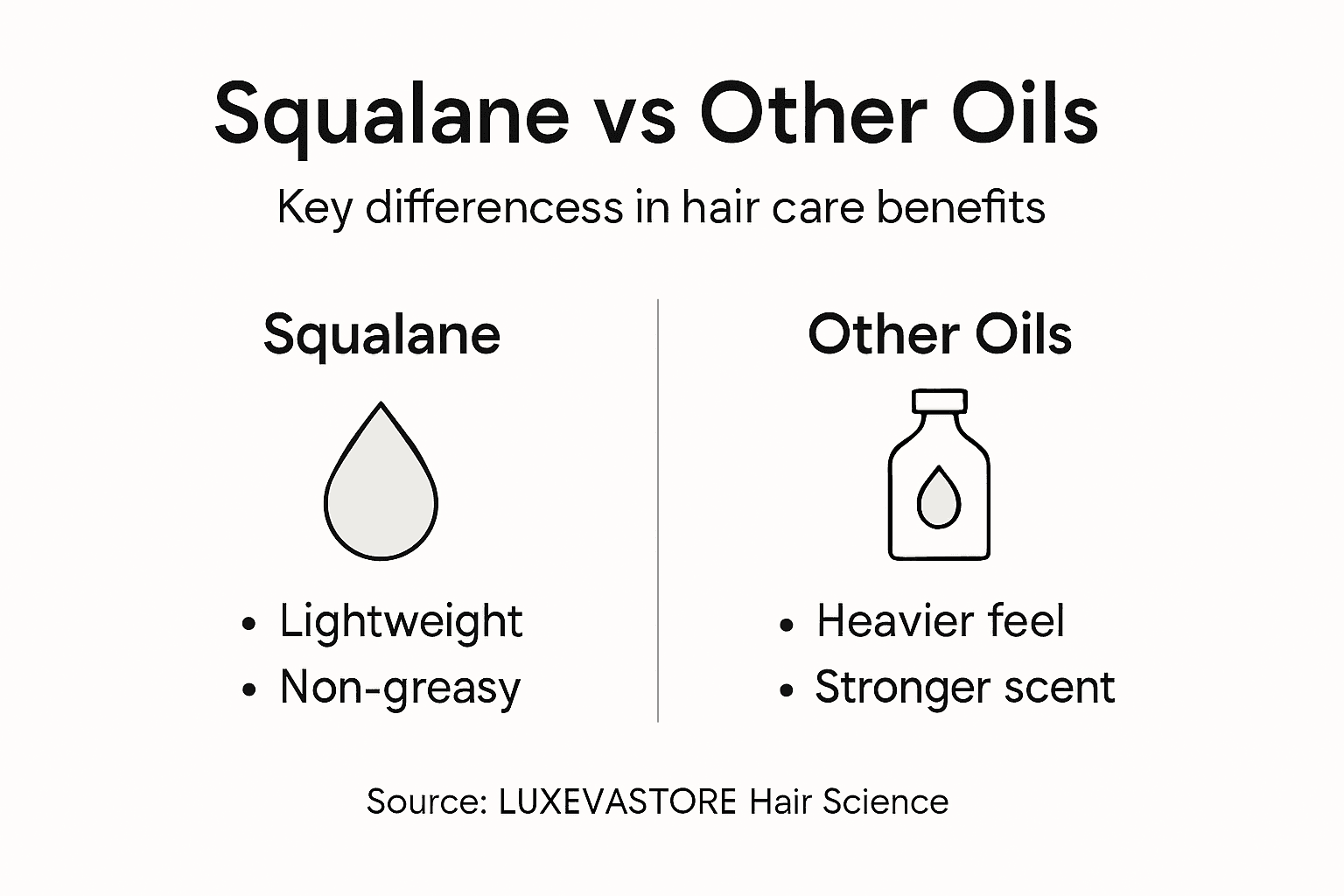
Here’s how they stack up:
| Oil Type | Weight | Absorption | Scalp Safety | Best For |
|---|---|---|---|---|
| Squalane | Very light | Fast | Excellent | All types |
| Argan | Medium | Moderate | Good | Dry hair |
| Coconut | Heavy | Slow | Fair | Thick curls |
| Jojoba | Light | Moderate | Good | Sensitive scalps |
Squalane stands out because it mimics your natural sebum exactly. Other oils are beneficial but fundamentally foreign to your scalp chemistry. They work around your hair rather than integrating with it.
Squalane’s safety and universal suitability make it the premium choice for long-term scalp and hair health without compromise.
Cost-wise, plant-based squalane is competitively priced against quality argan or jojoba oils. You’re not paying extra for effectiveness—you’re paying for sustainability and purity.
Pro tip: If you’ve never used squalane, perform a patch test on a small section of scalp first, though reactions are extremely rare; patch testing takes 24 hours and provides complete peace of mind before full-routine integration.
Experience the Power of Plant-Based Squalane for Hydrated, Resilient Hair
If you are seeking a solution to scalp dryness, breakage, or dull hair caused by environmental stress, squalane oil offers a lightweight, deeply hydrating remedy that mimics your scalp’s natural oils. The challenge of finding a truly sustainable and effective haircare ingredient is real — many oils weigh hair down or fail to protect your scalp barrier. With plant-derived squalane, you get rapid absorption, lasting moisture, and scalp nourishment without greasiness or build-up.

Explore premium, cruelty-free formulations at LUXEVASTORE.com where every product is crafted for those who value scientific backing, clean ingredients, and ethical sourcing. Discover how integrating squalane with natural boosters like argan oil and rosemary can transform your hair ritual. Don’t wait to revitalise your hair with a sustainable solution proven to strengthen and protect. Visit our website now to browse our exclusive collections and benefit from ongoing offers including Black Friday promotions.
Elevate your haircare. Choose plant-powered science. See the difference with LUXEVASTORE.com.
Frequently Asked Questions
What is squalane oil and why is it beneficial for hair?
Squalane oil is a lightweight, odourless oil that mimics the natural oils produced by your scalp. It hydrates and protects hair by restoring moisture lost due to heat styling and environmental stressors, leading to healthier, shinier strands.
How is squalane oil made?
Squalane is derived from the hydrogenation of squalene, commonly extracted from plant sources like olive oil or sugarcane fermentation. This process stabilises the oil, making it suitable for cosmetic use without the environmental issues associated with shark-derived squalane.
Can squalane oil help with scalp health?
Yes, squalane oil helps maintain the scalp’s natural moisture barrier, reducing dryness and irritation. This improvement in scalp health can lead to stronger hair growth and overall enhanced hair health.
How should I apply squalane oil for the best results?
For optimal results, apply 2-3 drops of squalane oil to damp hair, focusing on the mid-lengths and ends. You may also massage it into your scalp for added hydration, ensuring even distribution and better absorption.
Recommended
- Squalane for Hair Growth: Truths, Myths and Benefits – LUXEVA
- Top 6 Hair Care Brands Offering Squalane Products for Hair Growth in 2 – LUXEVA
- Top 8 Squalane Hair Oils for Growth in the UK 2026 – LUXEVA
- Argan Oil Hair Repair & Shine Ritual – LUXEVA
- The Ultimate Hair Oil for Hydration, Shine, and Healthy Growth – ManadelcielobyNashaly