


Most advice about hair repair barely scratches the surface of what truly happens on a molecular level. For many british consumers, the search for effective solutions leads to endless products and promises. Yet scientific breakthroughs show hair structure can actually be rebuilt from within, not just coated. With up to 95 percent of hair comprised of keratin proteins, understanding how repair really works will help you make smarter choices for stronger, healthier hair.
Table of Contents
- What Hair Repair Really Means Scientifically
- Types of Hair Damage and Repair Needs
- Key Ingredients Transforming Hair Structure
- How Natural and Synthetic Solutions Compare
- Risks, Limitations, and Common Misconceptions
Key Takeaways
| Point | Details |
|---|---|
| Understanding Hair Repair | Hair repair involves strategic molecular interventions targeting protein structures, primarily keratin, to restore and strengthen hair integrity. |
| Types of Hair Damage | Hair damage varies based on chemical, heat, mechanical, and environmental factors, each requiring tailored repair strategies. |
| Effective Ingredients | Advanced molecular ingredients, including thiol-reactive cross-linking agents and growth factors, are crucial for reconstructing hair’s protein architecture. |
| Realistic Expectations | Complete restoration of damaged hair is not feasible; effective repair necessitates consistent care and a comprehensive approach, combining synthetic and natural solutions. |
What Hair Repair Really Means Scientifically
Hair repair is far more complex than simply applying a conditioning treatment. At its core, scientific hair repair involves strategic molecular interventions that restore and strengthen the intricate protein structures within hair fibres. Molecular mechanisms of hair follicle regeneration reveal a sophisticated process of rebuilding and protecting hair’s fundamental structural integrity.
The scientific approach to hair repair centres on understanding and manipulating keratin proteins, which comprise approximately 95% of hair’s structural composition. Researchers have discovered that chemical cross-linking techniques can significantly enhance hair’s mechanical properties. Through innovative thiol-reactive cross-linking agents, scientists can now chemically regenerate disulfide bridges that provide strength and resilience to hair strands. Keratin protein reconstruction techniques demonstrate how targeted molecular interventions can dramatically improve hair fibre durability.
Critical factors in scientific hair repair include addressing multiple damage mechanisms simultaneously. These encompass protein structure restoration, lipid barrier reconstruction, and cellular-level hydration management. Hair follicle stem cells play a pivotal role in this process, regulating growth cycles and responding to internal and external environmental stressors. By understanding these intricate biological pathways, researchers can develop more sophisticated hair repair strategies that go beyond superficial treatments, targeting the fundamental causes of hair damage at the molecular level.
Types of Hair Damage and Repair Needs
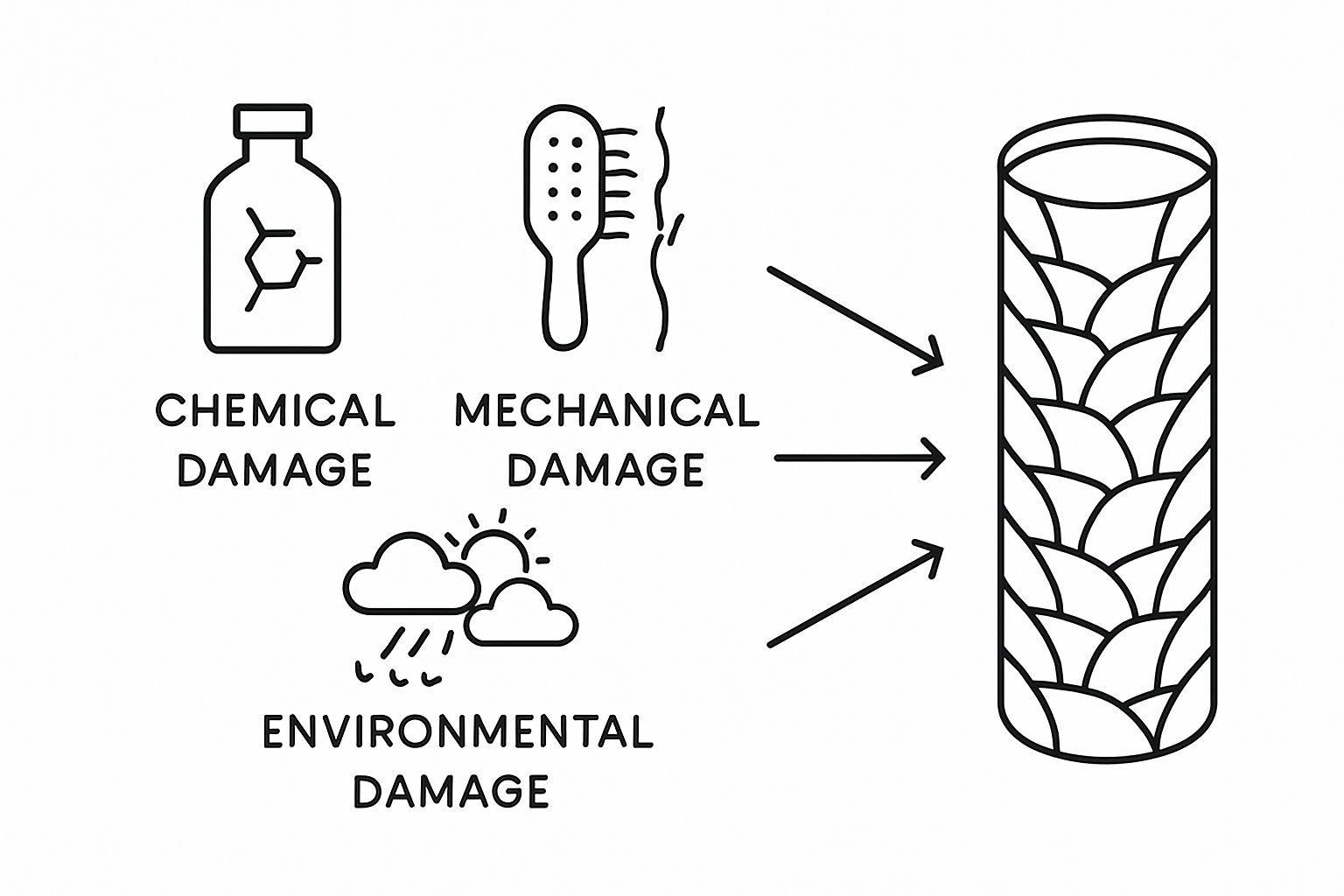
Hair damage is not a uniform phenomenon, but a complex interplay of multiple destructive mechanisms that compromise hair’s structural integrity. Comprehensive analysis of hair damage types reveals four primary categories: chemical, heat, mechanical, and environmental damage, each requiring distinct repair approaches. Understanding these variations is crucial for developing targeted hair restoration strategies that address specific structural weaknesses.
Chemical damage represents one of the most aggressive forms of hair degradation, typically resulting from repeated colour treatments, bleaching, and harsh chemical processing. These interventions disrupt the hair’s protein bonds, causing significant structural compromise. Protein bond breakdown occurs at the molecular level, creating porosity, fragility, and increased susceptibility to further damage. Hair damage classification techniques demonstrate that chemical treatments can reduce hair’s tensile strength by up to 40%, rendering strands brittle and prone to breakage.
Mechanical and environmental damage present equally complex challenges. Repeated heat styling, aggressive brushing, and exposure to UV radiation progressively weaken hair’s protective cuticle layer. These external stressors cause cumulative microtrauma, gradually eroding the hair’s natural resilience. By recognising the nuanced mechanisms of damage, individuals can implement more sophisticated repair protocols that focus on molecular reconstruction, targeted protein restoration, and comprehensive protective strategies.
Key Ingredients Transforming Hair Structure
Advanced hair repair demands sophisticated molecular ingredients that can fundamentally reconstruct hair’s intricate protein architecture. Thiol-reactive cross-linking agents represent a breakthrough in scientific hair restoration, capable of chemically regenerating disulfide bridges that provide structural strength to hair fibres. These innovative molecular components can enhance hair’s mechanical properties by targeting the fundamental protein connections within each strand.
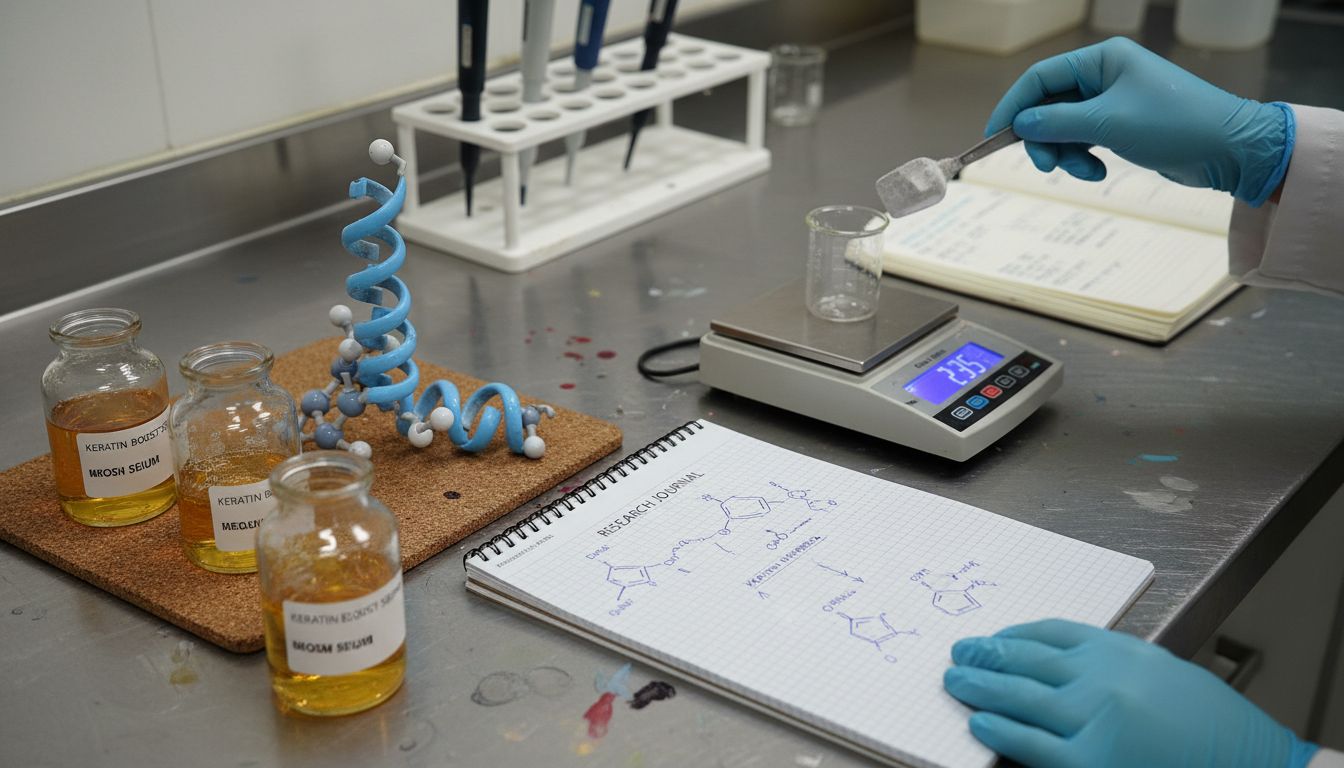
Growth factors emerge as another critical category of transformative ingredients. Bioactive molecular compounds like Hepatocyte Growth Factor (HGF) and Insulin-like Growth Factor (IGF-1) play a pivotal role in hair follicle regeneration. Mechanical stimulation and stem cell activation research demonstrates how these growth factors can reactivate dormant hair follicle stem cells, essentially reprogramming the hair’s regenerative potential at a cellular level.
The most effective hair repair ingredients operate through multifaceted mechanisms. Keratin-based proteins, ceramides, amino acid complexes, and lipid-rich botanical extracts work synergistically to rebuild, protect, and strengthen hair’s structural integrity. By addressing damage at molecular, cellular, and surface levels, these advanced ingredients can transform compromised, fragile hair into resilient, healthy strands capable of withstanding environmental and chemical stressors.
How Natural and Synthetic Solutions Compare
The landscape of hair repair is increasingly defined by the nuanced interplay between natural botanical extracts and advanced synthetic molecular technologies. Comparative analysis of mechanical hair regeneration techniques reveals that both approaches offer unique advantages in addressing hair structural challenges. Natural solutions leverage botanical compounds and traditional healing mechanisms, while synthetic interventions provide precision-engineered molecular reconstruction strategies.
Synthetic hair repair technologies represent a groundbreaking approach to structural restoration. Thiol-reactive cross-linking agents demonstrate remarkable potential in chemically regenerating hair’s protein bonds with unprecedented accuracy. These lab-developed compounds can precisely target damaged keratin structures, offering a level of molecular intervention impossible through natural ingredients alone. Synthetic solutions excel at delivering targeted, measurable improvements in hair fibre strength and elasticity.
Natural ingredients, conversely, provide holistic nourishment through complex botanical compounds. Essential oils, plant-based proteins, and herbal extracts work synergistically to support hair’s overall health, addressing damage through nutritional replenishment and protective mechanisms. The most effective hair repair strategies often combine both synthetic precision and natural nurturing approaches, creating comprehensive treatments that simultaneously repair, protect, and revitalise hair at molecular and surface levels.
Risks, Limitations, and Common Misconceptions
Comprehensive understanding of hair damage myths reveals a critical truth often overlooked by consumers: damaged hair cannot be completely restored to its original state. While advanced treatments can significantly improve hair’s appearance and structural integrity, the notion of complete reversal is fundamentally misleading. Permanent structural changes caused by chemical processing, heat damage, and environmental stressors create lasting modifications that cannot be entirely undone.
Chemical intervention risks represent a significant concern in hair repair strategies. Excessive treatments can lead to irreversible protein degradation, compromising hair’s natural elasticity and strength. Risks associated with repeated chemical treatments demonstrate that frequent colour processing, bleaching, and aggressive styling techniques can cause cumulative damage that progressively weakens hair’s fundamental molecular structure. Many individuals mistakenly believe that successive treatments can repair prior damage, when in reality, they often exacerbate existing structural vulnerabilities.
Another prevalent misconception surrounds the instantaneous efficacy of hair repair products. Scientific research emphasises that meaningful hair restoration requires consistent, long-term care and realistic expectations. Quick-fix solutions promising immediate transformations are essentially marketing narratives disconnected from biological reality. Genuine hair repair is a gradual process involving molecular reconstruction, nutritional support, and protective strategies that demand patience, commitment, and a holistic approach to hair health.
Restore Your Hair with Science-Backed Rituals
Understanding the science behind hair repair reveals the need for treatments that target the molecular damage caused by chemical, heat, and environmental factors. If you struggle with weakened, brittle hair or aim to rebuild your hair’s natural resilience, then utilising premium products designed with advanced ingredients can make all the difference. These formulations focus on regenerating protein bonds and strengthening hair fibres at their core, helping you regain healthy, vibrant hair.
Discover our Scalp & Haircare Sets – LUXEVA that harness the power of natural, scientifically-proven ingredients combined to repair and protect. From thiol-reactive agents to botanical extracts like argan oil and biotin, each product works holistically to rebuild and nourish your hair.

Take control of your hair health today by exploring our carefully curated Sulphate Free Shampoo Sets: Elevate Your Haircare Ritual with LUXEVA and embrace a beauty routine that respects your hair’s unique needs. Act now to benefit from our current offers exclusively at https://luxevastore.com. Your journey towards scientifically supported, natural hair repair starts here.
Frequently Asked Questions
What is scientific hair repair?
Scientific hair repair involves strategic molecular interventions that restore and strengthen the protein structures within hair fibres, focusing on the manipulation of keratin proteins and chemical cross-linking techniques to improve hair durability.
How do thiol-reactive cross-linking agents work in hair repair?
Thiol-reactive cross-linking agents chemically regenerate disulfide bridges in hair, enhancing its mechanical properties and restoring structural integrity at the molecular level.
What types of hair damage can scientific hair repair address?
Scientific hair repair can address various types of damage, including chemical, heat, mechanical, and environmental damage, each requiring targeted repair strategies to restore hair health.
Can natural ingredients effectively repair hair compared to synthetic solutions?
Natural ingredients provide holistic nourishment through botanical compounds, while synthetic solutions offer precision-engineered molecular reconstruction. The most effective hair repair methods often combine both approaches to maximise overall hair health.
Recommended
- Reverse Alopecia: Insights from Science and Real-Life Success Stories – LUXEVA
- Argan Oil Hair Repair & Shine Ritual – LUXEVA
- LUXEVA 3-in-1 Biotin & Rosemary Hair Growth Shampoo & Conditioner Set
- Combat Postpartum Hair Loss: Natural Tips & Treatments That Work – LUXEVA
- 7 Essential Male-Focused Med Spa Treatments for Men