


Searching for haircare that brings both luxury and wellness can feel exhausting, especially when every product promises miracles but delivers little. For health-conscious women who value cruelty-free solutions and yearn for vibrant, nourished hair, the answer lies in the transformative power of essential oils. These concentrated plant extracts are celebrated for their ability to improve scalp health and promote hair repair, blending botanical science with natural beauty empowerment. Discover how molecular complexity unlocks radiant, resilient hair with targeted essential oil treatments.
Table of Contents
- What Are Essential Oils in Haircare?
- Major Types and Plant Sources Explained
- How Essential Oils Benefit Hair and Scalp
- Science, Effectiveness, and Common Misconceptions
- Safe Use, Risks, and Allergic Reactions
- Choosing Oils: Best Practices for Luxe Haircare
Key Takeaways
| Point | Details |
|---|---|
| Essential oils enhance haircare | These botanical concentrates offer therapeutic benefits that support hair and scalp health, going beyond mere fragrance. |
| Tailored oil selection is crucial | Choosing the right essential oils based on hair type and specific concerns maximises their natural healing potential. |
| Safety precautions are essential | Always dilute essential oils and perform patch tests to prevent skin irritation and adverse reactions. |
| Scientific understanding is necessary | Recognise that essential oils should complement, not replace, conventional treatments and require informed application for effectiveness. |
What Are Essential Oils in Haircare?
Essential oils represent powerful botanical concentrates extracted from plants, designed to revolutionise natural hair treatment approaches. Concentrated plant extracts contain potent aromatic compounds that deliver targeted nutrition and support for hair and scalp health.
These extraordinary botanical substances are derived through precise extraction methods, capturing the most therapeutic elements of plants. The extraction process typically involves:
- Steam distillation of aromatic plant parts
- Cold pressing of botanical materials
- Solvent extraction techniques
- Mechanical compression of plant tissues
In haircare, essential oils offer multiple transformative benefits. They are not merely fragrances but complex molecular structures that interact directly with hair follicles and scalp ecosystem. Therapeutic properties range from stimulating hair growth to balancing sebum production and addressing specific scalp conditions.
Potent molecular compositions enable essential oils to penetrate hair shafts and scalp tissue, delivering targeted nutrition. Volatile aromatic liquids represent more than simple botanical extracts - they embody the complete physiological and chemical essence of their source plants.
Pro tip: Always dilute essential oils with a carrier oil before direct application to prevent potential skin irritation and ensure safe, effective haircare treatment.
Major Types and Plant Sources Explained
Natural haircare embraces a diverse array of essential oils, each sourced from unique botanical environments and offering remarkable therapeutic benefits. Essential oils from plant diversity represent a complex ecosystem of healing compounds extracted through intricate processes.
The most prominent essential oils used in haircare originate from specific plant families and parts, including:
- Lavender: Extracted from flowering tops, known for calming scalp conditions
- Tea Tree: Derived from Australian native tree leaves, renowned for antimicrobial properties
- Rosemary: Harvested from leafy herb stems, stimulates hair follicle circulation
- Peppermint: Obtained from mint plant leaves, provides cooling scalp sensation
- Eucalyptus: Sourced from tree bark and leaves, offers deep cleansing properties
Botanical extraction techniques reveal fascinating variations in oil composition, influenced by environmental factors like soil quality, climate, and harvesting methods. Each essential oil contains a unique molecular profile that determines its specific therapeutic potential for hair and scalp wellness.
Understanding the intricate relationship between plant sources and their extracted oils allows for targeted haircare solutions. Molecular complexity means that different plant parts - whether flowers, leaves, roots, or bark - contribute distinct chemical compounds that address specific hair health concerns.
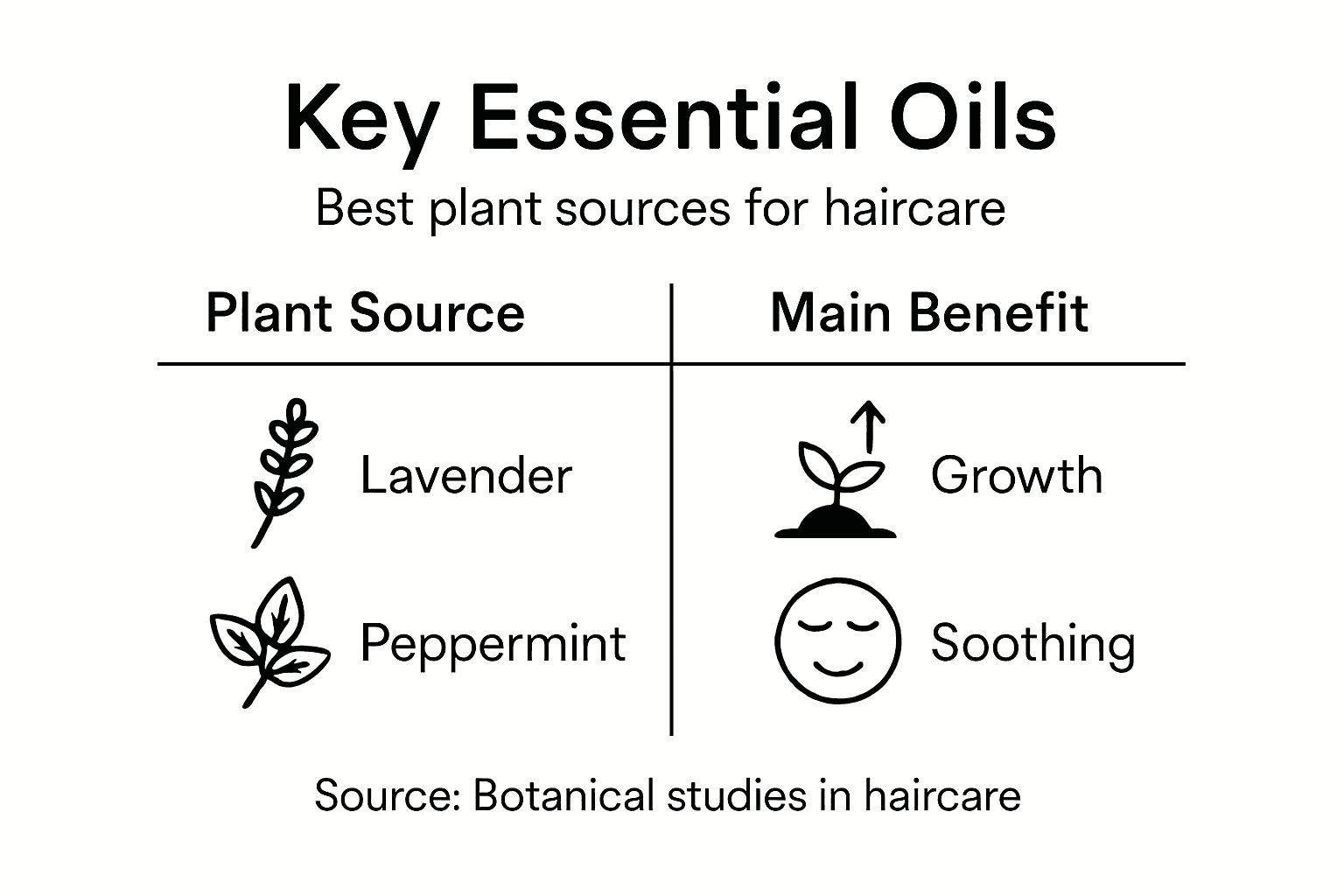
Here is a quick guide comparing popular essential oils used in haircare:
| Essential Oil | Plant Source | Main Haircare Benefit |
|---|---|---|
| Lavender | Flowering tops | Calms scalp irritation |
| Tea Tree | Leaves | Antimicrobial action |
| Rosemary | Herb stems | Stimulates hair growth |
| Peppermint | Mint leaves | Refreshes, soothes scalp |
| Eucalyptus | Bark and leaves | Deep cleansing effect |
Pro tip: Select essential oils based on your specific hair type and scalp condition to maximise natural healing potential.
How Essential Oils Benefit Hair and Scalp
Essential oils represent a powerful natural approach to comprehensive hair and scalp wellness, delivering multi-dimensional therapeutic benefits beyond traditional haircare solutions. Rosemary oil’s antioxidant properties demonstrate remarkable potential for stimulating hair growth and supporting overall scalp health.
The profound benefits of essential oils for hair and scalp include:
- Improved Blood Circulation: Enhances nutrient delivery to hair follicles
- Antimicrobial Protection: Combats scalp infections and dandruff
- Hydration Restoration: Prevents moisture loss and strengthens hair shaft
- Anti-Inflammatory Action: Reduces scalp irritation and potential hair loss
- Natural Nutrient Infusion: Provides vitamins and minerals directly to hair roots
Hair oiling techniques unlock transformative potential for addressing multiple hair concerns simultaneously. Molecular interactions between essential oils and scalp tissues create a complex healing environment that supports natural hair regeneration and protection.

Understanding the intricate mechanisms of essential oils reveals their extraordinary capacity to address hair challenges holistically. By targeting root causes of hair damage and scalp conditions, these botanical extracts offer a sophisticated alternative to synthetic haircare treatments.
Pro tip: Perform a patch test with diluted essential oils to ensure individual skin compatibility before full scalp application.
Science, Effectiveness, and Common Misconceptions
Scientific research on essential oils reveals a nuanced landscape of potential benefits and critical limitations in haircare applications. While promising, the evidence demands a measured and scientifically informed approach to understanding their true therapeutic potential.
Common misconceptions about essential oils include:
- Miracle Cure Myth: Believing essential oils can instantly solve all hair problems
- Universal Application: Assuming all oils work identically for every hair type
- Concentration Misunderstanding: Using undiluted oils directly on scalp and hair
- Immediate Results Expectation: Anticipating instantaneous transformational effects
- Medical Treatment Replacement: Viewing essential oils as alternative medicine
Hair fiber biology research demonstrates that effectiveness depends on precise formulation, concentration, and individual hair characteristics. Scientific validation requires rigorous testing that examines molecular interactions, long-term impacts, and potential side effects.
Understanding the scientific boundaries of essential oils means recognising them as complementary treatments rather than absolute solutions. Their power lies in supporting hair health through targeted, evidence-based applications that respect individual physiological variations.
Pro tip: Consult a trichology professional to develop a personalised essential oil strategy tailored to your specific hair and scalp conditions.
Safe Use, Risks, and Allergic Reactions
Essential oil safety guidelines underscore the critical importance of understanding potential risks and implementing responsible usage practices. Navigating the complex landscape of essential oil application requires careful consideration of individual sensitivities and potential adverse reactions.
Key safety precautions for essential oil use include:
- Patch Testing: Always conduct a small skin test before full application
- Dilution Requirement: Never apply pure essential oils directly to skin
- Concentration Monitoring: Use recommended dilution ratios
- Individual Sensitivity: Recognise unique physiological responses
- Medical Consultation: Seek professional advice for specific health conditions
Proper oil dilution techniques are fundamental to preventing skin irritation and allergic reactions. Carrier oils serve as essential buffers, reducing the potential for adverse dermatological responses and ensuring safer topical application.
Special populations require additional caution. Pregnant women, children, individuals with sensitive skin, and those with pre-existing health conditions must exercise heightened vigilance and preferably consult healthcare professionals before incorporating essential oils into their haircare routine.
Below is a summary of key safety considerations when using essential oils for hair:
| Precaution | Why It Matters | Who Should Be Most Cautious |
|---|---|---|
| Patch testing | Detects allergic reactions | Sensitive or allergy-prone skin |
| Dilution with carrier | Prevents irritation | All users, especially new to oils |
| Professional advice | Safe, tailored recommendations | Pregnant women, children, those with health issues |
Pro tip: Maintain a detailed journal tracking your essential oil usage, noting any skin reactions or sensitivities to build a personalised safety profile.
Choosing Oils: Best Practices for Luxe Haircare
Selecting essential oils for hair requires a nuanced understanding of your unique hair profile and specific wellness objectives. The art of luxe haircare involves strategic oil selection that transcends generic recommendations, focusing instead on personalised therapeutic approaches.
Key considerations when choosing essential oils include:
- Hair Type Compatibility: Match oils to your specific hair texture
- Targeted Hair Concerns: Address specific issues like dryness or scalp health
- Molecular Properties: Understand each oil’s unique chemical composition
- Carrier Oil Selection: Choose high-quality base oils for optimal dilution
- Concentration Precision: Use recommended dilution ratios
Essential oil therapeutic profiles reveal complex interactions between botanical extracts and hair biochemistry. Molecular sophistication means that different oils provide distinct benefits, from stimulating hair follicle circulation to balancing scalp microbiome conditions.
Professional haircare demands a holistic approach. Integrating essential oils requires understanding their intricate properties, potential synergies, and individual physiological responses. Each selection should be a deliberate, informed choice that respects the complexity of hair and scalp ecosystems.
Pro tip: Create a personalised essential oil blend by consulting a trichology expert who can assess your specific hair health requirements.
Unlock the Power of Essential Oils with Luxeva
If you are seeking to nurture your hair and scalp with natural, science-backed care, understanding essential oils is the first step. This article highlights common challenges like scalp irritation, dryness, and lacklustre hair growth, all of which can benefit from the precise, therapeutic action of these potent botanical extracts. At Luxeva, we share your goal of achieving radiant, healthy hair by combining the best of nature and science.
Discover how targeted blends rich in essential oils can transform your haircare routine. Explore our carefully curated Scalp & Haircare Sets – LUXEVA that harness the anti-inflammatory and antimicrobial qualities described in the article. We also offer exclusive Sulphate Free Shampoo Sets: Elevate Your Haircare Ritual with LUXEVA to ensure gentle cleansing without stripping natural oils.

Experience personalised hair revival based on detailed, science-driven formulations designed for your unique hair concerns. Visit https://luxevastore.com today to elevate your haircare ritual with natural luxury that protects, nourishes, and restores. Start your journey now to healthier hair and scalp wellness with trusted botanical power.
Frequently Asked Questions
What are the main benefits of using essential oils in haircare?
Essential oils provide numerous benefits, including improved blood circulation to hair follicles, antimicrobial protection, hydration restoration, anti-inflammatory action, and natural nutrient infusion for healthier hair and scalp.
How should essential oils be diluted for safe use?
It is essential to dilute essential oils with a carrier oil before application to prevent skin irritation. Recommended dilution ratios typically involve mixing a few drops of essential oil with a carrier oil, such as coconut or jojoba oil.
Can essential oils help with specific scalp conditions?
Yes, different essential oils can address various scalp conditions. For example, tea tree oil is known for its antimicrobial properties, making it effective against dandruff and scalp infections, while lavender oil can soothe irritations.
Are there any risks associated with using essential oils on hair?
Yes, there are potential risks, including skin irritation and allergic reactions. It is important to perform a patch test before full application, monitor concentration levels, and consult a healthcare professional if needed.