


Most women assume their hair is strong right up until it isn’t. You notice short, snapped pieces on your brush, uneven ends that won’t grow past a certain length, and a general sense that something is wrong. The frustrating truth? Hair breakage occurs when the hair shaft snaps due to weakened protein bonds deep within the cortex, not from poor length retention or bad luck. This guide will walk you through the real causes, the science behind why certain strands snap first, and the proven solutions that actually rebuild strength from the inside out.
Table of Contents
- What really causes hair breakage?
- The science of weakest links: Why some strands snap
- Inside-out repair: Proven solutions for preventing breakage
- Other hidden triggers: Medical, environmental and daily mistakes
- Discover premium solutions for lasting hair repair
- Frequently asked questions
Key Takeaways
| Point | Details |
|---|---|
| Breakage vs shedding | Breakage results in short, snapped pieces, whilst shedding removes whole hairs with root bulbs. |
| Weakest links matter | Hair tips are structurally weaker and break first; targeted treatments deliver the best results. |
| Repair needs balance | Combining internal nutraceuticals with cruelty-free serums and oils creates resilient, healthy hair. |
| Daily habits impact | Wet handling, protein-moisture imbalance, and medical issues often trigger breakage unnoticed. |
What really causes hair breakage?
Breakage and shedding are not the same thing, and mixing them up leads to the wrong solutions. Shedding releases whole hairs complete with a small white bulb at the root. Breakage, on the other hand, leaves short, snapped pieces with no bulb at all. Understanding the difference between breakage and shedding is the first step to treating the right problem.
The primary causes include chemical treatments, excessive heat styling, mechanical stress, environmental factors, and nutritional deficiencies. Each of these attacks the protein bonds that hold your hair shaft together. When those bonds weaken, the shaft becomes brittle and prone to snapping under even gentle tension.
Here is a quick breakdown of the most common culprits:
- Chemical treatments such as bleaching, relaxing, and perming break disulfide bonds in the cortex directly
- Excessive heat from straighteners and curling tongs strips moisture and degrades the cuticle layer
- Mechanical stress from tight hairstyles, rough towel drying, and aggressive brushing creates physical fractures
- Environmental factors including UV exposure, hard water, and pollution weaken the outer cuticle over time
- Nutritional deficiencies in iron, zinc, biotin, and vitamin D reduce the quality of new hair growth at the follicle
“The hair shaft is only as strong as its weakest protein bond. Once those bonds are compromised, no amount of surface conditioning will fully restore structural integrity without targeted repair.”
This is why so many women feel stuck in a cycle of conditioning and trimming without ever seeing real improvement. The damage is structural, and it needs a structural solution.
The science of weakest links: Why some strands snap
Not all parts of your hair are equally vulnerable. Research shows that breakage happens at sections with the smallest diameter and highest surface irregularity, and this irregularity increases consistently from root to tip. In practical terms, your ends are far more fragile than your roots, and that is exactly where most snapping occurs.
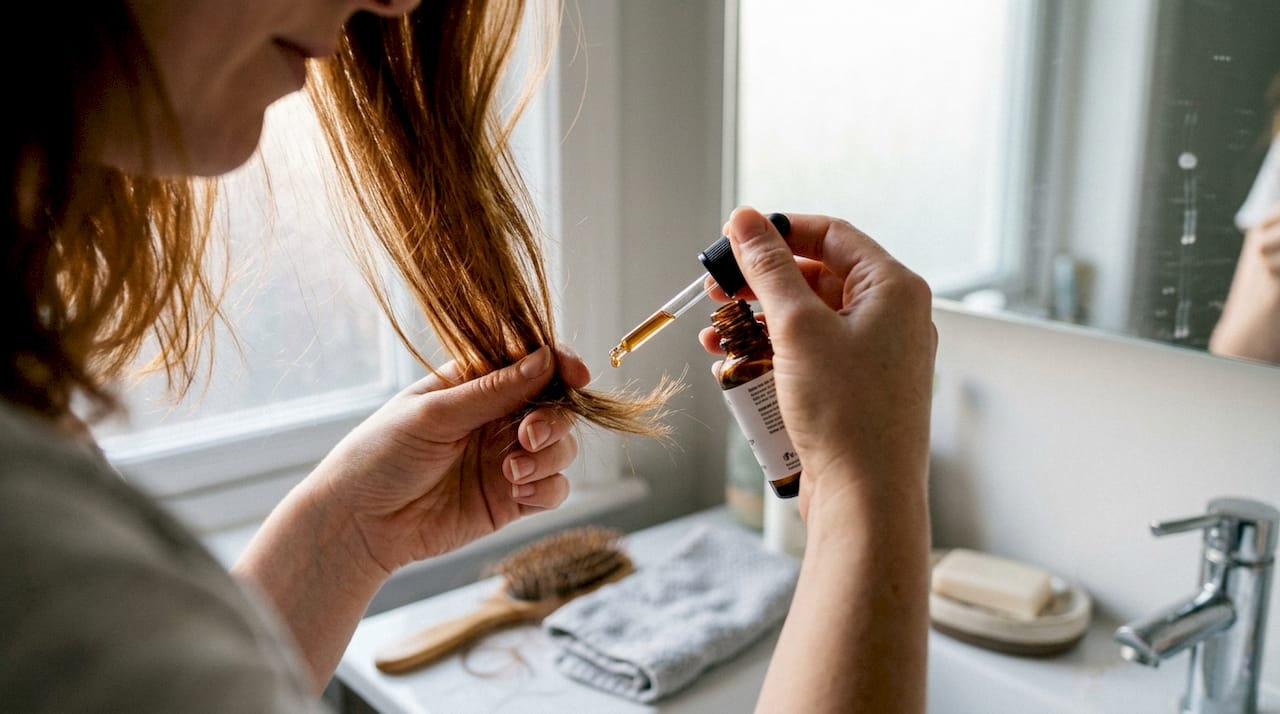
Scientists measure this surface irregularity using a value called Rq (root mean square roughness). The higher the Rq, the more uneven and structurally compromised the hair surface is. Tips can show up to 100% more structural irregularity than roots, which explains why length retention is so difficult without targeted end care.
| Hair section | Surface irregularity (Rq) | Breakage risk |
|---|---|---|
| Root | Low | Minimal |
| Mid-shaft | Moderate | Moderate |
| Tips | High (up to 100% more) | Very high |
Pro Tip: Apply a lightweight oil or serum specifically to your ends before any heat styling or manipulation. This reduces surface irregularity and creates a protective barrier exactly where your hair is most vulnerable.
Oils and targeted treatments work by smoothing the cuticle and reducing Rq, which directly lowers the risk of snapping at those weak points. If you are serious about caring for brittle hair long term, focusing your repair efforts on the mid-shaft to tips is where you will see the biggest results.
Inside-out repair: Proven solutions for preventing breakage
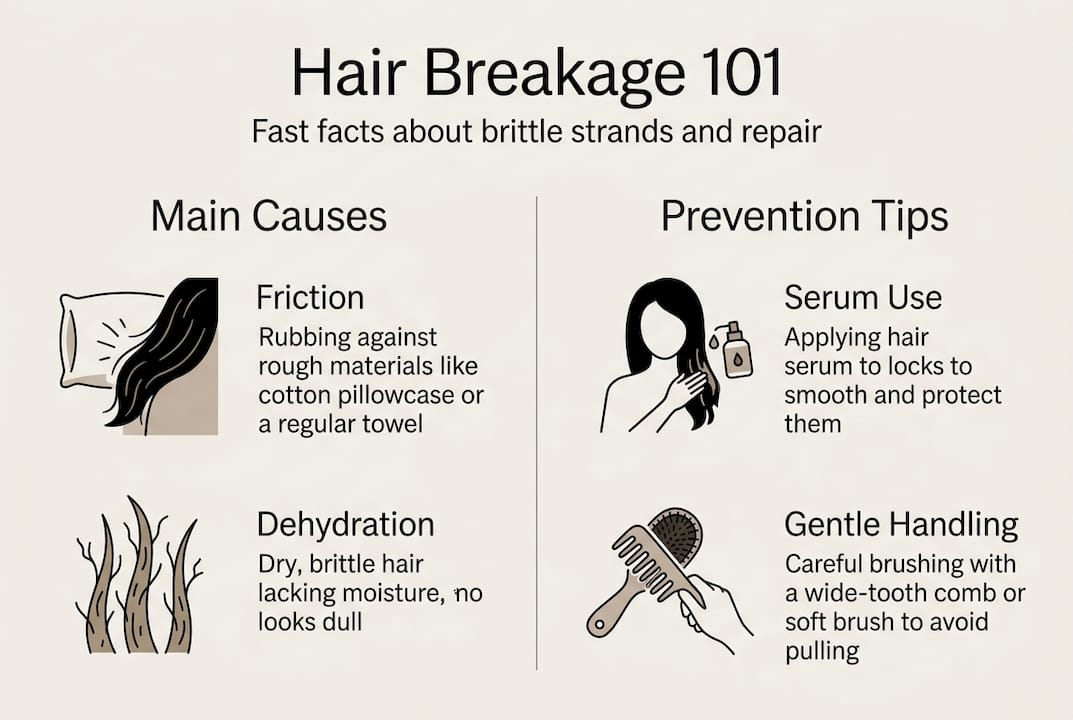
Real repair works on two levels: what you put on your hair and what you put in your body. Both matter enormously, and the evidence backs this up clearly.
On the internal side, nutraceuticals (supplements formulated specifically for hair health) have shown impressive results. Studies confirm that nutraceuticals increase hair diameter by 6 to 9% over six months, which directly translates to stronger, more resilient strands that resist snapping. For women with known deficiencies, this internal support can be genuinely transformative.
On the external side, the right serums and oils make a measurable difference. The same research found that a targeted serum produced 84% fewer split ends in controlled testing, which is a remarkable result for a topical product.
| Solution type | Key benefit | Timeframe for results |
|---|---|---|
| Nutraceuticals | 6-9% increase in hair diameter | 6 months |
| Targeted serums | Up to 84% fewer split ends | 4-8 weeks |
| Natural oils | Reduced surface irregularity (Rq) by 30-65% | Immediate to 4 weeks |
| Protein treatments | Restored bond strength in cortex | 2-4 weeks |
Here is a practical, ordered approach to reduce breakage naturally and rebuild strength:
- Assess your protein-moisture balance using the stretch test: wet a single strand and gently pull. If it snaps immediately with no stretch, you need moisture. If it stretches and does not return, you need protein.
- Start a nutraceutical routine that includes biotin, iron, zinc, and vitamin D if deficiencies are suspected or confirmed by a GP.
- Introduce a cruelty-free serum or oil to your ends two to three times per week, focusing on mid-shaft to tips.
- Reduce heat styling frequency and always use a heat protectant rated for your styling temperature.
- Switch to a wide-tooth comb for detangling and always work from ends to roots to minimise mechanical stress.
Pro Tip: Pair a cruelty-free hair repair serum with a weekly deep conditioning mask for a combined protein and moisture boost. This two-step approach addresses both structural weakness and surface damage at the same time.
For women dealing with severe dryness alongside breakage, exploring dry hair repair solutions that combine humectants with strengthening actives gives you the best of both worlds.
Other hidden triggers: Medical, environmental and daily mistakes
Some of the most damaging habits are the ones that feel completely harmless. Knowing these hidden triggers puts you firmly in control of your hair health.
Wet hair is significantly weaker than dry hair because water temporarily disrupts the hydrogen bonds that give the shaft its structure. Wet hair is weaker and far more vulnerable to breakage from combing, brushing, or even sleeping on a rough pillowcase. Always detangle gently with a wide-tooth comb and ideally wait until hair is at least 80% dry before styling.
Here are the most overlooked triggers to address right now:
- Combing wet hair aggressively is one of the single biggest causes of mechanical breakage, especially for fine or chemically treated hair
- Hard water deposits calcium and magnesium on the hair shaft, increasing surface roughness and making strands more brittle over time
- Protein-moisture imbalance is easy to miss but simple to test using the stretch test described above
- Tight hairstyles such as high ponytails, braids, and buns create constant tension at the same points, leading to traction breakage
- Underlying medical conditions including thyroid disorders and iron deficiency anaemia are among the most common and most overlooked causes of chronic breakage in women
If your breakage is persistent despite good product choices and gentle handling, it is worth speaking to your GP about thyroid function and iron levels. These medical conditions often underlie chronic breakage and will not respond to topical treatments alone.
Building consistent hair wellness habits around gentle handling, balanced nutrition, and smart product choices creates a foundation that no single treatment can replace. And if you are looking for targeted topical support, exploring growth serums for UK women that combine strengthening actives with scalp stimulation can complement your repair routine beautifully.
Discover premium solutions for lasting hair repair
You now have the knowledge. The next step is finding products that actually deliver on the science. ✨

At LUXEVASTORE, every product is chosen for its clean, cruelty-free formulation and its ability to deliver real, measurable results. From argan oil treatments and biotin-rich serums to caviar-based repair rituals, the collection is built around the same science-backed principles covered in this guide. Whether you are tackling protein-moisture imbalance, surface irregularity, or chronic dryness, you will find targeted solutions designed specifically for women who want results without compromise. Explore the full range of premium hair repair products and give your strands the expert-level care they deserve. 🚀
Frequently asked questions
How can I tell if my hair is breaking instead of shedding?
Breakage shows as short, snapped strands without bulbs, while shedding releases whole hairs with a small white root bulb attached. Check the length and ends of the fallen hair to tell them apart instantly.
Can oils and serums actually repair broken hair?
Oils reduce surface irregularity significantly, with Rq reductions of 30 to 65% in studies, and targeted serums have shown 84% fewer split ends in controlled testing. They prevent further breakage effectively but cannot reattach already snapped strands.
How fast do nutraceuticals work for hair breakage?
Nutraceuticals increase hair diameter by 6 to 9% over six months, with noticeable reductions in breakage and shedding typically appearing from the three-month mark onwards.
What medical issues should I check for if my hair keeps breaking?
Ask your GP to test thyroid function alongside iron, zinc, and vitamin D levels, as thyroid and iron issues are among the most common medical causes of persistent breakage in women.
Recommended
- How to Reduce Hair Breakage Naturally for Healthier Hair – LUXEVA
- Effective solutions for brittle and dry hair repair – LUXEVA
- Ultimate guide to caring for brittle hair naturally – LUXEVA
- Restore dry brittle hair: natural cruelty-free care – LUXEVA
- Best Invisible Wire Extensions for Thin Hair | Naturyl Extensions