


Finding a truly luxurious, natural solution for damaged hair can feel challenging for British women who want both indulgence and integrity. With over 60 percent of haircare customers now prioritising clean, cruelty-free products, the search for something scientifically proven and genuinely effective is more relevant than ever. Discover how carefully sourced botanical oils, rooted in centuries-old Moroccan tradition, are redefining hair restoration for modern British beauty routines.
Table of Contents
- Argan Oil for Hair: Definition and Origins
- Nutrients and Science-Backed Hair Benefits
- Argan Oil for Different Hair Types Explained
- Common Misconceptions About Argan Oil
- Potential Risks and Choosing Quality Oil
- Comparing Argan Oil with Other Hair Oils
Key Takeaways
| Point | Details |
|---|---|
| Origin of Argan Oil | Argan oil is a natural treatment from Morocco, extracted from the fruit of the argan tree, traditionally harvested by Berber women. |
| Nutritional Benefits | Rich in essential fatty acids and vitamin E, argan oil nourishes hair, enhances elasticity, and protects against damage. |
| Application Variability | Different hair types require tailored application techniques to maximise benefits; fine hair needs less oil while coarse hair may benefit from more. |
| Quality Matters | When choosing argan oil, opt for cold-pressed, unrefined varieties to ensure maximum nutrients and efficacy. |
Argan Oil for Hair: Definition and Origins
Argan oil represents a luxurious natural hair treatment originating from the arid regions of Morocco. Derived from the kernels of the argan tree, this remarkable botanical extract has been cherished by indigenous Moroccan communities for centuries as both a culinary and cosmetic treasure. The argan tree (Argania spinosa) grows exclusively in the southwestern regions of Morocco and parts of Algeria, creating a uniquely concentrated source of this extraordinary oil.
Traditionally harvested by Berber women using time-honoured techniques, argan oil production involves carefully extracting oil from the tree’s kernels through mechanical pressing methods. The oil contains a powerful combination of fatty acids, including oleic and linoleic acids, alongside significant quantities of vitamin E and beneficial phenolic compounds. These natural components contribute to its extraordinary reputation for nourishing and strengthening hair follicles, providing deep hydration and protecting against environmental damage.
Modern cosmetic applications have transformed argan oil from a local cultural resource into a globally recognised hair care solution. While traditional processes were labour-intensive and primarily conducted through women’s cooperatives, contemporary production methods have streamlined extraction without compromising the oil’s intrinsic nutritional qualities. The two primary grades - food grade and cosmetic grade - offer different refinement levels, with cosmetic variants being particularly prized for natural hair treatments.
Pro tip: When selecting argan oil, always look for cold-pressed, unrefined varieties to ensure maximum nutrient retention and authentic moroccan sourcing.
Nutrients and Science-Backed Hair Benefits
Argan oil represents a powerhouse of hair-nourishing nutrients that deliver scientifically validated benefits for hair health and restoration. Cutting-edge research reveals its remarkable composition of unsaturated fatty acids, polyphenols, and vitamin E, offering a comprehensive approach to hair care that goes far beyond traditional conditioning treatments. These potent natural compounds work synergistically to address multiple aspects of hair and scalp wellness.
The essential fatty acids present in argan oil, particularly oleic and linoleic acids, play a crucial role in hair strength and resilience. Scientific studies demonstrate how these compounds deeply nourish hair follicles, enhancing elasticity and protecting against environmental damage. By stimulating keratin production and reducing inflammation, argan oil helps combat common hair concerns such as breakage, frizz, and scalp irritation. Its antioxidant properties actively neutralise free radicals, providing a protective shield that maintains hair’s natural vitality and shine.
Beyond surface-level treatments, argan oil’s complex molecular structure supports long-term hair health through targeted nutritional intervention. Advanced scientific research into hair growth mechanisms highlights its potential to improve microbial balance, hydrate the scalp, and create an optimal environment for hair follicle development. The oil’s unique combination of vitamin E, polyphenols, and fatty acids work together to soothe conditions like dandruff, eczema, and acne, transforming hair care from a cosmetic concern to a holistic wellness approach.
Pro tip: Apply argan oil to damp hair after washing, focusing on ends and mid-lengths, to maximise absorption and protective benefits.
Argan Oil for Different Hair Types Explained
Hair porosity and texture dramatically influence how effectively argan oil can nourish and transform your locks. Scientific research reveals that the oil’s molecular structure interacts differently across various hair types, making personalised application critical for optimal results. Understanding these nuanced interactions allows for targeted hair care strategies that maximise the oil’s remarkable conditioning potential.
For fine to medium hair types, argan oil functions as an exceptional surface-level conditioning agent, providing lightweight moisture without weighing down delicate strands. Its ability to enhance shine and reduce frizz makes it particularly beneficial for those struggling with limp or easily overwhelmed hair textures. Exploring hair porosity helps determine the most effective application technique, ensuring that each hair type receives precisely the right amount of nourishment. Chemically treated or bleached hair can especially benefit from argan oil’s protective properties, though users should apply sparingly to prevent excessive water absorption.

Coarse and curly hair types experience unique advantages with argan oil, as its rich nutrient profile helps manage volume, definition, and overall hair health. The oil’s lightweight molecular structure allows it to smooth cuticles without creating buildup, making it an ideal solution for controlling frizz and maintaining natural curl patterns. Its antioxidant-rich composition provides a protective barrier against environmental stressors, helping to maintain hair’s structural integrity across different textural challenges.
Pro tip: Experiment with different application amounts based on your specific hair type, starting with a few drops and adjusting to find your perfect balance of moisture and definition.
Here’s a summary highlighting how argan oil interacts with different hair types and the most suitable application methods:
| Hair Type | Primary Effect of Argan Oil | Recommended Application |
|---|---|---|
| Fine | Adds shine, tames frizz | 1-2 drops to damp ends |
| Medium | Boosts moisture, smooths hair | Light layer, mid-lengths down |
| Coarse | Controls bulk, defines curls | Generous amount, focus on curls |
| Curly | Enhances definition, reduces frizz | Rake through damp curls |
| Chemically Treated | Protects, repairs surface | Small amount, repeated use |
Common Misconceptions About Argan Oil
Argan oil has become a buzzword in hair care, surrounded by numerous myths that can mislead consumers about its true potential and application. Many people mistakenly believe that argan oil is a one-size-fits-all miracle solution, capable of instantly transforming every hair concern. Understanding the nuanced science behind hair treatments reveals a more complex reality about how this natural ingredient truly works.
One prevalent misconception is that more oil equals better results. In reality, argan oil requires careful and precise application, with excessive use potentially leading to greasy, weighed-down hair. Users often assume that applying large quantities will accelerate hair repair, when in fact, a few strategic drops can provide optimal nourishment. Another widespread myth suggests that argan oil can completely reverse severe hair damage, which is unfortunately not entirely accurate. While the oil offers remarkable conditioning and protective properties, it cannot magically heal extensively damaged or chemically processed hair beyond its surface-level capabilities.
The quality and sourcing of argan oil represent another area rife with misunderstandings. Consumers frequently believe that all argan oil products are identical, overlooking critical differences in extraction methods, purity, and concentration. Pure, cold-pressed argan oil from traditional Moroccan sources differs significantly from mass-produced, diluted alternatives. Additionally, many individuals incorrectly assume that argan oil works identically for every hair type, failing to recognise that its effectiveness varies depending on individual hair texture, porosity, and existing damage levels.
Pro tip: Always patch test new hair products and start with minimal quantities, gradually increasing based on your hair’s unique response and absorption rate.
Potential Risks and Choosing Quality Oil
Argan oil quality represents a complex landscape fraught with potential pitfalls for unsuspecting consumers. Scientific authentication methods have revealed significant challenges in maintaining product integrity, with numerous products on the market falling short of genuine standards. The risk of adulteration looms large, as unscrupulous manufacturers frequently blend argan oil with cheaper vegetable oils, compromising both its therapeutic potential and safety profile.
The extraction process plays a crucial role in determining oil quality and potential health risks. Advanced analytical techniques like spectroscopic and chromatographic methods have exposed the intricate challenges of verifying authentic argan oil. Two primary grades exist: food-grade (derived from roasted kernels) and cosmetic-grade (from unroasted kernels), each with distinct characteristics. Physical refining processes can significantly diminish the oil’s beneficial compounds, particularly tocopherols, which are responsible for its renowned antioxidant properties. Consumers must remain vigilant, recognising that not all argan oil products deliver the same nutritional and therapeutic benefits.
Authentic argan oil predominantly originates from women’s cooperatives in Morocco, where traditional cold-pressing techniques preserve the oil’s nutritional integrity. Discerning buyers should look for specific markers of quality: transparent sourcing information, certifications from recognised bodies, and clear indications of extraction methods. Laboratory testing, traceability, and minimal processing are key indicators of a superior product. The most reliable oils maintain their natural composition, avoiding excessive refinement that strips away essential nutrients and antioxidants.
Pro tip: Always request detailed provenance documentation and third-party testing certificates when purchasing argan oil to ensure you’re investing in a genuinely high-quality product.
Comparing Argan Oil with Other Hair Oils
Hair oil selection requires nuanced understanding of each oil’s unique molecular properties and potential benefits. Scientifically, argan oil distinguishes itself through its distinctive molecular structure and surface interaction with hair fibres, offering a markedly different approach to hair nourishment compared to other popular botanical oils. Unlike coconut or avocado oils, argan oil primarily functions as a surface conditioning agent, making it exceptionally suited for fine to medium hair textures.
Coconut oil penetrates hair more deeply, actively supporting protein retention and reducing structural damage, whereas argan oil creates a protective external layer that enhances shine and reduces frizz. Advanced comparative research highlights argan oil’s unique composition of unsaturated fatty acids and polyphenols, which provides antimicrobial and anti-inflammatory benefits not universally found in alternative hair treatments. Avocado oil offers moderate penetration and tends to work best on medium to coarse or previously damaged hair, contrasting with argan oil’s lightweight surface conditioning approach.
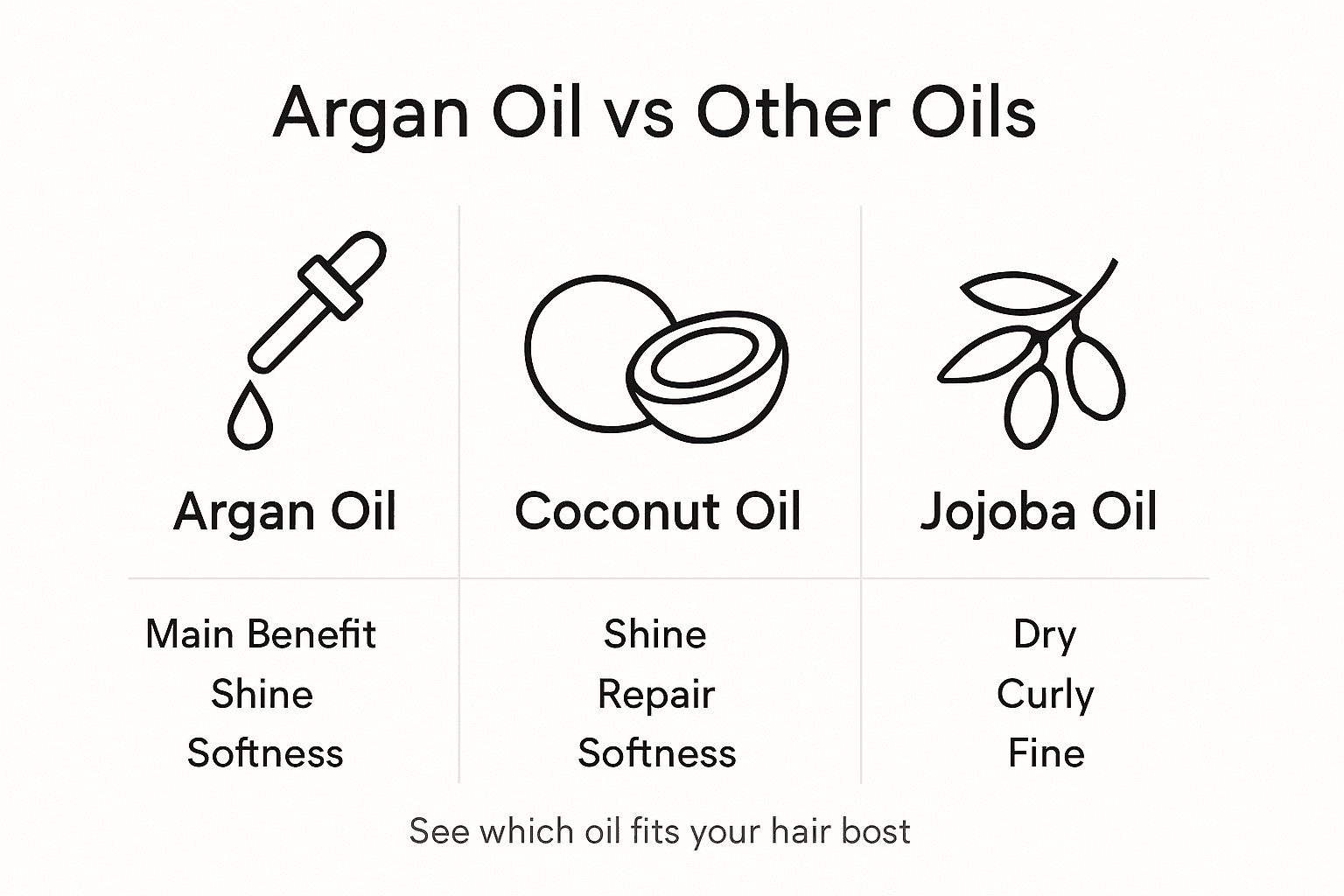
Each oil presents distinct advantages depending on individual hair requirements. Jojoba oil closely mimics human sebum and works brilliantly for balancing scalp moisture, while castor oil provides intense protein support. Argan oil, however, stands out for its versatility and gentler approach, particularly for those with sensitive scalps or fine hair prone to weight and buildup. Its molecular structure allows for surface protection without overwhelming hair follicles, making it an ideal choice for individuals seeking subtle, natural hair enhancement.
This comparison outlines the distinguishing features of argan oil versus other popular hair oils:
| Oil Type | Main Benefit for Hair | Penetration Level | Ideal for Hair Type |
|---|---|---|---|
| Argan Oil | Surface protection, shine | Surface conditioning | Fine to medium, sensitive |
| Coconut Oil | Deep protein retention | Strong penetration | Coarse, damaged, thick |
| Jojoba Oil | Balances scalp moisture | Moderate penetration | Oily or dry, scalp care |
| Avocado Oil | Intense moisture repair | Moderate penetration | Coarse, chemically treated |
Pro tip: Experiment with layering different oils, starting with argan oil as a lightweight base and potentially adding more penetrative oils like coconut for targeted hair repair.
Discover the Power of Argan Oil with LUXEVA’s Premium Haircare Solutions
If you are striving for nourished, radiant hair that reflects true health and beauty, understanding the benefits of argan oil is just the beginning. This natural elixir tackles key hair challenges like frizz, breakage, and dryness by delivering essential fatty acids and antioxidants that protect and restore your hair’s natural vitality. For sensitive scalps and diverse hair types, precise application and choosing high-quality oil are crucial — goals perfectly aligned with LUXEVA’s commitment to clean, cruelty-free, and science-backed formulations.

Elevate your daily hair ritual by exploring our thoughtfully curated Scalp & Haircare Sets – LUXEVA. These sets harness the restorative power of argan oil combined with gentle, sulphate-free ingredients to ensure lightweight moisture without buildup. Ready to experience natural hair revival and lasting protection? Shop now at LUXEVASTORE.com and take advantage of our current offers on luxury hair treatments. Your healthiest hair awaits.
Frequently Asked Questions
What are the benefits of using argan oil for hair?
Argan oil provides numerous benefits for hair health, including deep nourishment for hair follicles, enhanced moisture retention, improved elasticity, and protection against environmental damage. Its rich composition of fatty acids and vitamin E also helps to reduce frizz and enhance shine.
How should I apply argan oil to my hair?
To maximise the benefits, apply argan oil to damp hair after washing. Focus on the mid-lengths and ends to prevent dryness and split ends. Start with a few drops and adjust the amount based on your hair type for optimal moisturisation without weighing it down.
Can argan oil be used on all hair types?
Yes, argan oil is suitable for a variety of hair types. For fine to medium hair, it serves as a lightweight conditioner, while coarse and curly hair types can benefit from its ability to control frizz and enhance definition. It’s important to adjust the application amount based on individual hair characteristics.
How does argan oil compare to other hair oils?
Argan oil primarily functions as a surface conditioner, making it ideal for fine to medium hair types. In contrast, oils like coconut oil penetrate deeply to support protein retention. Each oil has unique properties: for instance, jojoba oil helps balance scalp moisture, while avocado oil provides intense hydration for coarse or damaged hair.