


Finding a solution for dry, stressed hair often feels exhausting when every product promises miracles and delivers only disappointment. There is growing interest in premium, cruelty-free options in the British market that actually address damage without harsh chemicals or heavy residues. If you have struggled with breakage, dullness, or frizz, discover how squalane oil’s lightweight, deeply hydrating properties help restore shine and manageability for all hair types, supporting recovery and lasting health.
Table of Contents
- What Is Squalane Oil for Hair?
- How Squalane Oil Works on Hair Types
- Main Benefits for Damaged or Dry Hair
- How to Use and Application Precautions
- Squalane Oil Versus Other Popular Hair Oils
Key Takeaways
| Point | Details |
|---|---|
| Lightweight Hydration | Squalane oil provides lightweight moisturisation without weighing hair down, making it suitable for all hair types. |
| Damage Prevention | Regular use of squalane helps reduce split ends and breakage by locking in moisture and fortifying the hair structure. |
| Scalp Health | Squalane supports a healthy scalp, which promotes better hair growth and mitigates issues like brittleness. |
| Versatile Applications | It can be used as a daily treatment, pre-shampoo conditioner, or scalp moisturiser, adapting to various hair needs and styles. |
What Is Squalane Oil for Hair?
Squalane is a lightweight, non-greasy oil that mimics your scalp’s natural oils. It’s a saturated form of squalene, a lipid your skin naturally produces. Your body creates squalene to protect and moisturise skin and hair, but production slows with age.
Squalane works differently than heavier oils like coconut or argan. It absorbs quickly without leaving hair feeling weighed down or stringy. This makes it ideal if you’ve struggled with products that sit on your hair like a greasy film.
How Squalane Benefits Hair
Squalane acts as an emollient and moisturiser in haircare products. It penetrates the hair surface and locks in hydration, preventing moisture loss throughout the day. This hydration is what keeps your hair looking glossy and feeling soft.
The oil also has anti-inflammatory properties that support scalp health. A healthy scalp means healthier hair growth from the root. When your scalp’s natural balance is compromised, hair becomes brittle and prone to breakage.
Here are the main benefits you’ll notice:
- Smooths the outer hair layer, reducing frizz and flyaways
- Prevents split ends by sealing moisture into the hair shaft
- Adds natural shine without the heavy, greasy look
- Protects hair follicles and supports sebaceous gland function
- Reduces breakage and split ends before they worsen
- Works well for all hair types, including fine and oily hair
Why Squalane Is Different from Other Oils
Unlike coconut oil or jojoba oil, squalane is non-irritating and gentle. It’s stable and doesn’t oxidise or turn rancid quickly, meaning your haircare products stay effective longer.
Squalane also won’t build up on your hair over time. Some oils leave residue that makes hair look dull and limp after repeated use. Squalane absorbs cleanly, so you can use it regularly without that weighted-down feeling.
Squalane’s molecular structure mimics your skin’s natural oils, making it one of the most compatible oils for your scalp and hair.
The oil comes from plant and animal sources, though plant-derived versions are more common in ethical, cruelty-free haircare lines. As an emollient and moisturiser in hair conditioners, squalane keeps hair smoother and less prone to damage.
Pro tip: Apply squalane oil to damp hair focusing on mid-lengths and ends, never on wet roots, to avoid looking greasy whilst maximising hydration benefits.
How Squalane Oil Works on Hair Types
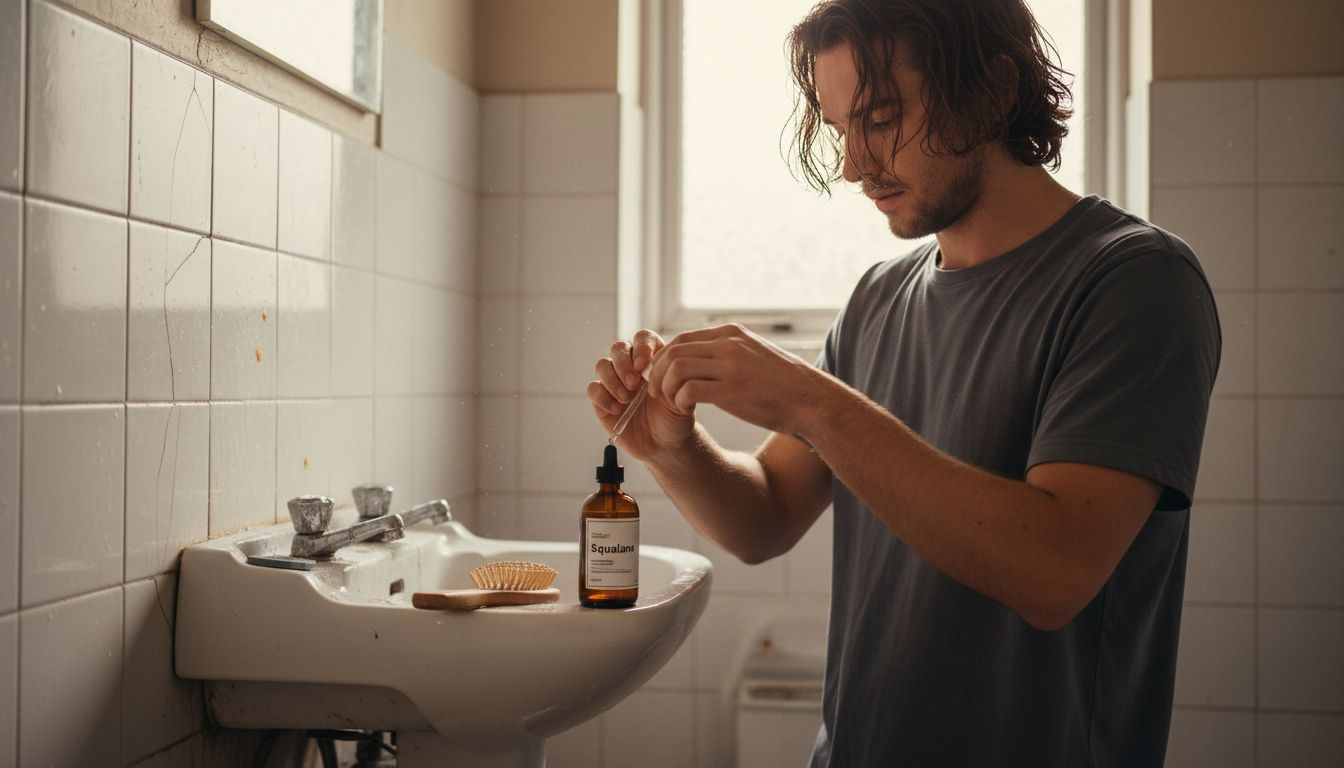
Squalane works universally because it mimics your scalp’s natural oils. Your body produces squalene as part of its protective barrier, and squalane is simply its stabilised form. This compatibility means it works effectively on virtually every hair type without causing buildup or irritation.
The oil sits on your hair’s outer surface, creating a protective layer. This layer smooths down the hair cuticle, reducing frizz and enhancing shine. It also traps moisture inside the hair shaft, preventing water loss that leads to dryness and breakage.
How Different Hair Types Benefit
Squalane’s lightweight nature makes it exceptional for fine or thin hair. Many oils weigh hair down, making it look limp and lifeless. Squalane adds shine and softness without that flattening effect.
Thick, curly, or textured hair benefits from squalane’s smoothing and moisturising properties. These hair types are naturally drier because natural oils struggle to travel down the hair shaft. Squalane helps restore hydration that weather, heat styling, or aging have stripped away.
Oily scalp types should note that squalane won’t make things worse. Unlike heavier oils, it absorbs cleanly rather than sitting on the scalp. You can use it on mid-lengths and ends without triggering excess oil production at the roots.
Colour-treated or damaged hair responds particularly well to squalane. Squalane acts as a natural moisturising agent that protects hair from environmental stressors. It reduces the effects of heat damage and chemical treatments.
Why It Works for Everyone
Unlike plant oils that suit specific hair types, squalane works across the board. It’s lightweight yet deeply hydrating—a rare combination. Your hair gets moisture without that greasy, weighed-down feeling.
The oil also helps retain moisture and prevents breakage by protecting the outer hair layer. This is crucial for anyone dealing with split ends or brittleness.
Here’s what you’ll notice across different hair types:
- Fine hair: Added shine without heaviness
- Curly hair: Enhanced definition and reduced frizz
- Damaged hair: Smoother texture and less breakage
- Oily scalp: Clean absorption without buildup
- Ageing hair: Restored moisture and improved elasticity
- Colour-treated hair: Enhanced shine and protection
Squalane’s universal compatibility comes from being a natural component of human sebum—your hair recognises it as something that belongs there.
Pro tip: Apply squalane to damp hair sections for 15–20 minutes before shampooing, or use a conditioning product containing squalane to address your specific hair type’s needs.
Main Benefits for Damaged or Dry Hair
If your hair feels rough, breaks easily, or looks dull, squalane addresses these issues directly. Dry and damaged hair lacks moisture and natural oils, making it brittle and prone to snapping. Squalane restores what’s been lost without adding weight or grease.
Damaged hair often has a compromised outer layer, allowing moisture to escape continuously. Squalane seals this layer, preventing further water loss throughout the day. This single action transforms how your hair feels and looks within days.
Repairing Split Ends and Breakage
Split ends occur when the hair shaft dries out and the protective cuticle layer separates. Squalane oil provides natural hydration that penetrates deep into damaged sections. This hydration helps mend the internal structure, reducing visible splitting.
The oil also prevents new damage from forming. Heat styling, harsh weather, and chemical treatments all cause breakage, but squalane’s protective barrier shields your hair from these stressors. Regular use means less breakage over time.
Benefits you’ll notice for damaged hair:
- Split ends smooth and blend back together
- Breakage reduces significantly within 2–3 weeks
- Hair feels softer immediately after application
- Shinier appearance without product buildup
- Improved elasticity and flexibility
- Less frizz and flyaways
Restoring Moisture to Parched Hair
Dry hair feels straw-like because it cannot retain moisture. Squalane works like a moisture seal, trapping water inside the hair shaft. Unlike humectants that only draw moisture, squalane actually locks it in place.
This is particularly valuable for hair exposed to heat styling and harsh weather conditions. Squalane mimics natural sebum, supporting your hair’s natural barrier. When your natural oils can’t keep up with moisture demands, squalane fills that gap.
You’ll see results quickly. Parched hair becomes noticeably softer within the first week of consistent use.
Squalane doesn’t just add moisture—it prevents moisture loss, which is the real difference between temporarily softening hair and genuinely repairing it.
Improving Manageability and Shine
Damaged hair tangles easily because the cuticle is raised and rough. When you smooth down that cuticle with squalane, combing becomes effortless. Your blow-dry time shortens, and styling becomes less stressful for already fragile strands.
The shine boost is remarkable. Squalane reflects light as it smooths the hair surface, making even severely damaged hair look vibrant again. This isn’t superficial—it’s an actual improvement in hair structure.
Pro tip: Use squalane-infused conditioners or treatments twice weekly on damaged sections, focusing on mid-lengths and ends, and follow with a cool rinse to seal the cuticle and maximise shine.
How to Use and Application Precautions
Squalane is straightforward to use because it works on both damp and dry hair. You don’t need special tools or complicated routines. A few drops go a long way, making a single bottle last months with regular use.
Start with less than you think you’ll need. Squalane is concentrated, so begin with 2–3 drops and add more only if your hair needs it. This prevents the greasy appearance that turns people away from hair oils entirely.
For easy reference, here is how to apply squalane oil for different outcomes:
| Hair Goal | Amount to Use | Application Area |
|---|---|---|
| Daily Shine | 2–3 drops | Mid-lengths and ends |
| Intensive Repair | 5–6 drops pre-wash | Entire hair, avoid scalp |
| Scalp Soothe | 1–2 drops | Directly on scalp |
Application Methods
There are three main ways to incorporate squalane into your routine, depending on your hair needs and lifestyle.
-
Leave-in treatment: Apply a few drops to damp hair after showering, focusing on mid-lengths and ends. Don’t apply to the scalp unless your hair is extremely dry. Style as normal—the oil dries down and adds shine without visible residue.
-
Pre-shampoo treatment: Massage squalane into dry hair 15–20 minutes before washing. This deeply conditions and protects hair during shampooing. Heavier damage responds particularly well to this method.
-
Scalp massage: For dry or itchy scalps, warm a drop or two between your fingers and massage gently into the scalp. This supports your natural oil production and reduces irritation.
Safety and Sensitivities
Squalane is safe for regular use because it’s lightweight and non-irritating. Most people experience no adverse effects, even with daily application. However, a small amount of caution is worthwhile.
Test first if you have a sensitive scalp or skin conditions. Apply a tiny amount to a small section and wait 24 hours. If no irritation appears, you’re good to use it freely.
Allergic reactions are rare but possible. Safety assessments show squalane is safe at concentrations up to 97% in cosmetic products. If you notice redness, itching, or burning, discontinue use and consult a dermatologist.
Key precautions to remember:
- Start with small amounts to avoid greasiness
- Test on a small area first if you have sensitive skin
- Monitor your scalp for any irritation during the first week
- Avoid applying to soaking wet hair—damp is best
- Don’t apply directly to the scalp if you have fine or oily hair
- Keep the bottle sealed tightly to maintain stability
Begin conservatively with squalane. You can always add more, but you cannot easily remove it from hair without rewashing.
Pro tip: Mix 2–3 drops of squalane with your regular conditioner for a customised treatment that strengthens weak sections without the inconvenience of a separate step.
Squalane Oil Versus Other Popular Hair Oils
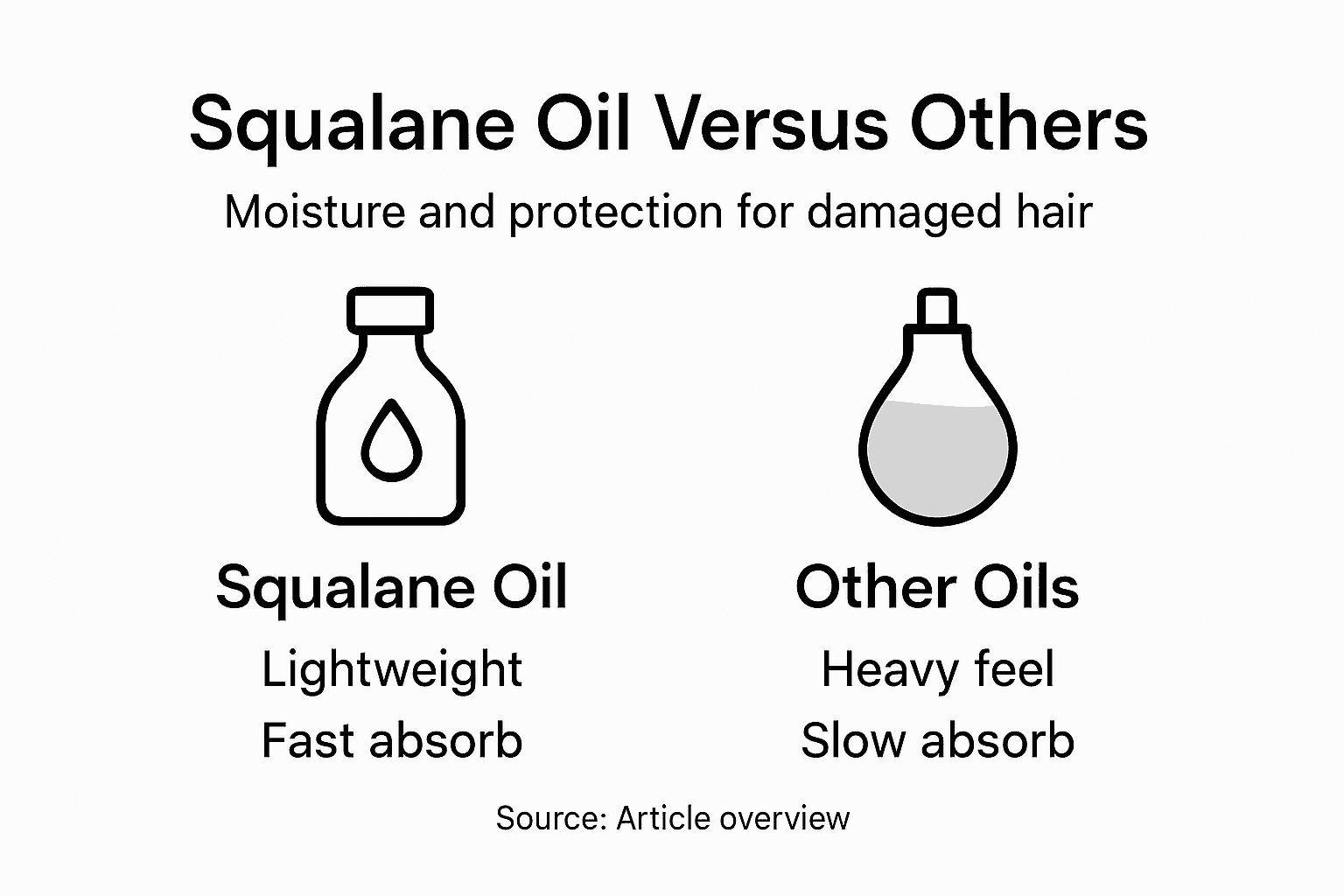
Not all hair oils perform equally. Some leave your hair feeling greasy for days, whilst others don’t absorb properly. Squalane stands apart because it delivers moisture without the heavy residue that frustrates people trying to find the right oil.
The market is flooded with options: argan, coconut, jojoba, and countless others. Each has devoted followers, but they work differently on hair. Understanding these differences helps you choose what actually suits your hair type and lifestyle.
Squalane Versus Argan Oil
Argan oil contains vitamins and fatty acids that strengthen hair structure. It’s richer and more nourishing for severely compromised hair. However, argan oil is noticeably heavier and can leave your hair feeling oily for longer.
Squalane excels at providing smoothness and shine without that weighted-down sensation. Squalane is lightweight and fast-absorbing, making it better for daily use. If you have fine hair or prefer a non-greasy finish, squalane wins.
Argan oil is better for: thick, textured, or severely dry hair needing intense repair.
Squalane is better for: fine, oily-scalp, or regular maintenance on all hair types.
Squalane Versus Jojoba Oil
Jojoba oil closely mimics human sebum, just as squalane does. Both regulate sebum production and moisturise effectively. The key difference lies in texture and absorption speed.
Jojoba oil has a slightly heavier feel and takes longer to absorb. Squalane absorbs almost immediately, leaving no visible residue. Squalane’s non-comedogenic nature and higher oxidative stability make it superior for those seeking a clean finish and longer-lasting product efficacy.
Both oils support healthy hair, but they suit different preferences and hair types. Jojoba works well if you don’t mind a slightly richer feel. Squalane is ideal if you want invisible, everyday nourishment.
Squalane Versus Coconut Oil
Coconut oil is trendy but has serious limitations for most hair types. It can solidify in cool temperatures, making it difficult to apply. More importantly, coconut oil sits heavily on hair and can cause buildup with regular use.
Squalane remains liquid at all temperatures and never accumulates on your strands. It’s also more stable and resistant to rancidity than coconut oil. If you’ve used coconut oil and your hair felt weighed down, squalane offers a genuinely different experience.
To help you choose the best oil for your hair type, see this additional comparison:
| Hair Concern | Squalane Effect | Argan Oil Effect | Jojoba Oil Effect |
|---|---|---|---|
| Fine & Limp Hair | Adds shine, stays lightweight | May feel too heavy | Slightly weights but good hydration |
| Curly or Textured | Smoothes and reduces frizz | Offers deep nourishment | Defines curls, controls scalp oil |
| Oily Scalp | No buildup, absorbs fast | Can cause greasy feel | Regulates sebum, may linger |
| Colour-Treated | Protects and boosts shine | Protects, repairs damage | Maintains softness, less protection |
Quick Comparison
| Oil | Texture | Absorption Speed | Best For | Drawbacks |
|---|---|---|---|---|
| Squalane | Lightweight | Fast | All hair types | Higher cost |
| Argan | Rich | Slow | Thick, dry hair | Too heavy for fine hair |
| Jojoba | Medium | Medium | Normal to dry hair | Slightly greasy feel |
| Coconut | Heavy | Very slow | Thick hair only | Buildup, solidifies |
Squalane’s biggest advantage isn’t what it adds—it’s what it doesn’t: greasiness, buildup, or that weighed-down feeling that makes people abandon oils entirely.
Pro tip: If you’ve struggled with other oils leaving your hair greasy, start with squalane at half the amount you’d use with argan or jojoba—it’s significantly more potent.
Unlock the Full Potential of Your Hair with Premium Squalane Solutions
If you have been struggling with dry, damaged, or brittle hair as described in the article “Is Squalane Oil Good for Hair Health” you understand the pain of dealing with pesky split ends, frizz, and lacklustre shine. Squalane’s ability to lock in moisture, smooth the hair cuticle, and reduce breakage offers a truly transformative approach to haircare. At LUXEVASTORE.com, our collection focuses on natural, scientifically-backed treatments that combine the power of clean ingredients like squalane with luxurious formulas designed to rejuvenate your hair from root to tip.

Discover a range of cruelty-free, plant-powered products specially curated to complement squalane’s lightweight, fast-absorbing properties. Whether you want to restore moisture, protect colour-treated hair, or simply add everyday shine without greasiness, our exclusive rituals and sets featuring argan oil, biotin, and rosemary mint can elevate your haircare routine. Don’t let your hair suffer longer—embrace effective solutions that work with your scalp’s natural balance today. Visit LUXEVASTORE.com now and experience how premium, ethical haircare can transform your hair health and confidence.
Frequently Asked Questions
Is squalane oil beneficial for all hair types?
Squalane oil is suitable for all hair types due to its lightweight, non-greasy nature. It mimics the scalp’s natural oils, providing moisture and shine without causing buildup or irritation.
How does squalane oil help with damaged or dry hair?
Squalane oil restores moisture by sealing the hair’s outer layer, preventing water loss. This action improves texture, reduces breakage, and helps repair split ends, making the hair softer and more manageable.
Can squalane oil reduce frizz and flyaways?
Yes, squalane oil smooths the outer hair layer, effectively reducing frizz and flyaways. Its hydrating properties help maintain a sleek appearance, making it easier to style and manage.
How should I apply squalane oil for the best results?
To achieve optimal results, apply squalane oil to damp hair, focusing on mid-lengths and ends. Start with 2–3 drops and adjust as needed. Avoid applying it directly to soaking wet hair or at the roots if you have fine or oily hair.