


Finding genuinely effective ways to revive damaged hair can feel overwhelming, especially with so many promises on the market. For women across the United Kingdom who care about their wellbeing and cherish cruelty-free rituals, hair follicle health is about much more than aesthetics. Strong follicles are tied to protection, immune function, and self-confidence. This article highlights the biological importance of hair follicle repair, explores how damage occurs, and showcases proven natural and scientific solutions for lasting restoration.
Table of Contents
- Defining Hair Follicle Repair and Its Importance
- How Hair Follicles Become Damaged
- Natural and Scientific Repair Methods
- Key Ingredients Proven to Support Repair
- Common Mistakes When Treating Follicle Damage
Key Takeaways
| Point | Details |
|---|---|
| Importance of Hair Follicles | Hair follicles are essential for hair growth and scalp health, impacting skin protection and immune responses. Their repair is crucial for overall well-being. |
| Causes of Follicle Damage | Hair follicle damage arises from intrinsic ageing, hormonal imbalances, environmental stressors, and genetic factors, requiring comprehensive prevention strategies. |
| Effective Repair Methods | Combining advanced scientific methods with natural treatments is key to successful hair follicle repair and regeneration, leveraging both technology and botanical compounds. |
| Common Treatment Mistakes | Misdiagnosis and improper treatment approaches can worsen follicle damage, highlighting the importance of professional guidance in hair care practices. |
Defining Hair Follicle Repair and Its Importance
Hair follicle repair represents a sophisticated biological process targeting the restoration of critical structures responsible for hair growth and scalp health. These intricate mini-organs play far more complex roles than simply producing hair.
Hair follicles are extraordinary tubular structures embedded within skin layers that undergo continuous regenerative cycles. Regenerative capabilities of hair follicles extend beyond aesthetic functions, significantly impacting overall skin protection and immune system responses. Their ability to cycle through growth, rest, and shedding phases makes them essential for maintaining robust scalp conditions.
The importance of hair follicle repair becomes evident when understanding their multifaceted biological significance:
- Restores hair growth potential
- Supports skin’s protective mechanisms
- Enhances immune system functionality
- Addresses psychological impacts of hair loss
- Promotes cellular regeneration
Cellular mechanisms underlying hair follicle repair involve intricate molecular strategies. Complex repair strategies often leverage stem cell interventions and advanced signalling pathways to reconstruct damaged follicular structures.
Pro tip: Focus on holistic approaches that nourish follicles from within, combining targeted treatments with balanced nutrition and stress management strategies.
How Hair Follicles Become Damaged
Hair follicle damage represents a complex process involving multiple interconnected biological and environmental factors. Understanding these mechanisms is crucial for developing effective prevention and repair strategies for maintaining healthy hair growth.
Intrinsic aging and external stressors significantly contribute to follicular deterioration through various sophisticated pathways. These damaging influences can be categorised into several critical domains:
- Hormonal imbalances
- Oxidative stress
- Environmental exposures
- Genetic predispositions
- Chronic inflammatory processes
- Metabolic disruptions
Hormonal changes play a particularly significant role in follicle health. Androgen fluctuations, especially during key life stages like menopause or post-pregnancy, can trigger substantial hair follicle miniaturisation. Stem cell exhaustion and immune dysfunction further compound these challenges, creating cascading effects that compromise hair growth potential.
External factors such as ultraviolet radiation, chemical treatments, and persistent mechanical stress can dramatically accelerate follicular damage. Repeated exposure to harsh styling techniques, pollution, and inappropriate hair care products gradually weakens the intricate cellular structures responsible for healthy hair production.

Pro tip: Implement a comprehensive hair protection strategy that addresses both internal nutritional needs and external environmental challenges to minimise ongoing follicular damage.
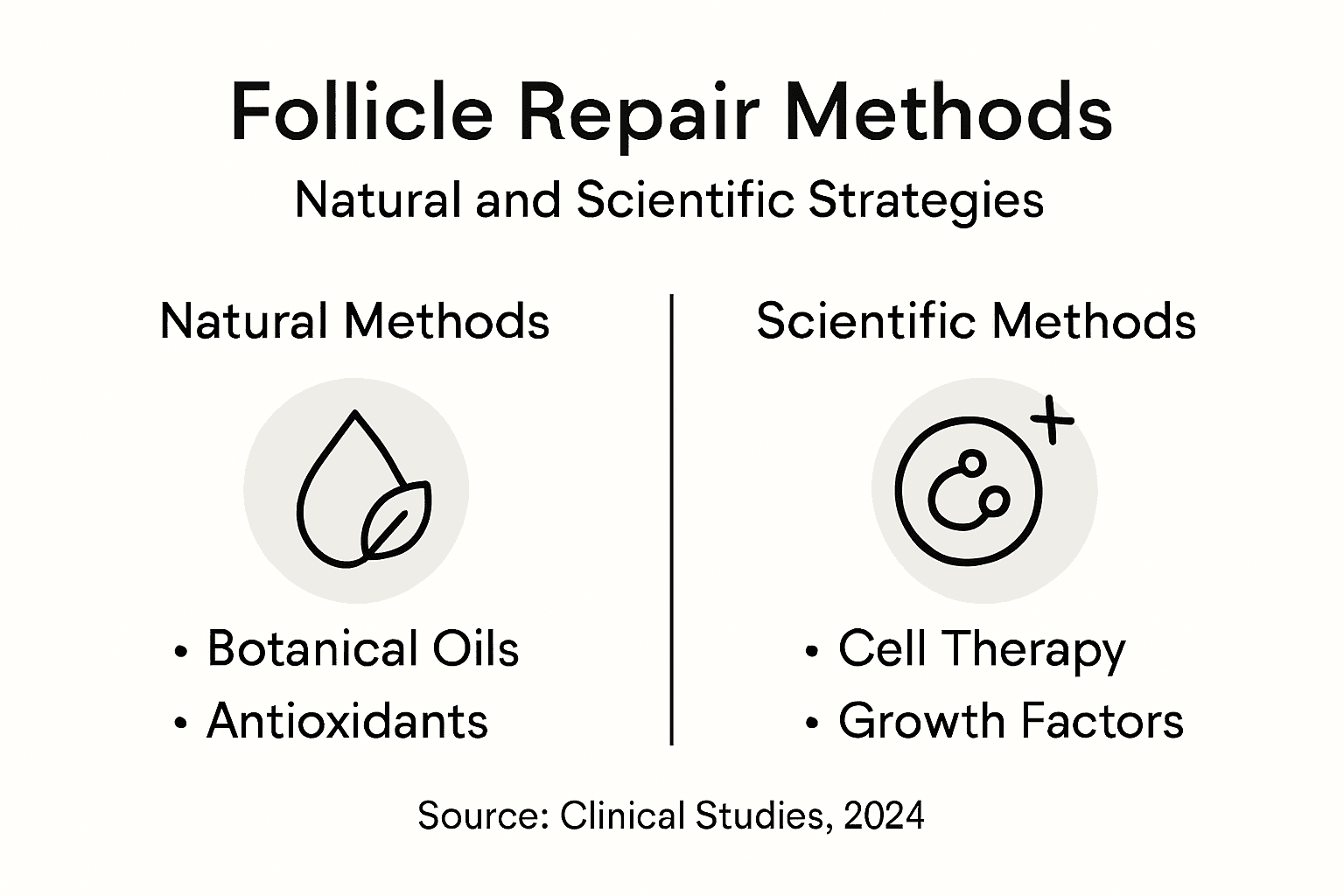
Natural and Scientific Repair Methods
Hair follicle repair represents a sophisticated intersection of cutting-edge scientific innovation and natural healing approaches. Modern research has unveiled remarkable strategies that combine technological advances with nature’s inherent regenerative capabilities.
Advanced regenerative therapies are revolutionising our understanding of hair restoration, offering multiple approaches to follicular healing. These innovative methods can be categorised into distinct domains:
- Stem cell therapies
- Tissue engineering techniques
- Biomaterial interventions
- Phytochemical treatments
- Growth factor stimulation
- Molecular signalling modulation
Scientific repair methods are particularly promising, with cutting-edge techniques like induced pluripotent stem cell technologies providing unprecedented insights. Molecular pathway regeneration focuses on precise interventions that target specific cellular mechanisms responsible for hair follicle health and regeneration.
Natural repair approaches complement these scientific methods by leveraging powerful botanical extracts and antioxidants. Phytochemicals derived from plants can activate dormant stem cells, reduce oxidative stress, and create an optimal microenvironment for follicular restoration. These natural compounds work synergistically with advanced scientific techniques to support comprehensive hair follicle healing.
Here is a summary of advanced and natural hair follicle repair methods and how they work:
| Method Type | Description | Main Goal |
|---|---|---|
| Stem Cell Therapies | Activate dormant follicles for growth | Restore hair production |
| Tissue Engineering | Rebuild follicle structure with scaffolds | Repair damaged tissue |
| Phytochemical Treatments | Use plant extracts for antioxidant effects | Enhance cellular microenvironment |
| Growth Factor Stimulation | Promote key cellular signals | Accelerate follicle regeneration |
Pro tip: Combine scientific treatments with natural botanical interventions to create a holistic approach to hair follicle repair and regeneration.
Key Ingredients Proven to Support Repair
Hair follicle repair requires a sophisticated understanding of targeted botanical and molecular interventions that can effectively regenerate and strengthen damaged follicular structures. The most promising ingredients demonstrate remarkable potential for comprehensive hair restoration.
Phytochemical research reveals several powerful natural compounds that actively support hair follicle healing. These scientifically validated ingredients work through complex cellular mechanisms:
- Epigallocatechin-3-gallate (EGCG)
- Caffeine extract
- Malva verticillata derivatives
- Sophora flavescens compounds
- Plant-based polyphenols
- Sulfur-containing botanical extracts
Advanced botanical ingredients target specific molecular pathways responsible for hair follicle regeneration. Clinical trials demonstrate that certain plant extracts can stimulate dermal papilla cell proliferation, induce anagen hair growth phases, and enhance critical growth factors like IGF-1 and VEGF.
The most effective repair ingredients function through intricate biological interactions, activating dormant stem cells and creating an optimal microenvironment for follicular health. Phenolic compounds and specialized plant extracts have shown particular promise in supporting comprehensive hair follicle restoration and preventing further damage.
Pro tip: Select hair care products containing multiple clinically validated botanical extracts to maximise your hair follicle repair potential.
Common Mistakes When Treating Follicle Damage
Follicle damage treatment requires precision and a nuanced understanding of underlying mechanisms. Many individuals inadvertently compromise their hair health by adopting ineffective or potentially harmful approaches to repair.
Misdiagnosis of follicular conditions frequently leads to inappropriate interventions that can exacerbate existing damage. The most prevalent mistakes in hair follicle treatment include:
- Overusing broad-spectrum antibiotics
- Neglecting underlying medical conditions
- Ignoring mechanical damage factors
- Failing to identify specific infection types
- Inadequate hygiene management
- Discontinuing treatment prematurely
Clinical experts highlight that treatment errors often stem from a fundamental misunderstanding of follicular health. Patients typically make critical errors such as self-medicating without professional guidance, using inappropriate topical treatments, and failing to address systemic factors that contribute to follicular damage.
Environmental and lifestyle factors play a crucial role in follicle repair that many individuals overlook. Mechanical stress from tight hairstyles, inappropriate hair care techniques, and chronic inflammation can perpetuate damage, making comprehensive treatment approaches essential for genuine follicular restoration.
The table below compares common mistakes in follicle repair and the consequences of each error:
| Mistake | Why It Happens | Potential Consequence |
|---|---|---|
| Self-medicating without guidance | Misjudging hair/scalp condition | Worsening of original damage |
| Overusing antibiotics | Mistaking bacterial infection | Disruption of skin microflora |
| Ignoring mechanical damage | Lack of awareness about stressors | Recurrent follicle trauma |
| Halting treatment too soon | Impatience or cost concerns | Incomplete follicle healing |
Pro tip: Consult a professional dermatologist for a comprehensive assessment before attempting any self-directed follicle repair strategy.
Restore Your Hair’s Natural Strength with Trusted Solutions
If you are struggling with hair follicle damage caused by stress, hormonal changes or environmental factors this article highlights the importance of targeted repair with scientifically backed ingredients and natural solutions. Understanding the complex processes behind follicle repair like stem cell activation and antioxidant support is essential to reverse damage and promote healthy hair growth.

Discover premium hair care rituals at LUXEVASTORE.com designed specifically to nourish your scalp and revitalise follicles. Our clean, cruelty-free formulations combine botanical extracts like argan oil, rosemary mint and biotin with innovative science to stimulate regeneration and strengthen hair at the root. Don’t wait until damage worsens embrace a holistic approach today and experience transformative results with expert-approved treatments. Start your journey to thicker resilient hair now by exploring our curated collections at https://luxevastore.com. Taking action today means protecting tomorrow’s natural vitality.
Frequently Asked Questions
What is hair follicle repair?
Hair follicle repair refers to the biological process that restores the structures responsible for hair growth and scalp health. It plays a crucial role in maintaining hair growth potential, supporting skin protection, and enhancing overall scalp health.
How can hair follicles become damaged?
Hair follicles can be damaged due to intrinsic factors such as hormonal imbalances and ageing, as well as external stressors like pollution, chemical treatments, and excessive mechanical stress from hairstyles. These factors can weaken the cellular structures vital for healthy hair production.
What are some effective methods for hair follicle repair?
Effective hair follicle repair methods include advanced scientific interventions like stem cell therapies and phytochemical treatments using plant extracts and antioxidants. Combining these approaches can enhance follicular healing and regeneration.
What key ingredients support hair follicle repair?
Key ingredients proven to support hair follicle repair include epigallocatechin-3-gallate (EGCG), caffeine extract, and various plant-based polyphenols. These ingredients target specific biological pathways to stimulate hair growth and strengthen follicular structures.