


Finding safe, effective ways to nurture your hair can feel challenging when every shelf seems crowded with promises and bold claims. Many women seek real solutions that align with natural beauty values and wellness goals, prioritising cruelty-free choices for visible hair growth and repair. Exploring biotin’s true role reveals why this vital B vitamin stands at the intersection of science, self-care, and the path to thicker, healthier hair—helping you choose what genuinely supports your hair from the inside out.
Table of Contents
- Biotin And Hair Health Basics Explained
- How Biotin Deficiency Affects Hair
- Biotin Supplementation: Evidence And Claims
- Risks, Safety, And Dietary Alternatives
- Choosing Effective Biotin Hair Products
Key Takeaways
| Point | Details |
|---|---|
| Biotin’s Role in Hair Health | Biotin is vital for hair structure and growth, contributing to keratin production and cellular energy. Its deficiency can lead to brittle hair, slower growth, and increased hair fall. |
| Nutritional Sources | Consuming foods rich in biotin, such as eggs, nuts, and salmon, can naturally support hair health, reducing the need for supplementation. |
| Supplementation Caution | While biotin supplements are popular, scientific evidence supporting their effectiveness in healthy individuals is limited. Consult a healthcare professional before use. |
| Risks of Unregulated Use | Biotin supplementation can interfere with lab tests and lead to false results; a balanced diet is generally a safer approach for maintaining adequate biotin levels. |
Biotin and Hair Health Basics Explained
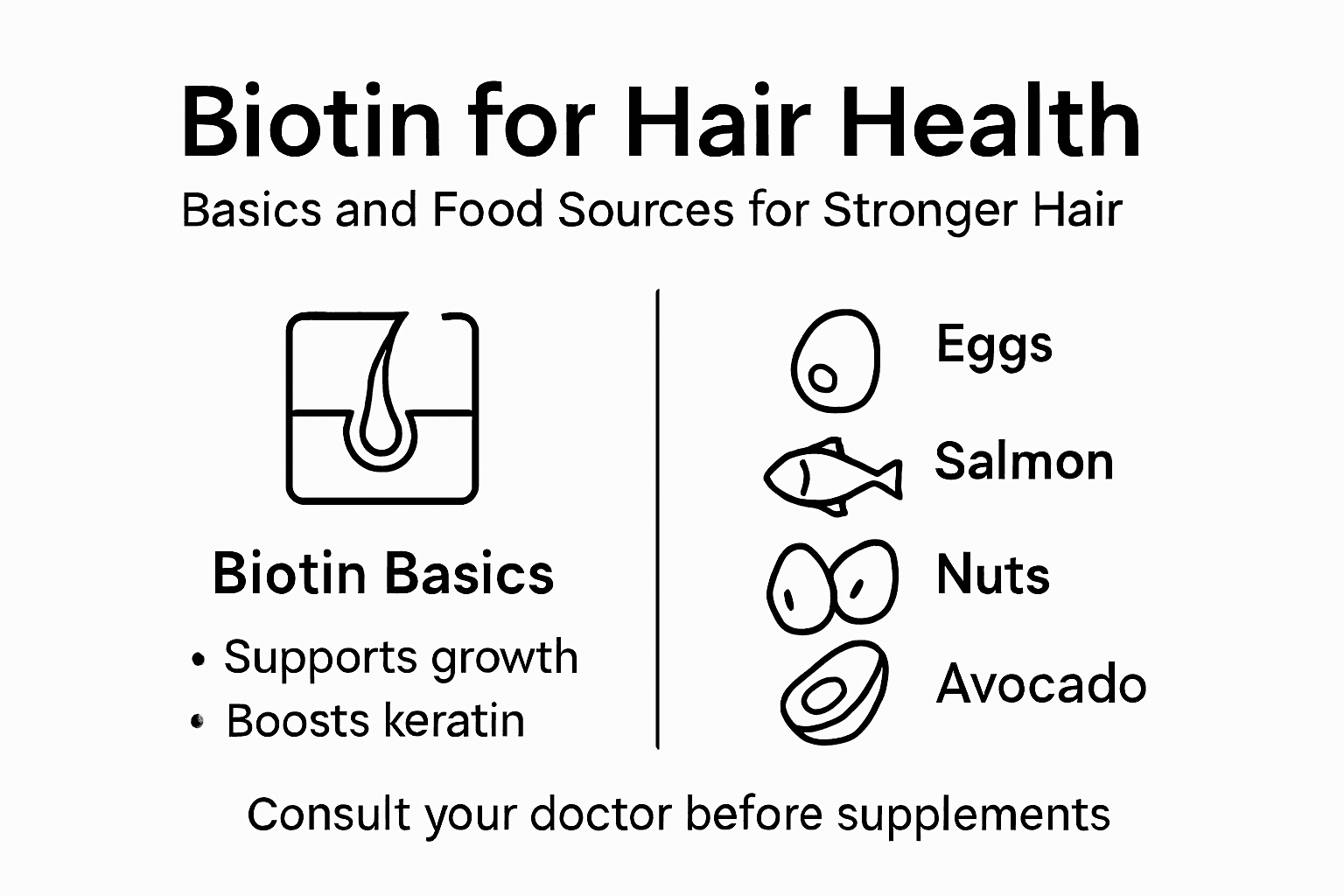
Biotin, a remarkable water-soluble B vitamin, plays a critical role in supporting hair health through complex metabolic processes. Metabolic functions of biotin demonstrate its significance in breaking down nutrients and supporting cellular energy production, which directly influences hair growth and strength.
Understanding biotin’s biological mechanism reveals why this nutrient is essential for maintaining healthy hair. Biotin contributes to keratin infrastructure, the primary protein responsible for hair structure. When biotin levels are insufficient, individuals might experience:
- Brittle hair prone to breakage
- Slower hair growth rates
- Increased hair fall
- Decreased hair thickness
The scientific community has extensively researched biotin’s impact on hair health. Research indicates that biotin helps metabolise fatty acids, carbohydrates, and amino acids, which are fundamental building blocks for robust hair follicle development. Evidence review of biotin supplements suggests that while supplementation can be beneficial, understanding individual nutritional needs remains paramount.
Dietary sources of biotin include eggs, nuts, seeds, salmon, and avocados. Consuming these foods can naturally support your body’s biotin requirements and promote healthier hair growth.
Pro tip: Consult a healthcare professional before starting any biotin supplementation to determine the appropriate dosage for your specific hair health needs.
How Biotin Deficiency Affects Hair
Biotin deficiency represents a rare but significant nutritional challenge that can substantially impact hair health. Clinical evidence on hair loss demonstrates that insufficient biotin levels can trigger multiple hair-related complications, ranging from subtle thinning to more pronounced hair loss.
The physiological consequences of biotin deficiency manifest through several distinct mechanisms affecting hair structure and growth. When biotin levels drop, individuals might experience:
- Reduced hair volume
- Increased hair fragility
- Slower hair growth rates
- Visible thinning across scalp regions
- Heightened susceptibility to hair breakage
Biochemical processes underlying hair health depend critically on adequate biotin levels. Biotin deficiency consequences reveal that this vitamin plays a crucial role in keratin production, the primary protein responsible for hair strength and resilience. Notably, biotin supports metabolic functions that directly influence hair follicle health, ensuring optimal protein synthesis and cellular energy production.

While biotin deficiency remains uncommon due to dietary sources and gut microbiome contributions, certain population groups face higher risks. Individuals with genetic disorders, chronic alcoholism, pregnant women, and those consuming raw egg whites regularly might experience more significant biotin absorption challenges.
Here is a summary of common causes and risk factors for biotin deficiency and their impact on hair health:
| Risk Factor | How It Affects Biotin Levels | Hair Health Consequence |
|---|---|---|
| Genetic disorders | Impaired biotin metabolism | Increased hair thinning |
| Chronic alcoholism | Reduced absorption | Heightened fragility and shedding |
| Pregnancy | Higher nutritional demand | Noticeable reduction in hair volume |
| Raw egg white consumption | Biotin binding and loss | Pronounced hair breakage |
| Poor dietary habits | Insufficient intake | Progressive loss of hair density |
Pro tip: Schedule an annual blood test to monitor your nutritional levels and consult a healthcare professional about potential biotin supplementation if you experience persistent hair health concerns.
Biotin Supplementation: Evidence and Claims
Biotin supplementation has gained significant popularity in recent years, with numerous claims about its potential to improve hair health. Evidence for biotin supplementation reveals that while these supplements are widely marketed, scientific support remains limited for individuals without a documented deficiency.
The current landscape of biotin supplementation presents several key considerations:
- Limited clinical evidence for hair growth in healthy individuals
- Potential risks of unregulated supplementation
- Varying absorption rates among different population groups
- Possible interactions with other medications
- Importance of professional medical guidance
Scientific perspectives suggest caution when approaching biotin supplementation. Oncological research on biotin highlights the critical need to distinguish between anecdotal claims and rigorous scientific research. Many social media testimonials and marketing materials overstate the potential benefits, overlooking the nuanced reality of nutritional supplementation.
Medical professionals emphasise that biotin supplements should primarily be considered for individuals with confirmed deficiencies. Those experiencing persistent hair health concerns should prioritise comprehensive nutritional assessment and personalised medical advice over generic supplement recommendations.
Pro tip: Consult a healthcare professional and request a comprehensive nutritional blood panel before starting any biotin supplementation to understand your specific physiological needs.
Risks, Safety, and Dietary Alternatives
Laboratory interference represents a critical concern with biotin supplementation that many consumers overlook. Risks of biotin supplements highlight potential diagnostic complications, particularly in medical testing scenarios where inaccurate results could significantly impact patient care.
Potential risks associated with biotin supplementation include:
- Interference with diagnostic laboratory tests
- False readings for thyroid function assessments
- Potential misdiagnosis of critical health conditions
- Interactions with multiple medical screenings
- Unpredictable metabolic responses in certain individuals
Dietary alternatives provide a safer approach to supporting hair health. NIH biotin intake recommendations emphasise that balanced nutrition can effectively meet most individuals’ biotin requirements without supplementation risks. Natural food sources offer a more sustainable and physiologically harmonious method of obtaining essential nutrients.
Natural biotin-rich foods include eggs, salmon, avocados, sweet potatoes, and nuts. These whole food sources not only provide biotin but also deliver complementary nutrients that support comprehensive hair and metabolic health. Medical professionals consistently recommend dietary approaches over isolated supplementation, particularly for individuals without documented nutritional deficiencies.
This comparison distinguishes dietary biotin with supplementation approaches for supporting hair health:
| Approach | Benefits | Potential Drawbacks |
|---|---|---|
| Dietary biotin intake | Balanced nutrition, safe levels | May be insufficient in rare disorders |
| Supplement use | Rapid increase in biotin levels | Risk of test interference, overdosing |
| Combination strategy | Addresses individual needs | Requires professional supervision |
Pro tip: Consult a registered dietitian to develop a personalised nutrition plan that naturally supports your hair health through whole food sources and balanced dietary strategies.
Choosing Effective Biotin Hair Products
Biotin hair products require careful selection to ensure genuine effectiveness and quality. Evidence on biotin product formulations highlights the critical importance of understanding scientific substantiation behind marketing claims.
When evaluating biotin hair products, consider these essential criteria:
- Transparent ingredient lists
- Clinically supported concentrations
- Third-party testing certifications
- Natural, cruelty-free formulations
- Minimal synthetic additives
- Complementary nutrient combinations
Product selection strategies demand a discerning approach. Clinical review of hair care supplements emphasises that consumers should prioritise products with clear scientific backing rather than relying solely on marketing rhetoric. Understanding your individual hair health requirements becomes paramount in making informed purchasing decisions.
Ideal biotin hair products typically incorporate additional supporting ingredients like keratin, collagen, and essential minerals that synergistically enhance hair strength and growth potential. Professional-grade formulations often combine biotin with other nutritional compounds to create more comprehensive hair health solutions.
Pro tip: Request product ingredient analysis from manufacturers and consult trichology professionals to validate the scientific credibility of specific biotin hair care formulations.
Restore Your Hair Health with Nature and Science
If you are facing brittle hair, thinning, or frustrated by slow hair growth due to low biotin levels, you are not alone. The article highlights how biotin deficiency disrupts keratin formation and metabolic processes vital for strong, resilient hair. Addressing these issues requires more than just supplements; it demands high-quality, scientifically backed haircare that nourishes your scalp and strands naturally and effectively.

Discover a curated selection of premium, cruelty-free biotin-enriched products designed to revitalise your hair from root to tip at LUXEVASTORE.com. With clean ingredients inspired by nature such as biotin, argan oil, and rosemary mint, these treatments support your hair’s metabolic needs without risking laboratory interference or harsh chemicals. Visit LUXEVASTORE.com now and begin your journey to luxurious, healthier hair with confidence.
Frequently Asked Questions
What is the role of biotin in hair health?
Biotin is a water-soluble B vitamin essential for hair health, contributing to the keratin structure and supporting metabolic processes that influence hair growth and strength.
How can a biotin deficiency affect my hair?
A biotin deficiency can lead to brittle hair, slower growth rates, increased hair fall, reduced thickness, and greater susceptibility to breakage.
Are biotin supplements effective for improving hair health?
While biotin supplements are popular, their effectiveness is primarily noted for individuals with documented deficiencies. For those without deficiencies, scientific support for hair growth benefits is limited.
What dietary sources can provide sufficient biotin for healthy hair?
Foods rich in biotin include eggs, nuts, seeds, salmon, and avocados. Incorporating these into your diet can help meet your body’s biotin requirements naturally.
Recommended
- 7 Biotin Haircare Advantages Every Woman Should Know – LUXEVA
- Science Behind Hair Growth: Nature Meets Innovation – LUXEVA
- Niacinamide for Hair: Impact on Growth and Thickness – LUXEVA
- Role of Oils in Hair Nutrition: Luxe Efficacy Unveiled – LUXEVA
- Best Foods to Eat for Healthy Hair: A Comprehensive Guide | MyHair