


Many british women are discovering that pure argan oil delivers results where ordinary hair serums fall short. With over 80% of argan oil on the global market traced directly to Morocco, this golden oil has become a sought-after staple for those refusing to compromise on cruelty-free care. If you want to restore shine, tame frizz, and repair damage naturally, exploring the authentic roots and real science behind argan oil could transform your hair health routine.
Table of Contents
- What Is Argan Oil Made From
- Types Of Argan Oil And Extraction Methods
- Essential Nutrients And How Argan Oil Works
- Argan Oil Hair Benefits And Real Use Cases
- Skin Health, Anti-Ageing, And Everyday Wellbeing
- Risks, Myths, And What To Avoid
Key Takeaways
| Point | Details |
|---|---|
| Argan Oil Origin | Argan oil is derived from the kernels of the Argan tree, native to southwestern Morocco, and there are two types: culinary and cosmetic. |
| Nutrient Composition | Rich in essential fatty acids, antioxidants, and bioactive compounds, argan oil provides numerous health and beauty benefits. |
| Extraction Methods | Traditional hand-pressing and modern mechanical pressing methods impact the oil’s quality and composition, with cold-pressed, unrefined varieties being the most beneficial. |
| Safety Considerations | Consumers should perform patch tests and seek high-quality, cold-pressed argan oil to avoid potential allergic reactions and ensure safe use. |
What Is Argan Oil Made From
Argan oil is a remarkable natural extract sourced from the kernels of the Argan tree (Argania spinosa), a remarkable botanical species native to southwestern Morocco. This extraordinary oil originates from a specific tree that grows exclusively in the arid regions of North Africa, making it a truly unique botanical resource.
The extraction process involves carefully harvesting the tree’s fruit, which contains a hard nut housing one to three oil-rich kernels. These kernels are meticulously processed to yield a precious oil with exceptional properties. Two distinct grades emerge from this process: food-grade argan oil, produced from roasted kernels, and cosmetic-grade oil, derived from unroasted kernels. The oil’s production is critically important to the local Moroccan economy and environment, supporting local communities and preserving traditional agricultural practices.
Chemically, argan oil is a complex mixture of triglycerides and powerful bioactive compounds. Its composition includes essential fatty acids like oleic and linoleic acids, alongside potent antioxidants such as vitamin E and phenolic compounds. These molecular constituents contribute to the oil’s remarkable nutritional and cosmetic benefits, explaining why it has become a sought-after ingredient in health and beauty applications.
Pro tip: When purchasing argan oil, always look for cold-pressed, unrefined varieties to ensure you receive the maximum nutritional and therapeutic benefits of this extraordinary botanical extract.
Types of Argan Oil and Extraction Methods
Argan oil is classified into two primary categories: culinary and cosmetic, each with distinct characteristics and extraction processes. Traditional extraction methods in Morocco involve meticulous manual techniques that have been refined over generations, preserving both cultural heritage and oil quality.
The culinary variant is distinguished by a unique production process where kernels are roasted before oil extraction, imparting a distinctive nutty flavour. Conversely, cosmetic argan oil is extracted from unroasted kernels, maintaining a neutral scent and maximising potential skin and hair benefits. Modern extraction techniques have evolved to include semi-industrial mechanical pressing, which significantly improves oil yield, quality, and shelf life compared to traditional hand-pressing methods.
Extraction techniques dramatically influence the oil’s final chemical composition and sensory properties. Traditional hand-pressing involves several intricate steps: kernel selection, careful roasting (for culinary oil), grinding, and manual pressing. These labour-intensive methods preserve cultural practices and produce oil with nuanced characteristics. Modern mechanical extraction offers greater efficiency, consistency, and hygiene, allowing for larger-scale production while maintaining the oil’s essential nutritional and cosmetic properties.
Pro tip: When selecting argan oil, prioritise cold-pressed, unrefined varieties and verify the extraction method to ensure maximum preservation of its natural beneficial compounds.
Here’s a concise comparison of culinary vs cosmetic argan oil types:
| Attribute | Culinary Argan Oil | Cosmetic Argan Oil |
|---|---|---|
| Kernel Treatment | Roasted kernels | Unroasted kernels |
| Flavour/Scent | Nutty, rich aroma | Neutral scent |
| Primary Use | Cooking, food preparation | Skin and hair care |
| Nutrient Retention | Moderate, due to roasting | Maximal, preserves antioxidants |
| Appearance | Golden, slightly darker | Pale, light yellow |
Essential Nutrients and How Argan Oil Works
The remarkable composition of argan oil reveals its potent skin and hair healing capabilities, with a sophisticated blend of nutrients that work synergistically to nourish and protect. At its core, the oil contains a powerful combination of fatty acids, primarily oleic acid (42.8%) and linoleic acid (36.8%), which form the foundation of its transformative properties.
The nutrient profile of argan oil extends far beyond basic fatty acids. Scientifically validated components include tocopherols, phenolic compounds, sterols, and antioxidants that provide comprehensive skin and hair protection. These molecules work together to combat oxidative stress, reduce inflammation, and support the body’s natural repair mechanisms. Vitamin E, a prominent antioxidant in the oil, plays a crucial role in protecting cellular structures from damage, while supporting skin hydration and elasticity.
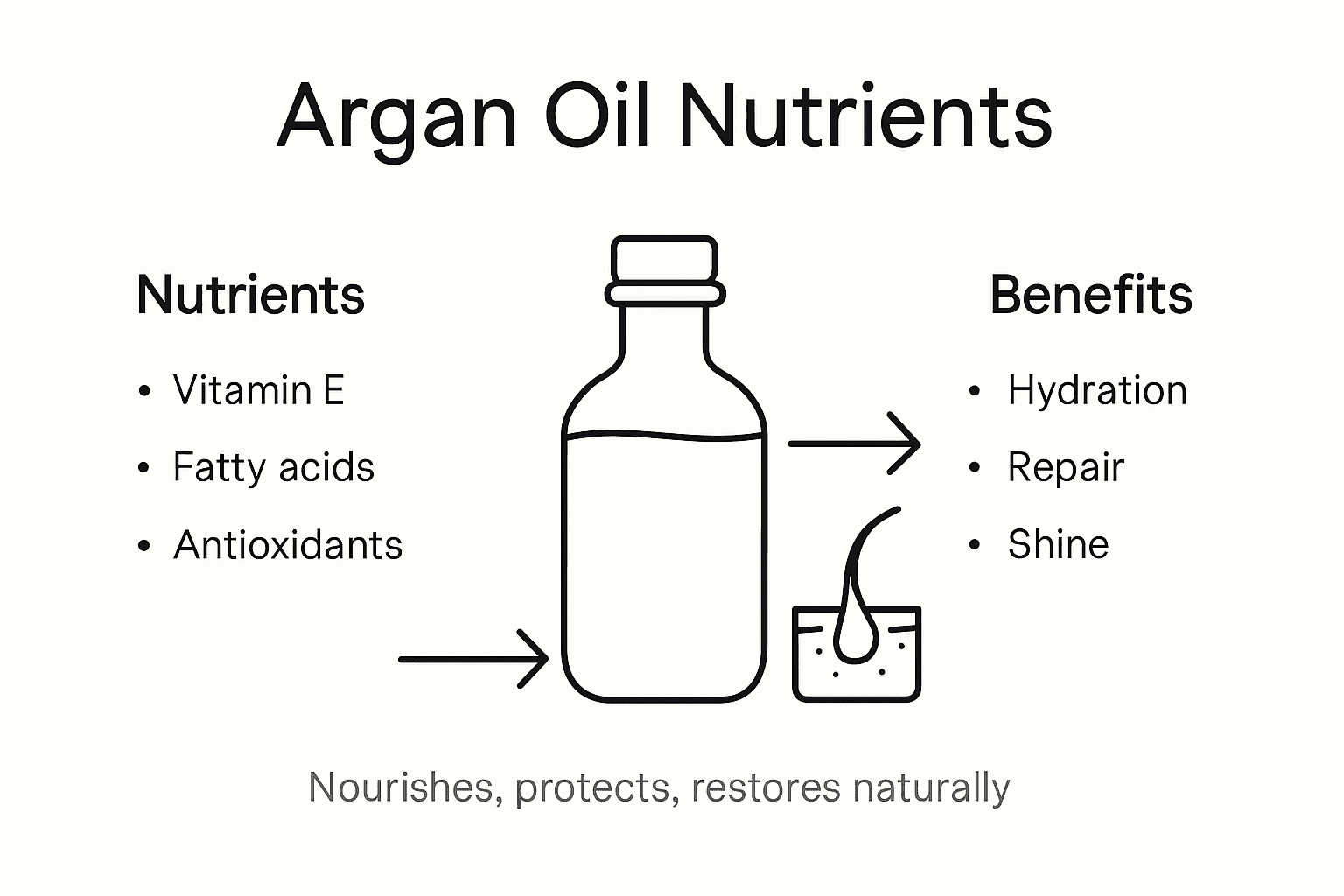
The oil’s mechanism of action is particularly sophisticated. Its unique molecular structure allows it to penetrate deeply into hair follicles and skin cells, delivering nutrients precisely where they are most needed. The balance of essential fatty acids helps strengthen the skin’s natural barrier, reduce moisture loss, and promote cellular regeneration. This makes argan oil an exceptional treatment for dry, damaged hair and stressed skin, providing a natural alternative to synthetic skincare ingredients.
Pro tip: For maximum absorption, apply argan oil to slightly damp skin or hair, gently massaging in circular motions to enhance nutrient penetration and stimulate blood circulation.
Below is a summary of major nutrients in argan oil and their skin/hair benefits:
| Nutrient | Function | Benefit to Skin & Hair |
|---|---|---|
| Oleic Acid | Moisture retention | Softens, repairs, smooths |
| Linoleic Acid | Barrier strengthening | Enhances resilience |
| Vitamin E | Antioxidant protection | Prevents cell damage |
| Sterols | Anti-inflammatory action | Calms irritation |
| Phenolics | Stress neutralisation | Fights premature ageing |
Argan Oil Hair Benefits and Real Use Cases
Argan oil has emerged as a transformative solution for comprehensive hair health, offering multiple benefits that address common hair challenges. Its remarkable nutrient profile makes it an exceptional treatment for individuals struggling with dry, damaged, or environmentally stressed hair strands. The oil’s unique composition enables it to penetrate deeply into hair follicles, providing intensive moisture and protection from root to tip.
The specific hair benefits of argan oil are both immediate and long-term. It excels at reducing frizz, enhancing natural shine, and improving overall hair manageability. The rich concentration of essential fatty acids and vitamin E works to repair damaged hair cuticles, protecting against environmental stressors like UV radiation, heat styling, and pollution. People with chemically treated, colour-processed, or heat-damaged hair find particular relief, as the oil helps reconstruct and strengthen weakened hair structures.
Real-world applications of argan oil span multiple hair care scenarios. Individuals with curly or textured hair use it as a leave-in conditioner to define curls and reduce breakage. Those with fine or thin hair appreciate its lightweight nature, which provides nourishment without weighing down strands. Professional hairstylists recommend it as a pre-styling treatment to create a protective barrier against heat damage, and as a finishing serum to add lustrous smoothness and eliminate frizzy flyaways.
Pro tip: Apply a few drops of argan oil to damp hair, concentrating on the ends, and use sparingly to prevent oversaturation and potential greasiness.
Skin Health, Anti-Ageing, and Everyday Wellbeing
Argan oil represents a holistic approach to skin wellness, offering profound benefits that extend far beyond simple moisturisation. Its complex molecular structure enables deep nutritional support, addressing multiple dimensions of skin health simultaneously. The oil’s rich composition of fatty acids and antioxidants creates a powerful defensive mechanism against environmental stressors and premature ageing.
The anti-ageing properties of argan oil are particularly remarkable. Its concentrated antioxidant profile helps neutralise free radical damage, which is a primary contributor to skin degradation and cellular ageing. The oil’s natural compounds work to improve skin elasticity, reduce the appearance of fine lines, and promote a more youthful, radiant complexion. Unlike synthetic alternatives, argan oil provides these benefits through entirely natural mechanisms, supporting the skin’s inherent regenerative processes.

For everyday wellbeing, argan oil’s non-comedogenic nature makes it an exceptional choice for diverse skin types. It effectively hydrates without clogging pores, helping to balance skin’s natural moisture levels and reduce inflammation. People with sensitive skin, prone to irritation or uneven texture, often find significant relief through consistent argan oil application. Its gentle yet potent formula supports skin barrier function, enhancing overall dermal resilience and promoting a calm, healthy appearance.
Pro tip: Incorporate argan oil into your evening skincare routine by gently massaging 2-3 drops onto clean skin, focusing on areas prone to dryness or early signs of ageing.
Risks, Myths, and What to Avoid
Understanding the potential risks associated with argan oil is crucial for safe and effective use, as misinformation can lead to inappropriate expectations or potential adverse reactions. While argan oil is generally considered safe for topical application, consumers must approach its use with informed caution and realistic perspectives.
Allergic reactions represent the primary concern for individuals considering argan oil. Those with nut sensitivities should exercise particular care, as argan oil is derived from tree nuts and could potentially trigger allergic responses. Common myths surrounding argan oil often portray it as a miraculous, instant solution for complex skin and hair conditions, which scientific evidence does not support. Consumers should be wary of products claiming extraordinary, instantaneous transformations and instead view argan oil as a supportive, long-term wellness ingredient.
To ensure safety and efficacy, individuals must be vigilant about product quality and sourcing. Cheaper, synthetic, or adulterated argan oil products may contain harmful additives that could cause skin irritation or diminish the oil’s natural benefits. Authentic, pure argan oil should be cold-pressed, unrefined, and sourced from reputable producers. Warning signs of low-quality products include unusually low prices, lack of transparent sourcing information, and absence of clear ingredient lists.
Pro tip: Always perform a patch test on a small area of skin before widespread application and purchase argan oil from verified, transparent suppliers with clear quality certifications.
Unlock the True Potential of Argan Oil for Your Hair and Skin
Struggling with dry, damaged hair or ageing skin? The article highlights the incredible benefits of argan oil, especially its rich content of essential fatty acids and antioxidants that deeply nourish and protect. If frizz, lack of shine, or premature signs of ageing are your concerns, embracing a natural, scientifically-backed haircare ritual can transform your daily routine. Discover how cold-pressed, pure argan oil maximises nutrient retention to repair and revitalise from root to tip.

Experience the luxurious effects of argan oil yourself with carefully curated treatments available at LUXEVASTORE.com. Our range focuses on clean, cruelty-free ingredients that support natural hair revival and holistic skin wellbeing. Act now to enjoy exclusive offers and holiday promotions that make premium haircare accessible. Don’t wait to nourish your hair and skin the way nature intended. Visit LUXEVASTORE.com today and transform your beauty routine with plant-powered science-backed solutions.
Frequently Asked Questions
What are the benefits of argan oil for hair?
Argan oil offers numerous benefits for hair, including reducing frizz, enhancing shine, and improving manageability. It also helps to repair damaged hair cuticles and protects against environmental stressors like UV rays and heat styling.
How is culinary argan oil different from cosmetic argan oil?
Culinary argan oil is extracted from roasted kernels, giving it a distinctive nutty flavour, while cosmetic argan oil is derived from unroasted kernels, preserving its neutral scent and maximising skin and hair benefits.
Can argan oil help with skin hydration and anti-ageing?
Yes, argan oil is rich in essential fatty acids and antioxidants, making it an excellent moisturiser. Its anti-ageing properties help improve skin elasticity, reduce the appearance of fine lines, and promote a more youthful complexion.
How should I apply argan oil for the best results?
For maximum absorption, apply argan oil to slightly damp skin or hair. Gently massage a few drops in circular motions, focusing on areas prone to dryness or damage, to enhance nutrient penetration.