


Finding the right shampoo feels daunting when you want both luxury and ingredient safety. Many popular hair products use parabens as synthetic preservatives, protecting against bacteria and mould but raising questions about long-term health and environmental impact. If you are seeking premium, paraben-free hair care that truly nurtures your hair while supporting ethical choices, you will discover insights into safer alternatives and what makes these formulations a smart option for modern women.
Table of Contents
- What Are Parabens In Hair Products?
- Types Of Parabens And Their Common Uses
- Health Risks Linked To Paraben Exposure
- Environmental And Ethical Concerns With Parabens
- Comparing Paraben-Free Versus Standard Haircare
- Choosing Safe Paraben-Free Hair Product Alternatives
Key Takeaways
| Point | Details |
|---|---|
| Parabens as Preservatives | Parabens are synthetic preservatives used in hair products to prevent microbial growth, prolong shelf life, and maintain safety. |
| Health Risks of Parabens | Prolonged exposure to parabens may pose health risks, including potential endocrine disruption and reproductive health challenges. |
| Environmental Impact | Parabens are persistent pollutants in ecosystems, raising concerns about contamination and bioaccumulation in the environment. |
| Choosing Paraben-Free Products | Consumers are encouraged to opt for paraben-free hair care alternatives that prioritise natural ingredients and sustainable practices. |
What Are Parabens in Hair Products?
Parabens are synthetic preservative chemicals widely used in hair care and personal care products to prevent microbial growth. Chemical preservatives like parabens protect cosmetic formulations from bacterial and fungal contamination, extending product shelf life and maintaining safety.
These compounds belong to a specific class of chemicals called para-hydroxybenzoic acid esters. Common types of parabens found in hair products include:
- Methylparaben
- Ethylparaben
- Propylparaben
- Butylparaben
Parabens work by disrupting microorganism cell membranes, effectively preventing yeast, bacteria, and mould from developing in personal care products. Their antimicrobial properties make them attractive to manufacturers seeking cost-effective preservation methods.
How Parabens Function in Hair Products:
- Block microbial reproduction
- Prevent product contamination
- Extend product storage duration
- Maintain product consistency and quality
Parabens protect cosmetic formulations by inhibiting microorganism growth and maintaining product integrity.
Pro tip: Always check product ingredient lists if you want to avoid synthetic preservatives in your hair care routine.
Types of Parabens and Their Common Uses
Parabens are a group of synthetic preservative chemicals with multiple variations used extensively across personal care industries. Common commercially available parabens include several distinct chemical compounds that serve critical preservation functions.
The most prevalent types of parabens found in hair and cosmetic products are:
- Methylparaben: The most frequently used paraben
- Propylparaben: Often combined with methylparaben
- Butylparaben: Used in various cosmetic formulations
- Ethylparaben: Common in hair and skin care products
- Benzylparaben: Less common but still used in some products
These preservatives are strategically employed across multiple product categories to prevent microbial contamination. Parabens in cosmetics are typically found in:
Here’s a summary of the main paraben types and their typical application areas:
| Paraben Type | Hair Products Use | Other Common Uses |
|---|---|---|
| Methylparaben | Shampoos, conditioners | Skin creams, deodorants |
| Propylparaben | Often in combination | Makeup, shaving gels |
| Butylparaben | Styling products | Moisturisers, sunscreens |
| Ethylparaben | Hair and skincare | Lotions, facial cleansers |
| Benzylparaben | Less frequent | Niche cosmetics, pharmaceuticals |
- Hair care products (shampoos, conditioners)
- Skin moisturisers
- Makeup foundations
- Deodorants
- Shaving gels
Parabens provide cost-effective, stable preservation across diverse personal care product ranges.
Manufacturers appreciate parabens for their low cost, remarkable stability, and potent antimicrobial properties. Their ability to prevent bacterial and fungal growth makes them an attractive preservation solution across cosmetic, pharmaceutical, and food industries.
Pro tip: Always read ingredient labels carefully and research specific paraben types if you have sensitivity concerns.
Health Risks Linked to Paraben Exposure
Paraben exposure continues to raise significant health concerns among researchers and health professionals. Potential health risks of parabens encompass a range of potential physiological disruptions that warrant careful investigation.
The primary health risks associated with prolonged paraben exposure include:
- Endocrine System Disruption: Potential interference with hormonal balance
- Reproductive Health Challenges: Possible impacts on fertility and reproductive function
- Skin Sensitivity: Risk of allergic reactions and dermatological complications
- Potential Carcinogenic Effects: Ongoing research into long-term cancer risks
Pregnancy-related health risks are particularly concerning, with recent studies highlighting potential complications:
- Increased risk of gestational hypertension
- Higher likelihood of premature birth
- Potential low birth weight
- Possible long-term metabolic disruptions
Scientific research suggests a nuanced approach, recognizing both potential risks and the body’s ability to metabolize these compounds.
While current evidence presents a complex picture, the body typically metabolizes parabens rapidly. However, cumulative exposure and individual sensitivity remain critical factors in assessing potential long-term health implications.
Pro tip: Consider consulting with a healthcare professional to understand your individual risk factors and potential sensitivities to paraben-containing products.
Environmental and Ethical Concerns with Parabens
Parabens represent a complex environmental challenge, extending beyond individual health concerns. Chemical contaminants in environmental systems demonstrate the widespread ecological implications of these ubiquitous preservative compounds.
Key environmental and ethical concerns surrounding parabens include:
- Ecosystem Contamination: Persistent presence in water systems
- Endocrine Disruption: Potential reproductive health impacts
- Bioaccumulation: Risk of long-term environmental persistence
- Global Regulatory Challenges: Varying international perspectives on chemical safety
Endocrine-disrupting chemical risks present significant ecological challenges, with specific concerns:
- Wastewater contamination routes
- Potential reproductive system interference
- Accumulation in environmental compartments
- Cross-species hormonal disruption
Environmental research indicates parabens as emerging contaminants with complex systemic implications.
Scientific investigations reveal that parabens can be detected in multiple environmental contexts, including surface waters, wastewater systems, and even indoor dust. Some countries have already taken proactive measures, with nations like Denmark implementing restrictions on paraben usage in children’s products.
Pro tip: Choose products with transparent ingredient lists and prioritise brands committed to environmental sustainability and chemical safety.
Comparing Paraben-Free versus Standard Haircare
Hair care formulations have undergone significant transformations, with consumers increasingly demanding safer, more natural alternatives. Hair care industry trends reveal a growing shift towards gentler, less toxic hair products that prioritise scalp and environmental health.
Key differences between standard and paraben-free hair care products include:
- Ingredient Composition: Natural versus synthetic preservatives
- Chemical Sensitivity: Reduced potential for skin irritation
- Environmental Impact: Lower ecological footprint
- Long-term Hair Health: More holistic approach to hair maintenance
Sustainable hair care formulations demonstrate substantial improvements in product development:
- Replacement of petrochemical-derived polymers
- Integration of biosurfactants
- Use of natural antimicrobial ingredients
- Minimised synthetic chemical presence
Modern hair care increasingly prioritises health, safety, and environmental sustainability.
Standard hair products typically contain synthetic detergents and preservatives that can potentially cause dryness, scalp irritation, and long-term health concerns. Paraben-free alternatives utilise herbal ingredients with natural antimicrobial properties, offering a more holistic approach to hair and scalp wellness.
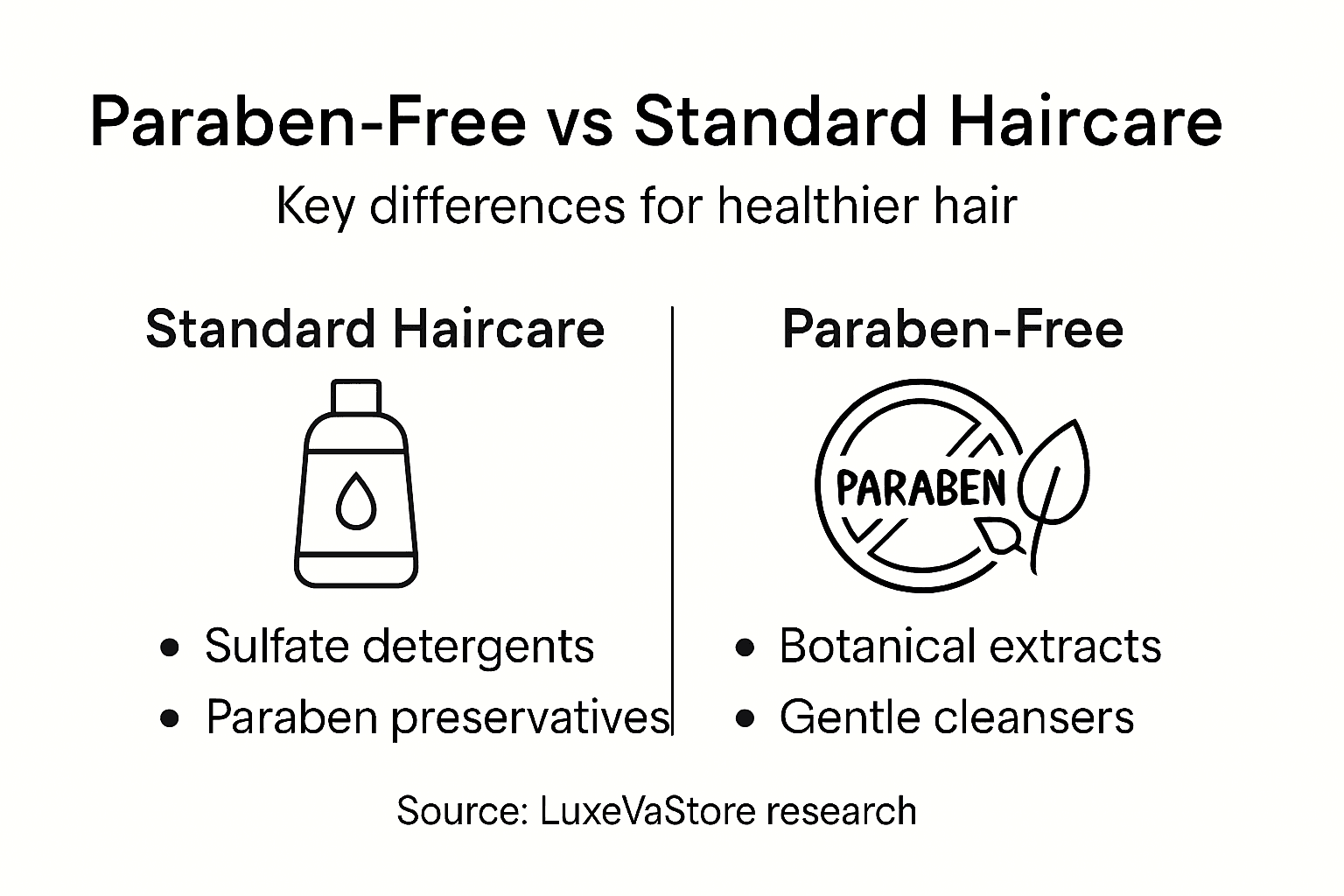
The comparison below highlights key distinctions between standard and paraben-free hair care:
| Aspect | Standard Haircare | Paraben-Free Haircare |
|---|---|---|
| Preservative Type | Synthetic chemicals | Plant-based, natural extracts |
| Skin Sensitivity Risk | Higher risk of irritation | Reduced, gentler on scalp |
| Environmental Footprint | Potential water contamination | More eco-friendly ingredients |
| Hair Health Approach | May cause dryness over time | Promotes long-term wellness |
Pro tip: Research product ingredients carefully and prioritise brands demonstrating genuine commitment to natural, sustainable hair care solutions.
Choosing Safe Paraben-Free Hair Product Alternatives
Hair care consumers are increasingly seeking safer, more natural product alternatives that minimise potential health risks. Cosmetic safety guidelines recommend careful ingredient scrutiny when selecting personal care products to ensure optimal health protection.
Key strategies for identifying safe paraben-free hair care alternatives include:
- Label Reading: Check for ingredients ending in ‘-paraben’
- Natural Preservative Selection: Look for plant-based alternatives
- Brand Research: Investigate company ingredient philosophies
- Ingredient Transparency: Prioritise products with clear component listings
Innovative hair care alternatives now offer promising developments in safe product formulations:
- Bio-based polymer technologies
- Natural biosurfactant integration
- Plant-derived conditioning agents
- Sustainable preservation methods
Safe hair care prioritises human and environmental wellness through intelligent ingredient selection.
Modern paraben-free formulations leverage advanced natural technologies to provide effective hair maintenance without compromising product safety or performance. These innovative approaches utilise botanical extracts, essential oils, and scientifically developed natural preservatives that offer robust protection against microbial growth.
Pro tip: Always conduct a patch test with new products and research ingredients to ensure compatibility with your unique hair and scalp needs.
Discover Healthier Hair with Paraben-Free Solutions at LUXEVASTORE
If you are concerned about parabens disrupting your hormonal balance or causing long-term scalp sensitivity, switching to paraben-free hair care is essential. The true challenge lies in finding products that combine effective preservation with natural, non-toxic ingredients to protect both your hair’s health and the environment. At LUXEVASTORE, we understand this need and offer a curated range of premium, scientifically-backed hair treatments that avoid harmful synthetic preservatives while delivering luxurious care.

Explore our exclusive selection featuring botanical extracts like argan oil, biotin, and rosemary mint, all crafted to nourish your hair without parabens or sulfates. Prioritise your well-being and the planet by choosing cruelty-free, plant-powered products that support long-term scalp wellness and vibrant hair. Visit LUXEVASTORE.com today to experience safer alternatives backed by science and natural beauty. Start your journey towards healthier hair now and take advantage of our special promotions.
Frequently Asked Questions
What are the benefits of using paraben-free hair products?
Paraben-free hair products minimise the risk of skin irritation and potential long-term health concerns associated with synthetic preservatives. They often contain natural ingredients that are gentler on both hair and scalp, promoting overall hair health.
How do I identify paraben-free hair care products?
To identify paraben-free products, check the ingredient list for terms ending in ‘-paraben’, such as methylparaben or propylparaben. Look for brands that explicitly state they are paraben-free on their packaging.
Are paraben-free hair products more effective than standard ones?
Paraben-free hair products can be just as effective, if not more so, as they often utilise natural preservatives with antimicrobial properties. They also tend to favour gentle formulations that support long-term hair health without causing dryness or irritation.
What should I look for in a paraben-free hair product?
When choosing paraben-free hair products, look for those that use natural or plant-based preservatives, have transparent ingredient lists, and offer clear information about their eco-friendly practices. This ensures you are selecting products that are safe for both your health and the environment.