


Finding haircare that is both effective and cruelty free can feel confusing when your priority is a healthy, vibrant look. For many British women, the search leads to natural remedies with a rich history and proven results. Rosemary stands out as a botanical powerhouse, its use stretching from Ancient Egyptian times to modern Mediterranean-inspired routines, offering rejuvenation for hair and scalp through potent antioxidant and anti-inflammatory qualities. If you want a greener, science-backed solution for hair revival, this guide reveals why rosemary belongs in your cruelty free ritual.
Table of Contents
- Rosemary In Haircare: Origins And Core Properties
- How Rosemary Affects Hair And Scalp Health
- Evaluating Scientific Evidence And Common Myths
- Application Methods And Safe Usage Practices
- Comparing Rosemary To Alternative Haircare Solutions
Key Takeaways
| Point | Details |
|---|---|
| Rosemary’s Bioactive Properties | Rosemary contains essential oils, diterpenes, and polyphenolics that promote hair health by stimulating circulation, reducing inflammation, and protecting against oxidative stress. |
| Effective Natural Alternative | Scientific studies indicate that rosemary oil may provide comparable benefits to minoxidil, making it a viable option for those seeking natural hair restoration solutions. |
| Proper Usage is Crucial | To avoid skin irritation, rosemary oil should be diluted before application, and individuals should consult professionals for tailored treatment recommendations. |
| Holistic Haircare Approach | Unlike synthetic treatments, rosemary offers a multifaceted method for hair restoration, addressing various factors that contribute to hair loss while minimising side effects. |
Rosemary in Haircare: Origins and Core Properties
Rosemary emerges as a powerful botanical with extraordinary haircare potential, deeply rooted in centuries of traditional medicine and modern scientific research. Originating in Mediterranean landscapes, this remarkable herb represents more than just a culinary ingredient - it’s a potent natural remedy for hair health.
The botanical profile of rosemary is complex and fascinating, featuring a rich array of bioactive compounds that contribute to its therapeutic properties:
- Volatile essential oils containing monoterpenes
- Diterpenes like carnosic acid
- Polyphenolic molecules with strong antioxidant characteristics
- Anti-inflammatory compounds including carnosol and ursolic acids
Phytochemical Composition plays a critical role in rosemary’s effectiveness. Mediterranean shrub’s unique chemistry enables it to protect and nourish hair follicles through multiple biochemical mechanisms. These compounds work synergistically to combat oxidative stress, improve circulation, and potentially stimulate hair growth.
To enhance understanding, here’s a summary of rosemary’s phytochemical components and their impact on hair health:
| Compound Category | Example Compounds | Haircare Impact |
|---|---|---|
| Essential Oils | Monoterpenes | Stimulate circulation, nourish follicles |
| Diterpenes | Carnosic acid | Encourage hair growth, antioxidant effect |
| Polyphenolics | Rosmarinic acid | Protect against oxidative stress |
| Anti-inflammatory Agents | Carnosol, ursolic acid | Reduce scalp redness, soothe irritation |
Historically, rosemary has transcended cultural boundaries, with documented uses spanning Ancient Egyptian cosmetic practices to contemporary natural haircare solutions. Its evergreen nature symbolises resilience - much like the hair revival properties it offers.
Pro tip: Select cold-pressed rosemary oil for maximum preservation of its natural healing compounds and most potent haircare benefits.
How Rosemary Affects Hair and Scalp Health
Rosemary oil represents a transformative natural solution for comprehensive hair and scalp health, offering remarkable benefits beyond traditional hair treatments. Research demonstrates significant hair growth potential, positioning this botanical extract as a powerful alternative to conventional hair loss interventions.
The key mechanisms of rosemary’s effectiveness include:
- Enhanced blood circulation to hair follicles
- Reduction of scalp inflammation
- Stimulation of cellular metabolism
- Protection against oxidative stress
- Prevention of premature hair follicle miniaturisation
Understanding rosemary’s biochemical impact reveals its extraordinary potential. Bioactive compounds like carnosol work synergistically to combat hair loss mechanisms. These compounds interact directly with hair follicle cells, potentially blocking DHT (dihydrotestosterone) - a primary hormone responsible for pattern baldness.

Scientific investigations have revealed rosemary’s comparable efficacy to minoxidil, a standard pharmaceutical treatment for hair loss. This natural alternative offers promising results with potentially fewer side effects, making it an attractive option for individuals seeking holistic hair restoration strategies.
Pro tip: Massage rosemary oil into your scalp for at least 5 minutes to maximise absorption and stimulate follicular circulation.
Evaluating Scientific Evidence and Common Myths
Scientific investigations of rosemary oil reveal a nuanced landscape of proven benefits and persistent misconceptions surrounding hair loss treatment. The research community has meticulously examined rosemary’s potential, distinguishing between evidence-based outcomes and exaggerated claims.
Common myths and realities about rosemary in haircare include:
- Myth: Rosemary oil can instantly regrow hair Reality: Gradual improvement requires consistent application
- Myth: Rosemary works identically for everyone Reality: Individual responses vary based on genetic and scalp conditions
- Myth: More oil means faster results Reality: Appropriate dosage and technique matter more than quantity
Comprehensive herbal remedy reviews demonstrate rosemary’s scientifically substantiated mechanisms of action. The botanical’s anti-inflammatory and antioxidant properties provide measurable benefits, with clinical studies suggesting comparable efficacy to conventional treatments like minoxidil.
Critical scientific evaluation highlights that while rosemary shows promising results, it is not a miraculous cure-all. Success depends on multiple factors including scalp health, consistent application, and individual physiological responses. Realistic expectations and proper usage remain key to achieving meaningful hair restoration outcomes.
Pro tip: Consult a trichology specialist to understand your specific hair loss pattern before starting any herbal treatment regimen.
Application Methods and Safe Usage Practices
Topical application techniques for rosemary oil require careful consideration to maximise hair health benefits while minimising potential skin irritation. Understanding the nuanced approach to incorporating this potent botanical extract into your haircare routine is crucial for achieving optimal results.
Best application methods include:
- Direct scalp massage with diluted rosemary oil
- Mixing with carrier oils like coconut or jojoba
- Incorporating into existing hair masks or conditioners
- Using as a pre-shampoo treatment
- Creating weekly intensive scalp treatments
Herbal preparation guidelines emphasise the importance of proper dilution and application techniques. Concentrated rosemary oil can cause skin irritation, so careful preparation is essential. Most experts recommend diluting essential oils to a 2-3% concentration, which typically means adding 12-18 drops of rosemary oil per 30ml of carrier oil.
Safety considerations are paramount when using rosemary oil. Individuals with sensitive skin, pregnant women, and those with underlying scalp conditions should consult a healthcare professional before beginning any new treatment. Always conduct a patch test 24 hours before full application to ensure no adverse reactions occur.
Pro tip: Start with a small amount of diluted rosemary oil and gradually increase frequency, monitoring your scalp’s response and adjusting accordingly.
Comparing Rosemary to Alternative Haircare Solutions
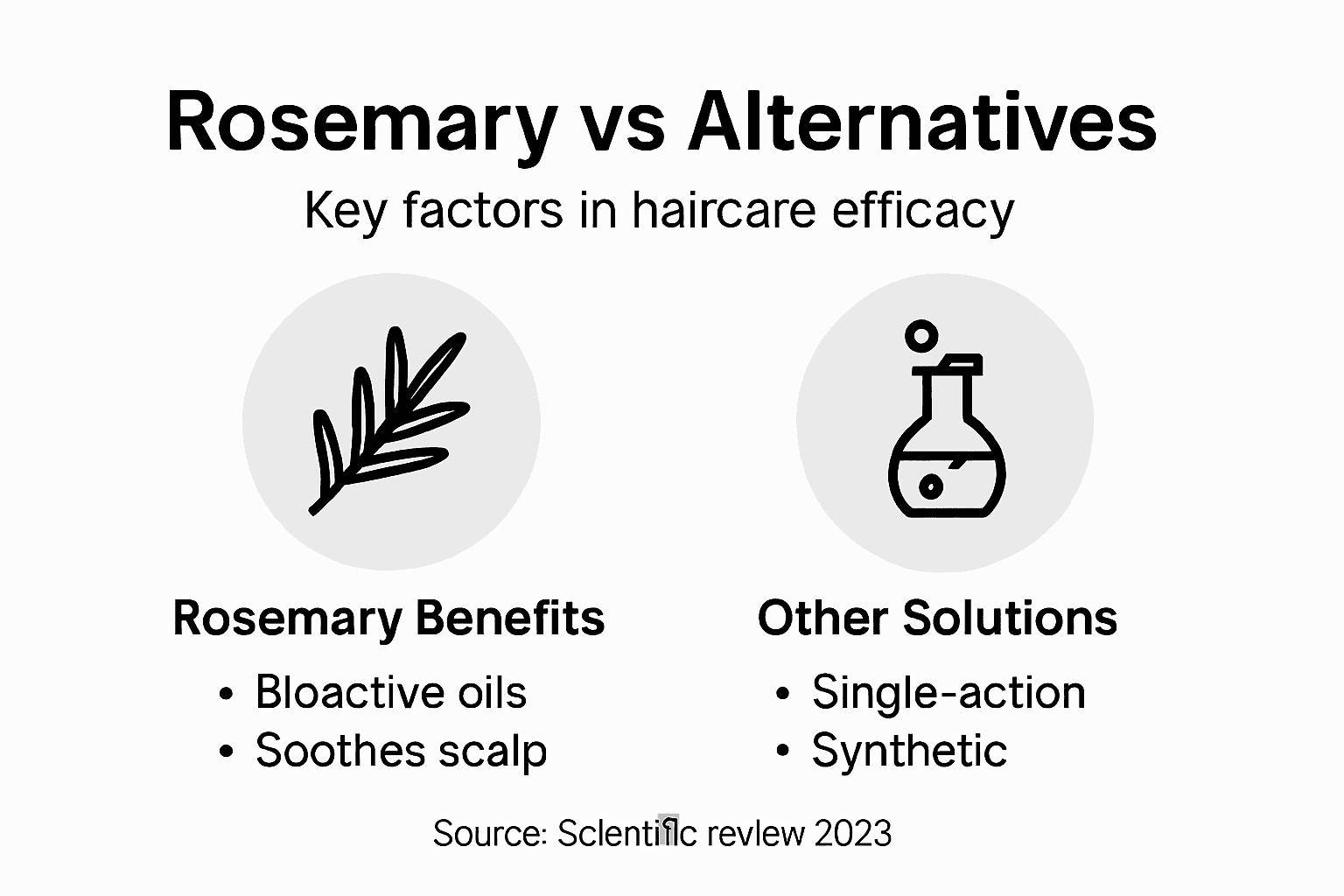
Comprehensive herbal remedy comparisons reveal rosemary’s unique position among natural hair loss treatments. Unlike single-purpose solutions, rosemary offers a multifaceted approach to hair health that distinguishes it from other botanical and synthetic alternatives.
Natural alternatives compared to rosemary include:
- Peppermint oil: Enhances scalp blood circulation
- Amla oil: Supports hair follicle strength
- Saw palmetto: Targets hormonal hair loss mechanisms
- Coconut oil: Provides deep moisturisation
- Argan oil: Offers surface-level hair protection
Comparative efficacy research demonstrates rosemary’s standout qualities. While other treatments often focus on single mechanisms, rosemary provides comprehensive benefits including antioxidant protection, anti-inflammatory action, and improved scalp circulation.
For quick guidance, here’s a comparison of rosemary with other botanical oils used in haircare:
| Botanical Oil | Main Benefit | Typical Application | Potential Drawback |
|---|---|---|---|
| Rosemary | Multi-action (growth, protection) | Scalp massage, masks | Mild irritation if undiluted |
| Peppermint | Stimulates circulation | Cooling scalp treatments | Can cause tingling sensation |
| Saw Palmetto | Reduces DHT activity | Applied for hormonal hair loss | Limited clinical evidence |
| Argan | Surface protection | Leave-in conditioners | Does not affect follicles |
The scientific landscape suggests rosemary’s superiority stems from its complex biochemical profile. Unlike synthetic treatments like minoxidil, which can produce unwanted side effects, rosemary offers a gentler, more holistic approach to hair restoration. Its ability to simultaneously address multiple hair health factors makes it a preferred choice for individuals seeking natural, low-risk interventions.
Pro tip: Consider combining rosemary with complementary natural oils to create a personalised, synergistic hair treatment approach.
Discover the Power of Rosemary for Your Hair with LUXEVA
If you are looking to address hair thinning or scalp irritation with science-backed natural solutions, rosemary offers a proven botanical approach. As highlighted in the article, rosemary’s unique bioactive compounds work to stimulate circulation, reduce inflammation and protect follicles from oxidative stress — essential steps for effective hair revival and scalp health. Yet, harnessing these benefits requires consistent care and the right formulation.
Elevate your routine with our specialised Scalp & Haircare Sets – LUXEVA designed to combine rosemary with other potent ingredients in clean, cruelty-free blends. Whether you want gentle daily nourishment or intensive treatments, you will find plant-powered options that respect your scalp’s sensitivity and support gradual, sustainable improvement.

Take control of your haircare ritual today by exploring our Sulphate Free Shampoo Sets: Elevate Your Haircare Ritual with LUXEVA. Start your journey towards healthier hair with trusted, natural formulas available now at LUXEVASTORE.com. Act now to embrace a luxurious, science-led approach to hair revival that truly honours your unique hair and scalp needs.
Frequently Asked Questions
What are the main benefits of using rosemary oil for hair care?
Rosemary oil promotes hair growth, improves scalp circulation, reduces inflammation, and protects against oxidative stress, making it a comprehensive solution for hair and scalp health.
How should rosemary oil be applied for optimal hair health?
For best results, dilute rosemary oil to a 2-3% concentration using carrier oils like coconut or jojoba, and apply directly to the scalp using a massage technique. Regular application, such as as part of a weekly treatment, is recommended.
Does rosemary oil work for everyone?
Individual responses to rosemary oil can vary based on personal factors like genetics and scalp condition. While many experience improvements, it may not be effective for everyone.
Is rosemary oil comparable to pharmaceutical treatments for hair loss?
Research indicates that rosemary oil shows comparable effectiveness to minoxidil, a common hair loss treatment, providing a natural alternative with potentially fewer side effects.
Recommended
- Rosemary Mint in Haircare: Scientifically Proven Benefits – LUXEVA
- 7 Types of Hair Treatments for Naturally Healthy Hair – LUXEVA
- 7 Inspiring Examples of Hair Growth Rituals for Women – LUXEVA
- What Is a Haircare Ritual? Benefits for Modern Lifestyles – LUXEVA
- Understanding Essential Oils Good for Hair: Nature’s Solutions | MyHair